
Selecting the right books for your digital products and content offerings has never been more complex. With AI algorithms reshaping discovery and audience expectations evolving rapidly, content creators face the challenge of identifying titles that genuinely resonate. In 2026, over 78% of major publishers allocate more than half their launch budgets to digital reader engagement and audience analytics, signaling that data-driven approaches are essential for effective book selection strategies.
Table of Contents
- Key Book Selection Criteria to Guide Your Choices
- Top Book Selection Strategies in 2026
- Comparative Analysis of Book Selection Strategies
- Pricing, Availability, and Accessibility Considerations
- Situational Recommendations: Choosing the Right Strategy for Your Needs
- Enhance Your Content Offerings with Bibliowlteca
Key Takeaways
| Point | Details |
|---|---|
| Audience insights and AI optimization are essential | Understanding your target segments and ensuring AI-friendly metadata drives effective selection. |
| Cross-format content boosts engagement | Diversifying with ebooks, audiobooks, and video formats improves accessibility and reach. |
| Different strategies suit different creator scenarios | Niche targeting, broad appeal, and budget-conscious approaches require tailored selection criteria. |
| Data-driven evaluation enables continuous refinement | Analytics, micro-testing, and community feedback validate and improve your book selections over time. |
Key Book Selection Criteria to Guide Your Choices
Effective book selection begins with understanding your audience at a granular level. Segment your readers by interests, consumption preferences, and engagement patterns. This foundation ensures every title you choose aligns with what your audience actually wants.
AI-powered discovery platforms now dominate how readers find content. Optimize your selections for semantic relevance by prioritizing books with clear thematic keywords, robust metadata, and descriptive summaries. Search algorithms reward titles that match user intent precisely.
Format diversity matters more than ever. Consider books available across multiple formats: ebooks for portability, audiobooks for accessibility, and video adaptations for visual learners. This multi-format approach expands your reach and caters to varied consumption habits.
Evaluate pricing models and availability carefully. Assess whether titles use subscription models, one-time purchases, or freemium structures. Ensure books are available on platforms your audience frequents. Misalignment here limits feasibility and returns.
Data-driven metrics validate your choices. Track engagement rates, completion statistics, and user feedback for selected titles. Micro-test new selections with small audience segments before full rollout.
Pro Tip: Build a scoring matrix that weights audience demand, format availability, AI discoverability, and pricing feasibility. This systematic approach removes guesswork and accelerates decision-making.
- Audience segmentation identifies precise reader needs and preferences
- AI-friendly metadata ensures visibility in algorithm-driven discovery
- Multi-format offerings enhance accessibility across consumption channels
- Pricing and platform alignment protect ROI and operational feasibility
- Micro-testing and analytics refine selections based on real-world performance
Top Book Selection Strategies in 2026
AI-powered discovery and personalized recommendations represent the frontier of book selection. Leverage machine learning tools that analyze reader behavior, purchase history, and engagement signals to surface titles with high semantic relevance. These systems continuously learn and adapt, improving recommendation accuracy over time.

Audience-first niche targeting delivers deeper engagement for specialized content. Instead of chasing broad appeal, focus on specific reader communities with well-defined interests. Author K.L. Slater used segmented email lists based on reader preferences and micro-testing of chapter samples to optimize book themes, demonstrating how precise targeting enhances selection effectiveness.
Cross-format content integration diversifies delivery and maximizes accessibility. Select titles available in print, digital, audio, and interactive formats. This strategy accommodates varied learning styles and consumption contexts, from commuters who prefer audiobooks to students who need searchable ebooks.
Community-driven content validation leverages social proof and trend signals. Monitor reader forums, social media discussions, and review aggregators to identify rising titles and themes. Community enthusiasm often predicts broader market success before traditional metrics surface patterns.
Data-backed topic curation uses analytics and testing to refine content relevance. Analyze existing engagement data to identify high-performing genres, authors, and themes. Test new selections with controlled audience samples, measuring completion rates and satisfaction scores before wider release.
Pro Tip: Combine AI recommendations with community signals for balanced selection. Algorithms excel at pattern recognition, but human communities surface cultural nuances and emerging trends machines may miss.
- AI tools analyze behavioral data to surface semantically relevant titles
- Niche targeting builds loyal, highly engaged reader communities
- Multi-format availability accommodates diverse consumption preferences
- Community validation provides early signals of title performance
- Analytics-driven testing validates selections before full commitment
Comparative Analysis of Book Selection Strategies
Comparative analysis reveals AI-enhanced book marketing strategies outperform traditional methods by 15-25% in engagement and sales performance, guiding creators toward technology-enabled approaches. Understanding how different strategies compare across key dimensions helps you choose the right mix.
| Strategy | Engagement Uplift | Typical Cost | Implementation Complexity | Best Suited For |
|---|---|---|---|---|
| AI-Powered Discovery | 15-25% increase | Moderate to high (tool subscriptions) | Low to moderate (automated) | Large catalogs, data-rich environments |
| Audience-First Niche Targeting | 20-35% increase | Low to moderate (research time) | Moderate (requires segmentation expertise) | Specialized topics, established communities |
| Cross-Format Integration | 10-20% increase | Moderate (licensing multiple formats) | Moderate (coordination across formats) | Diverse audience consumption patterns |
| Community-Driven Validation | 12-18% increase | Low (monitoring tools) | Low (manual observation) | Emerging trends, social-first audiences |
| Data-Backed Topic Curation | 18-28% increase | Moderate (analytics platforms) | Moderate to high (requires data literacy) | Content portfolios with performance history |
AI-powered approaches scale efficiently for large catalogs but require upfront investment in tools and data infrastructure. Niche targeting demands deep audience understanding but yields exceptional engagement with focused communities.
Cross-format strategies increase accessibility but complicate rights management and coordination. Community validation offers low-cost insights but requires consistent monitoring and interpretation. Data-backed curation delivers reliable performance gains but needs historical data and analytical capabilities.
Your choice depends on catalog size, budget constraints, technical capabilities, and audience maturity. Many successful creators combine multiple strategies for comprehensive coverage.
Pricing, Availability, and Accessibility Considerations
Pricing structures significantly influence book selection feasibility and audience uptake. Ebooks typically range from budget tiers (under £5) for backlist titles to premium pricing (£10-20) for new releases and specialized content. Audiobooks command higher price points due to production costs, often £15-30 per title.
Subscription models like Kindle Unlimited or Audible Plus offer unlimited access for fixed monthly fees, appealing to voracious readers but reducing per-title revenue for creators. One-time purchase models provide predictable earnings but may limit audience reach compared to subscription bundles.
Platform-specific availability constraints affect reach and discoverability. Amazon dominates ebook and audiobook distribution but imposes exclusivity requirements for certain programs. Alternative platforms like Kobo, Apple Books, and independent stores offer broader distribution but smaller individual audiences. Evaluate where your target readers actually shop.
Accessibility features ensure inclusive content consumption. Text-to-speech functionality, adjustable font sizes, and screen reader compatibility make ebooks accessible to visually impaired readers. Subtitle integration and variable playback speeds enhance audiobook usability for diverse learning needs and language proficiency levels.
These operational factors directly impact user experience and commercial viability. Books with restrictive licensing, limited format options, or poor accessibility features create friction that reduces engagement and narrows your addressable market.
- Budget ebook pricing (under £5) maximizes volume for price-sensitive segments
- Premium pricing (£10-20+) signals quality and exclusivity for specialized content
- Subscription models trade per-title revenue for broader audience access
- Platform exclusivity increases visibility on dominant channels but limits distribution breadth
- Accessibility features expand addressable markets and improve user satisfaction
Situational Recommendations: Choosing the Right Strategy for Your Needs
Different creator scenarios demand tailored approaches. Match your strategy to your specific circumstances for maximum impact.
-
Niche Expert Audiences: Combine audience-first niche targeting with data-backed topic curation. Deep segmentation identifies precise reader needs, while analytics validate topic relevance. Segmented audience strategies like K.L. Slater's micro-testing approach deliver exceptional engagement with specialized communities.
-
Broad Appeal and Mainstream Content: Prioritize AI-powered discovery and cross-format integration. AI tools surface titles with mass-market potential, while multi-format availability accommodates diverse consumption preferences across large, heterogeneous audiences.
-
Low-Budget Strategies: Focus on community-driven validation and free or low-cost analytics tools. Monitor social media discussions, reader forums, and review aggregators to identify promising titles without expensive research infrastructure. Leverage free analytics platforms to track basic engagement metrics.
-
Sustained Long-Term Growth: Implement data-backed topic curation with continuous micro-testing. Build a feedback loop where performance data informs future selections. Invest in analytics infrastructure that scales with your catalog, enabling progressive refinement over time.
-
Launching New Content Portfolios: Start with community-driven validation to identify market gaps and audience interest signals before committing resources. Gradually layer in AI tools and data curation as your catalog and performance history grow.
Successful creators often blend multiple strategies, starting with low-cost community validation and progressively adding sophisticated tools as budgets and data accumulate. Adapt your mix as your needs and capabilities evolve.
Enhance Your Content Offerings with Bibliowlteca
Implementing the strategies covered in this guide requires access to diverse, quality book selections that align with your audience needs and format preferences. The Bibliowlteca marketplace provides exactly that foundation.
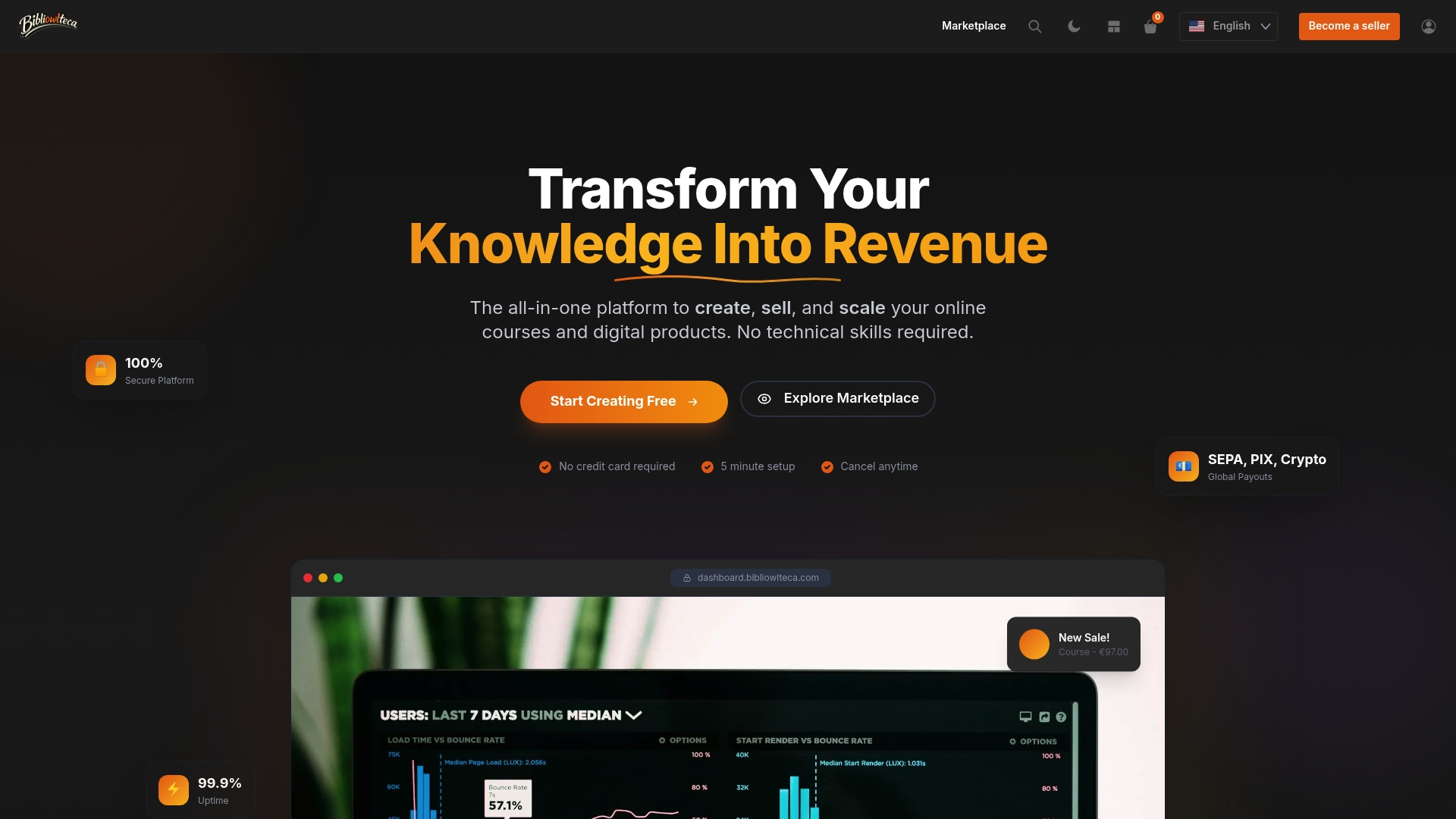
Bibliowlteca supports AI-driven and data-informed book selections with comprehensive metadata, semantic tagging, and performance insights that integrate seamlessly with modern discovery tools. The platform offers diverse format options including ebooks, audiobooks, and academic resources, enabling the cross-format integration strategies that boost engagement and accessibility.
Whether you're curating niche collections for specialized audiences or building broad content portfolios, Bibliowlteca's extensive catalog and intelligent search capabilities help you source titles that enhance your digital products and resonate with your readers. Explore the marketplace today to discover how the right book selections can transform your content offerings.
Frequently Asked Questions
What role does AI play in book selection today?
AI analyzes reader behavior patterns, purchase history, and engagement signals to recommend titles with high semantic relevance. These systems continuously learn from user interactions, improving recommendation accuracy and surfacing books that match audience intent more precisely than manual curation alone.
How can I assess if my audience segmentation is effective?
Track engagement metrics by segment, comparing completion rates, time spent, and satisfaction scores across groups. Effective segmentation shows distinct performance patterns between segments, with tailored selections outperforming generic choices. Test segment-specific content against control groups to quantify impact.
Are audiobooks equally important as ebooks for selection?
Audiobooks serve distinct consumption contexts like commuting and multitasking, where ebooks are impractical. They're especially important for accessibility and reaching auditory learners. However, importance depends on your specific audience: analyze format preferences in your user data before prioritizing production.
What is a cost-effective strategy for beginners?
Start with community-driven validation, monitoring reader forums and social media to identify promising titles without expensive tools. Use free analytics platforms to track basic engagement. As you build performance history and budget, gradually add AI tools and data curation capabilities.
How do I keep my book selections relevant over time?
Establish a continuous feedback loop combining analytics, micro-testing, and community monitoring. Review performance data quarterly to identify declining titles and emerging trends. Test new selections with small audience samples before full rollout. Stay engaged with reader communities to catch cultural shifts early.