
Yes, you can sell Canva templates, but only if you follow Canva's content licence and choose the right delivery method. Two patterns cover most sellers: a Canva share link for designs built with Pro assets, or a PDF bridge for marketplace listings. Before anything else, audit your design for Canva Pro elements and decide which delivery path fits where you plan to sell.
TL;DR:
- Using Pro assets in Canva templates requires delivery via a share link to preserve licensing and royalty integrity.
- Marketplaces like Etsy enable quick testing of demand but take a fee and limit branding control, while your own storefront offers higher margins with setup costs.
- Price templates based on complexity and audience, with single templates, bundles, and license tiers allowing flexible revenue strategies.
- US sellers should track gross income, platform fees, and refunds carefully, as all sales may be reported to the IRS regardless of platform payout schedules.
- Moving from marketplace sales to a dedicated storefront is advisable once templates generate consistent repeat revenue and you want to retain a larger share.
Table of Contents
- What Canva allows and prohibits: a licence checklist
- Prepare your product: packaging, previews and the PDF bridge
- Where to sell: marketplaces, Canva's Creator programme or your own storefront
- Pricing and payment: setting prices and getting paid
- Taxes and reporting: what US sellers need to track
- Starting small and scaling a template business
- How BibliOWLteca supports creators moving to their own storefront
- FAQ
- Sources
What Canva allows and prohibits: a licence checklist
Canva's Content License Agreement lets you sell templates you design from scratch. What you cannot do is resell Canva's library Content "as-is", meaning you cannot take a stock photo, icon or existing template and hand it over unchanged as your own product.
The rule that trips up most new sellers involves Pro assets. If your design includes Pro Content, Canva requires delivery through a Canva template link rather than a flat export, because the link keeps the licence and royalty mechanics intact. Flattening a Pro-heavy design into a PNG, JPG or PDF for standalone sale breaks that chain and violates the content license agreement.
Run every template through this checklist before listing it:
- Confirm the design is built from original layout and text choices, not a copied existing template.
- Check whether any element is Pro Content; if so, plan to deliver via a share link, not a file export.
- Make sure the template opens cleanly when a stranger clicks the link, with no broken fonts or missing elements.
- Note any attribution or credit requirements tied to specific assets you used.
Pro Tip: Duplicate your design, strip out every Pro element you can replace with Free Content, and keep a Pro version and a Free version side by side so you always know which delivery method each one needs.
Prepare your product: packaging, previews and the PDF bridge
A template that looks great in your account can still frustrate a buyer who has never opened Canva before. Packaging closes that gap.
- Build the template with editable text placeholders, a consistent colour palette, and clearly named layers or pages so buyers can navigate it without guessing.
- Generate the Canva template share link once the design is finished and tested from a fresh account to confirm it opens correctly for someone outside your workspace.
- Create a short branded PDF, the "PDF bridge", containing that share link plus plain-language setup steps; this is what most marketplaces expect buyers to download, since a listing cannot simply point to an external link.
- Produce preview images: a realistic mockup, a desktop view, a mobile view, and one or two close-up detail shots that show text and colour options clearly.
- Write a one-page setup guide covering how to duplicate the template, swap text and images, and resize for different platforms, plus a short troubleshooting note and a version log for future updates.
Good previews do more selling than your product description ever will, because buyers decide in seconds whether a template looks professional enough to trust with their own content.
Pro Tip: Screen-record a 30-second clip of yourself editing the template and use a still frame from it as one of your preview images; it signals ease of use faster than static mockups alone.

Where to sell: marketplaces, Canva's Creator programme or your own storefront
Your choice of selling route shapes how fast you get traction and how much of each sale you keep.
- Marketplaces such as Etsy give you an existing audience searching for templates, standard use of the PDF bridge for delivery, and built-in trust signals, in exchange for listing fees and a crowded search field.
- Canva's Creators programme lets approved designers publish templates directly inside Canva's editor and earn royalties based on how often buyers use them, rather than a per-sale price; it is application-based and templates stay inside Canva rather than being sold as standalone files.
- An independent storefront gives you full control over branding, pricing and the buyer relationship, and lets you capture a larger share of each sale, but it requires setting up a payment processor such as Stripe or PayPal and automating delivery yourself.
A sensible path is to validate a template on a marketplace first, confirm there is real demand, and then move your bestsellers to your own storefront once sales are consistent enough to justify the extra setup. Our earlier piece on choosing where to sell digital products walks through that migration in more detail, and some creators also look at broader creator programme models to compare royalty structures across platforms.
Pricing and payment: setting prices and getting paid
Most sellers price templates in one of three shapes: a single template at a flat price, a bundle of related templates at a discount per item, or licence tiers that charge more for commercial use than personal use.
- Single templates suit a focused niche design, such as one Instagram carousel layout.
- Bundles work well once you have several templates in the same style or theme.
- Licence tiers let you charge businesses more than solo creators for the same file.
Price depends heavily on complexity and audience: a one-page social media template typically sits lower than a multipage planner or a full brand kit, simply because the buyer is paying for more hours of design work behind it.
Where you get paid depends on where you sell. Marketplaces pay out on their own schedule, often holding funds briefly before releasing them, and deduct their fees before the payout lands. A storefront running on Stripe or PayPal settles faster in most cases but means you are responsible for reconciling fees and refunds yourself. Canva Creators are a separate case entirely: payment comes from a royalty pool tied to Canva Pro revenue, as described in Canva's Creators programme guidance, rather than from a price you set yourself.
Taxes and reporting: what US sellers need to track
Payment platforms report transactions to the IRS through Form 1099-K once a seller crosses the reporting threshold set for that filing year, so gross receipts from your template sales can end up documented whether or not you expect it.
Keep your own records regardless of what a platform reports:
- Log gross sales, platform fees, refunds and any paid tools or stock assets as business expenses.
- Reconcile your own totals against any Form 1099-K you receive rather than assuming the figures already match.
- Separate income by platform if you sell across a marketplace and a storefront, since each may report independently.
If you are selling across several marketplaces, crossing into consistent monthly income, or dealing with international buyers and VAT or OSS obligations, a conversation with an accountant is worth the cost before it becomes a bigger cleanup job later.
Starting small and scaling a template business
The sellers who build something sustainable almost always start narrow: one niche, one to three templates, enough to find out whether anyone wants what you have made before you pour weeks into a full catalogue.

Treat your first marketplace listing as a test, not a launch. Watch which template gets clicks and which gets sales, then put your energy into variations of the winner rather than spreading thin across ten ideas at once. Once a design earns repeat sales, move it to your own storefront, where margins are better and you control the buyer relationship directly.
Protect your ratings along the way. A sharp preview image, a clean PDF bridge, and a fast reply when someone cannot find the share link cost you little and save you from refunds that are almost always a packaging problem rather than a design one.
— BibliOWLteca
How BibliOWLteca supports creators moving to their own storefront
Once a template earns consistent marketplace sales, the next question is where to capture more of that revenue yourself. We offer a Creator Plan that provides a dedicated storefront with features designed to support multi-currency payments, automated digital delivery, and tax compliance, simplifying the transition from "marketplace experiment" to "your own shop."
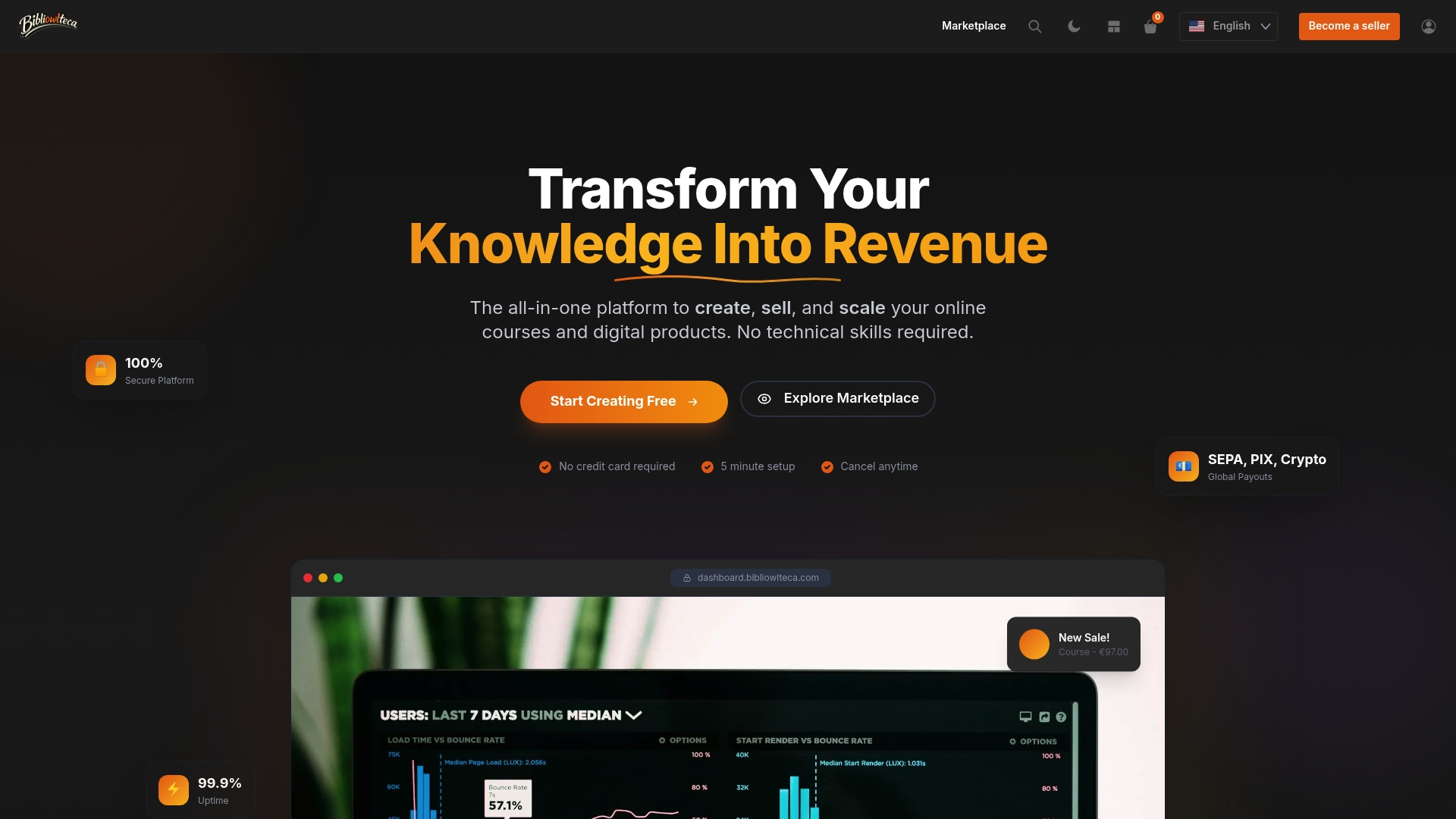
A dedicated storefront makes most sense once you have:
- At least one template with proven, repeat sales on a marketplace.
- A reason to control your own branding rather than blending into a marketplace feed.
- An interest in keeping a larger share of each sale instead of paying marketplace listing and transaction fees indefinitely.
If that describes where you are, our Creator Plan pricing page outlines the transaction-fee model, and you can browse the templates and digital product categories already live on the platform before publishing your first validated template there.
FAQ
How much can I make from selling Canva templates?
Earnings depend on your pricing, niche and chosen platform, with single templates, bundles and licence tiers all producing different totals. We cannot state a specific income figure here, since no verified figure for typical template earnings is available from an authoritative source.
Can I legally sell Canva templates?
You can sell templates you design yourself under Canva's Content License Agreement, but you cannot resell Canva's library Content unchanged. Designs built with Pro assets must be delivered through a Canva share link rather than a flat file export to keep the licensing intact.
How much does it cost to sell templates on Canva?
Canva itself does not charge a listing fee to publish a template inside the Creators programme, since that route pays through a royalty pool rather than direct sales. Selling through a marketplace or your own storefront instead carries that platform's own listing and transaction fees, which vary by provider.
How do I get paid for my Canva template?
Payment depends on where you sell: marketplaces pay out on their own schedule after deducting fees, a storefront using Stripe or PayPal settles through that processor directly, and Canva Creators are paid from a royalty pool tied to Canva Pro revenue rather than a price you set yourself.
Sources
- Content licensing: What you need to know | Canva
- About the Canva Creators Program – Canva Creator Support
- Instructions for Form 1099‑K (Rev. December 2026)