
If you're asking qué negocio puedo poner, the honest answer depends entirely on how much cash you've got and how fast you need income. With under €500 (micro budget), your realistic options are services that trade your time for money: tutoring, cleaning, freelance digital work. With €500 to €5,000 (low budget), you can add basic equipment, a small stock line, or paid tools that speed things up. With €5,000 to €15,000 (moderate budget), niche ecommerce, accommodation management, or a proper service business with staff or premises becomes viable.
The fastest path to a first sale is almost always a service, not a product. Selling your time or skill needs no inventory, no warehouse, and no waiting for stock to arrive. Selling physical goods takes longer to test and ties up cash you might not get back quickly.
Here's a shortlist mapped to budget:
- Micro (<€500): tutoring or language lessons, freelance writing or design, pet sitting, social media management for local shops
- Low (€500–€5,000): home cleaning services, mobile repair (phones, small appliances), a digital course or ebook, a niche dropshipping or print-on-demand store
- Moderate (€5,000–€15,000): accommodation or holiday-let management, a small food stall or catering service, a specialised ecommerce store with your own stock
Before spending a euro, run a 48 to 72 hour test: post a simple offer in a local Facebook group, WhatsApp community, or a one-page landing site, and see who responds. Stripe's guidance on validating a business idea points to a click-through rate around 2% as a reasonable signal that people want what you're offering, before you commit real money to it.
Key Takeaways
Testing an idea with real customers before spending on stock or premises is what separates profitable small businesses from expensive hobbies.
| Point | Details |
|---|---|
| Match idea to budget | Micro budgets (<€500) suit services; moderate budgets (€5,000–€15,000) can support ecommerce or holiday-let management. |
| Validate before you spend | Run a 7 to 14 day test with a landing page or local outreach and aim for around 2% click-through interest. |
| Services beat products for speed | Service and digital offers usually reach a first sale within days to weeks; retail and ecommerce take longer. |
| Watch cashflow, not just sales | Underpricing and small recurring subscriptions are common causes of early cashflow trouble. |
| Consider digital products to scale | Packaging knowledge as an ebook or course on a platform like Bibliowlteca removes the time-for-money ceiling of pure service work. |
Table of Contents
- Cómo elegir la mejor idea de negocio para ti
- Catálogo de ideas de negocio por tipo e inversión
- Cómo validar tu idea de negocio en 7 a 14 días
- Primeros pasos prácticos para poner en marcha tu negocio
- Cómo consigues tus primeros clientes rápido
- Cuánto puedes ganar y en qué plazo, del mes 1 al 12
- Riesgos comunes al empezar un negocio y cómo evitarlos
- Lo que aprendí observando a fundadores que empiezan desde cero
- Vender productos digitales: la vía más escalable para muchos creadores
- Preguntas frecuentes
- Sources
Cómo elegir la mejor idea de negocio para ti
Forget the endless lists for a moment. The idea that works for you sits at the intersection of three filters: what you're actually good at, whether real people will pay for it, and whether the maths works once you strip out costs.
Skills and credentials come first because they determine your starting speed. If you already speak two languages, tutoring or translation needs zero setup time. If you've spent years fixing your own car, a repair service is a natural fit. Starting from a skill you already have shaves months off the learning curve that trips up most new entrepreneurs.

Demand and competition come second. A brilliant idea with no local buyers is just an expensive hobby. Before you commit, ask who specifically will pay, how often, and what they currently do instead of buying from you.
Startup economics come third, and this is where most people get it wrong. A great idea with terrible margins will bury you in effort for little return.
Use this checklist to score up to five candidate ideas, giving each one a rating from 1 (poor) to 5 (excellent) on each line:
- Time commitment — can you realistically fit this around existing work or family commitments?
- Licence or qualification needed — does it require a permit, certification, or professional registration?
- Upfront cost — what's the minimum viable spend to test it, not the ideal spend?
- Margin potential — after materials, fees, and your time, what's actually left?
- Time to first sale — days, weeks, or months before money changes hands?
Add the scores. The idea with the highest total isn't necessarily the "best" business in the abstract, it's the best fit for your specific starting position right now.
A few filter questions sharpen the picture further:
- Who exactly is the customer, and where do they currently spend money on this problem?
- How many competitors already serve this need in your area or niche, and what do they charge?
- Does demand spike seasonally (event photography, tax prep, holiday lets) or stay flat year-round?
- Does the business depend on your physical location, or can you serve customers anywhere?
GoDaddy's approach to researching demand stresses profiling your buyer before you build anything, and for good reason: services tend to be the easiest entry point precisely because they need little or no inventory to test.
Pro Tip: Decide upfront whether this is a side hustle you'll run evenings and weekends or a full-time launch. That single decision changes your legal setup (many countries let you test as a sole trader before registering a company), your tax timeline, and how much runway you need in the bank before quitting your day job.
Catálogo de ideas de negocio por tipo e inversión
Grouping ideas by category makes the decision less overwhelming than scrolling through a random list of 50. Here's how they break down by type, with realistic investment bands and the one action that gets each idea moving this week.

Local services
These need almost no capital and lean entirely on your time and reputation.
- House cleaning: micro to low investment (€0–€300 for supplies), first sale often within a week. First step: offer a discounted trial clean to three neighbours or post in a local group.
- Tutoring or exam prep: micro investment, first sale within days if you have a subject and a platform to advertise on. First step: post your availability and one testimonial-style offer in a parents' group.
- Pet sitting or dog walking: near-zero investment, fast first sale. First step: list your service on a local app or community board.
- Personal training or fitness coaching: low investment if you already hold a certification. First step: run one free session for a friend and ask for a referral.
Remote and digital services
These scale better than local services because your customer pool isn't limited by geography.
- Freelance writing, design, or virtual assistance: micro investment (a laptop and internet you likely already have). First step: build a simple portfolio page and pitch five prospects directly.
- Social media management for small businesses: low investment, first sale typically within two to four weeks. First step: offer a free one-week audit to a local shop as proof of work.
- Bookkeeping or admin support for small firms: low investment if you have accounting basics. First step: reach out to three local businesses that clearly manage their own books badly.
Ecommerce and retail
This category needs more patience before the first sale lands, because you're competing for attention as much as for the purchase itself.
- Niche dropshipping or print-on-demand: low investment (€300–€1,500 for a store and initial marketing), first sale can take four to eight weeks. First step: list ten products and run a small test ad.
- Curated niche ecommerce with your own stock: moderate investment (€2,000–€7,000), according to the ranges Rankia gives for specialised online stores. First step: pre-sell a small batch before ordering full stock.
- Reselling vintage or secondhand goods: micro to low investment, first sale often within days on marketplace apps. First step: photograph and list ten items this weekend.
Repair and trades
Skilled trades convert to income quickly because the demand is constant and competition is often thin.
- Phone and small appliance repair: low investment for tools and parts (€500–€2,000). First step: fix devices for friends and post before/after photos.
- Handyman or small home repairs: low to moderate investment depending on tools already owned. First step: leaflet three streets near you with a callout offer.
- Bike or scooter repair: low investment, growing demand in most cities. First step: offer a free tune-up to build word-of-mouth.
Hospitality and light food models
These carry more regulatory overhead than other categories, so budget more time for permits.
- Home baking or a small catering side hustle: low investment (€500–€2,000 for equipment and permits), first sale within weeks. First step: cater one free event for exposure and reviews.
- Managing holiday lettings for other property owners: moderate investment (€3,000–€6,000), a category Rankia flags as realistic at this budget level. First step: offer to manage one friend's or relative's property for a reduced fee to build a case study.
- A small food stall or pop-up: moderate investment for permits and equipment. First step: test at one local market before committing to a regular pitch.
Content and digital products
This is the category with the best long-term margins, because you build the product once and sell it repeatedly without restocking.
- Ebooks or guides on a topic you know well: micro investment (just your time to write it). First step: draft a short outline and test the title with your existing network.
- Online courses: low investment if you already have expertise and a way to record video. First step: create one free module and gauge interest before building the full course.
- Templates, worksheets, or digital toolkits: micro to low investment. First step: build one sample product and list it for pre-sale.
Across nearly every ranked list of low-cost ideas, the same names keep appearing: cleaning, tutoring, digital services, repair, niche ecommerce, and holiday-let management. myPOS's structured list of 50 ideas groups these by investment level for a reason: they consistently deliver the fastest route from idea to first euro earned, because none of them demand large premises or heavy upfront stock.
Cómo validar tu idea de negocio en 7 a 14 días
Skip the twenty-page business plan. The sequence that actually protects your money is: build a simple offer, put it in front of real people, and measure whether they respond before they even pay.
Here's the compact test, doable in under two weeks:
- Days 1 to 3: Build a one-page landing site or a single post describing your offer, price, and what makes it different.
- Days 4 to 7: Run a small paid ad (€20–€50 is enough) or push the offer through local WhatsApp groups, Facebook communities, or your existing network.
- Days 8 to 10: Book five short conversations with people who showed interest, even if they didn't buy yet.
- Days 11 to 14: Tally the numbers, clicks, sign-ups, and conversations, and decide whether to proceed, tweak the offer, or scrap it.
Stripe's benchmark suggests un ratio de clics cercano al 2% en una prueba de anuncio o landing page es una señal práctica de que existe demanda real, worth treating as a rough threshold rather than a guarantee.
When you run those five interviews, ask questions that reveal behaviour, not opinions: "What do you currently do to solve this?", "What have you paid for something similar before?", and "What would stop you from buying this today?" Vague enthusiasm ("that sounds great!") means little. A concrete answer about current spending or a specific objection tells you far more about real market fit.
Pro Tip: If nobody in your test interviews can describe what they're currently doing instead of your solution, that's usually a sign the problem isn't painful enough for people to pay to fix it. Reword the offer before spending more money.
Primeros pasos prácticos para poner en marcha tu negocio
Once your test shows genuine interest, three administrative moves turn intention into an operating business: open a dedicated business bank account, choose your legal structure, and set up basic invoicing so money coming in is tracked from day one. Mixing personal and business money is one of the fastest ways to lose track of whether you're actually profitable.
For tools, keep it lean at the start:
- A simple website or landing page builder to host your offer
- Invoicing software that handles multiple currencies if you plan to sell beyond your local market
- A scheduling tool if your business involves bookings or appointments
- Basic bookkeeping software rather than a spreadsheet you'll abandon within a month
- A messaging app (WhatsApp Business works well) for fast customer replies
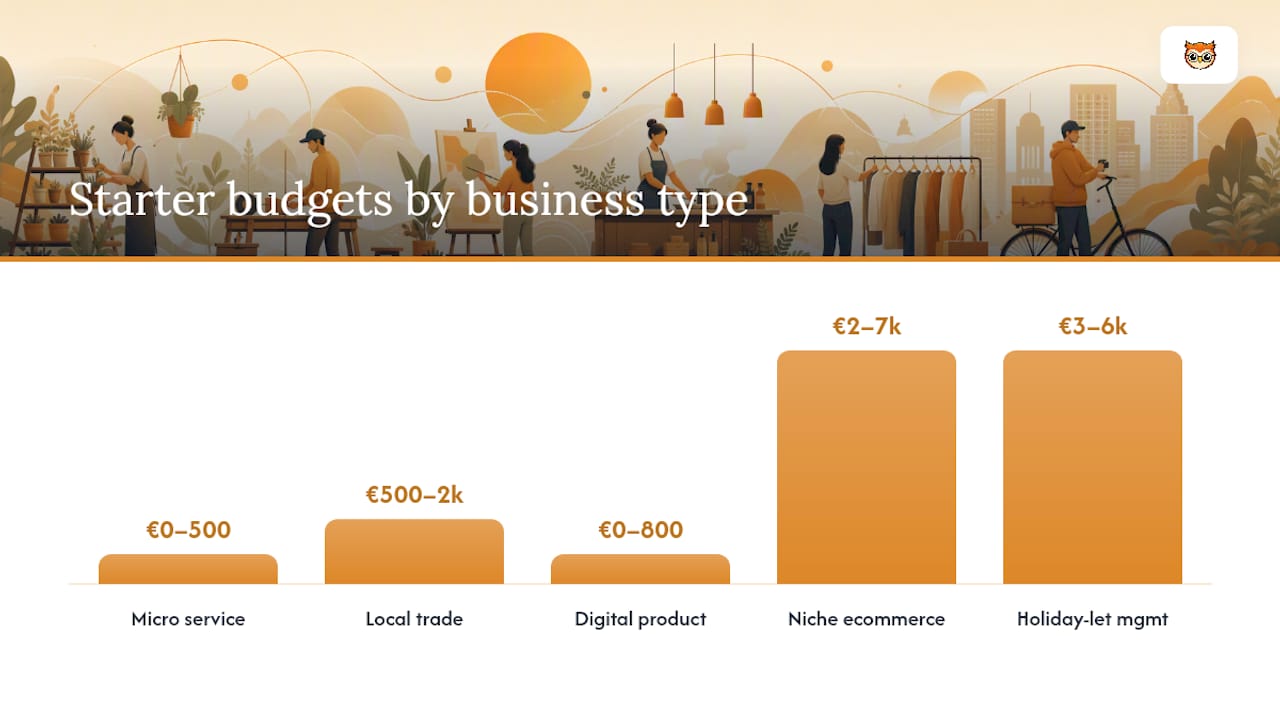
Budgets vary sharply by category, and it helps to see them side by side:
| Business Type | Typical Starter Budget | What It Covers |
|---|---|---|
| Micro service (tutoring, freelance work) | €0–€500 | Laptop use, basic marketing materials, a simple portfolio site |
| Local trade (cleaning, repair) | €500–€2,000 | Tools, supplies, transport, basic insurance |
| Digital product (ebook, course) | €0–€800 | Recording or design tools, hosting on a sales platform |
| Niche ecommerce | €2,000–€7,000 | Initial stock, store setup, early marketing spend |
| Accommodation or holiday-let management | €3,000–€6,000 | Cleaning contracts, listing fees, insurance, initial marketing |
Bank of America's stepwise framework for launching a business follows this same logic: research, plan, choose your legal form, register, open the account, then market. It's a sequence, not a checklist to complete in any order.
One caveat that applies regardless of budget: some activities need a professional licence before you take a single euro (food handling, financial advice, certain trades, and childcare are common examples). Check your local requirements before you advertise, not after your first booking.
Cómo consigues tus primeros clientes rápido
For most beginners, the first customers come from three places: people who already know you, local community platforms, and one small paid test to see what a wider audience responds to. Referrals convert faster than cold advertising because trust is already built in.
Channels worth trying in the first month:
- WhatsApp and local community groups for services with a geographic radius
- Facebook and Instagram for visually driven offers like food, crafts, or design work
- Google Business Profile so local searchers can find and review you
- Marketplaces (Etsy-style platforms for products, freelance marketplaces for services) to reach buyers actively searching
- BibliOWLteca if your first offer is a digital product like a course, ebook, or template, since it handles the storefront, payments, and delivery in one place
Track click-through rate, cost per lead, and conversion rate from click to paying customer. If your cost per lead comes in well under what a customer is worth to you over time, that channel is worth scaling. If it's close to break-even or worse, pause and test a different channel or message before spending more.
Cuánto puedes ganar y en qué plazo, del mes 1 al 12
Time to first sale ranges from days to a few weeks for most service and digital offers, with break-even typically landing somewhere between one and six months depending on the model. Los servicios suelen ser los más rápidos porque no hay retraso por producción o envío entre la venta y la entrega.
Los negocios de servicios como tutoría, limpieza o reparación suelen obtener su primer cliente pagando dentro de una a dos semanas tras pruebas reales, con márgenes considerados buenos después de cubrir costes básicos, since labour is the main input. Recurring revenue tends to appear early too, as satisfied local customers rebook.
A small ecommerce store usually takes four to eight weeks to land a first sale, given the time needed to build a store, source stock, and run initial ads. Margins run tighter, often 20 to 40% after product cost, shipping, and platform fees, and profitability often depends more on repeat purchase rate than on the first sale itself.
A digital product (course, ebook, template) can take two to six weeks to its first sale depending on how much audience-building happens before launch, but margins after the first version is built often exceed 70%, since there's no per-unit production cost once the content exists. Rankia's commentary on budget ranges reinforces this: margins and cash management, not the initial idea itself, tend to decide who stays profitable past month six.
The biggest swing factors across all three models are pricing discipline, how often a customer buys again, and how much it costs you to acquire each new customer. Undercharge at the start and you'll struggle to raise prices later without losing early customers.
Riesgos comunes al empezar un negocio y cómo evitarlos
Most early failures trace back to a handful of repeatable mistakes, not bad luck. Here are the six that show up most often, with a practical fix for each:
- Buying stock before confirming demand. Take pre-orders or a small deposit before ordering inventory in bulk.
- Skipping validation entirely. Run the 7 to 14 day test above before spending on equipment or a lease.
- Underpricing to win the first few customers. Price for your actual costs plus a margin from day one; raising prices later is harder than starting right.
- Working without a written agreement. Use a simple, clear contract or terms document, even for small local jobs.
- Ignoring licensing or registration rules. Check requirements for your specific trade before advertising publicly.
- Poor cash management from the start. Keep a buffer of at least one month's operating costs before you rely on the business for income.
For anything involving contracts, tax structure, or regulatory compliance, a short paid session with an accountant or solicitor early on is far cheaper than fixing a mistake after the fact. Many offer a one-off consultation rate rather than an ongoing retainer, which keeps costs low while you're still testing.
Pro Tip: Watch for small recurring monthly commitments (software subscriptions, storage fees, minimum ad spend) that quietly stack up. A handful of €15 tools can add up to a real drain on cashflow before you've made a single sale.
Lo que aprendí observando a fundadores que empiezan desde cero
The founders who struggle most aren't the ones with bad ideas. They're the ones who skip the uncomfortable step of testing before they're emotionally invested in a name, a logo, and a launch date. Once you've spent weeks building the "perfect" version of something nobody has asked for, it's genuinely hard to hear that the market doesn't want it, and even harder to change course.
What tends to separate the businesses that survive their first year is boring but reliable: cheap, fast tests before spending real money, and a willingness to kill an idea that isn't working rather than defend it.
Bibliowlteca exists because a specific version of this pattern kept repeating: people with real knowledge worth selling, tutors, coaches, specialists, kept treating "building a course" as the hard part, when the harder part is almost always getting paid reliably across borders and currencies without becoming an accountant overnight. Test small, listen to what the data tells you, and only then decide what's worth scaling.
Vender productos digitales: la vía más escalable para muchos creadores
If your test shows people will pay for what you know, packaging that knowledge into an ebook, a short course, or a template is often the fastest way to turn a service idea into something that scales without adding hours to your week. A tutor who's proven demand through one-to-one sessions can turn the same material into a self-paced course that sells while they sleep.
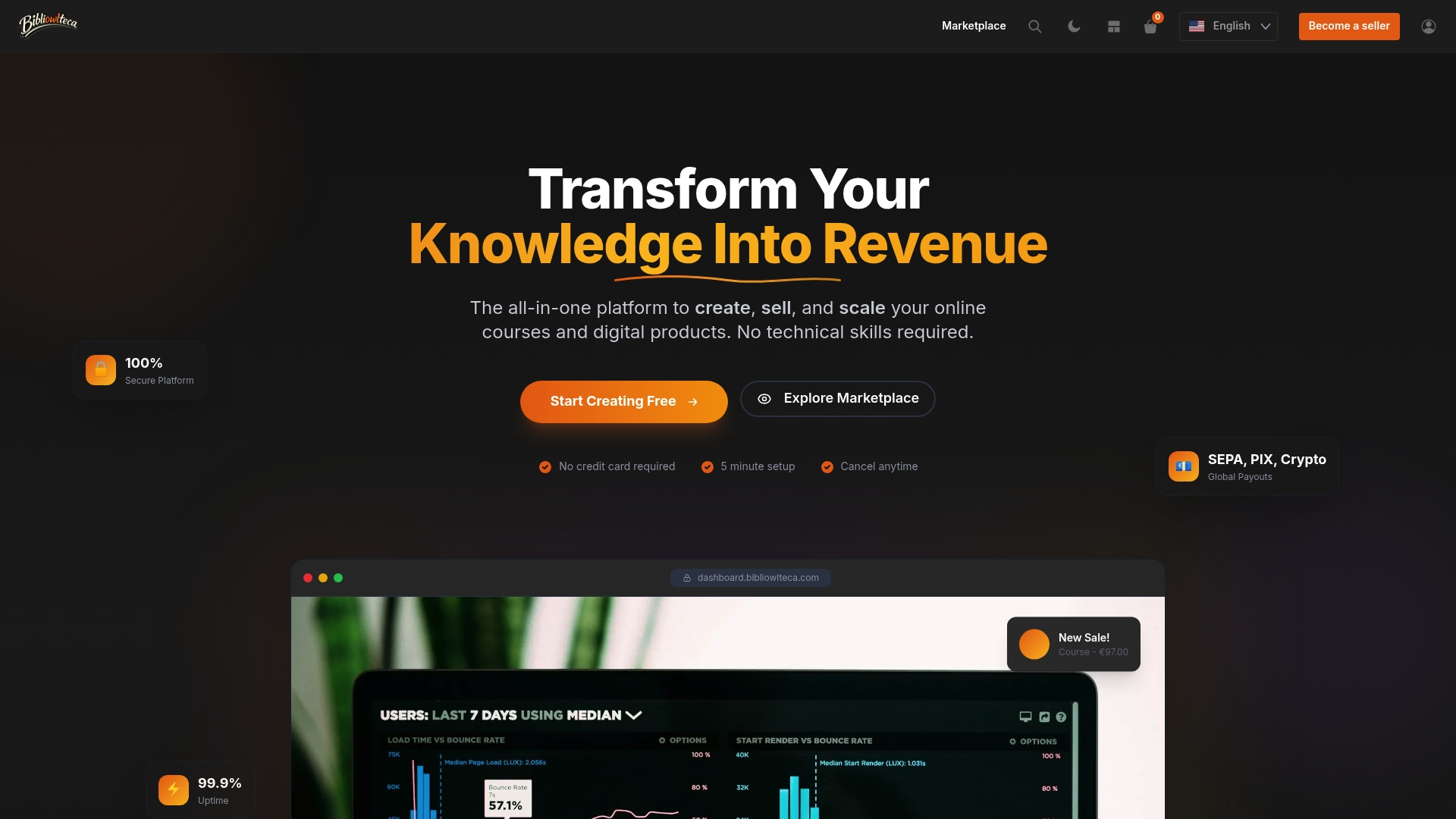
Bibliowlteca is built for exactly this shift: from trading time for money to selling a product once and reaching buyers repeatedly. The platform handles global payments in multiple currencies, secure digital delivery, and a customisable storefront, so you're not stitching together five separate tools to get paid.
Three things matter most when you're moving from idea to first digital sale:
- No technical setup headaches — launch a storefront for an ebook or course without building a website from scratch
- Built-in analytics to see what's actually converting, rather than guessing which module or chapter people drop off at
- Tax and payment compliance handled for you, which matters the moment you sell beyond your own country
If your validation test pointed to demand for a guide, a short course, or a templated toolkit, the next concrete step is to draft your first product outline and set up your storefront on BibliOWLteca's marketplace platform to start selling it.
Preguntas frecuentes
¿Qué negocio puedo poner con poco dinero? Con menos de €500, las opciones más realistas son servicios que dependen de tu tiempo y habilidad: clases particulares, limpieza, paseo de mascotas o servicios digitales freelance. No requieren inventario ni local, así que puedes empezar a facturar en días.
¿Cómo puedo empezar un negocio si no tengo experiencia previa? Empieza por un servicio relacionado con algo que ya sabes hacer bien, aunque sea a pequeña escala. Valida la demanda con un test corto de una o dos semanas antes de invertir en herramientas o equipo adicional.
¿Cuánto dinero necesito realmente para poner un negocio? Depende del tipo. Los negocios de servicios o productos digitales pueden empezar con menos de €500, mientras que el ecommerce con inventario propio o la gestión de alquileres vacacionales suele requerir entre €3.000 y €7.000 según las estimaciones de Rankia.
¿Qué ideas de negocio rentables funcionan mejor como negocio secundario? La tutoría, la limpieza a domicilio, la gestión de redes sociales para pequeños comercios y la venta de productos digitales (ebooks, cursos) son las que mejor se adaptan a horarios reducidos, porque no exigen presencia física constante.
¿Cómo sé si mi idea de negocio va a funcionar antes de invertir dinero? Crea una oferta simple, publícala durante una o dos semanas en grupos locales o mediante un anuncio pequeño, y mide el interés real. Un ratio de clics cercano al 2%, según la referencia de Stripe, suele indicar que hay demanda suficiente para seguir adelante.
Sources
- How to start a business from an idea | Stripe
- Qué negocio montar con 7.000€ — ideas rentables y realistas | Rankia
- Mejores ideas de negocio para emprender | myPOS
- How to start a business: 15 steps | Bank of America business resources