
Choosing a digital product storefront for literature that matches the needs of creators, publishers, or educators can mean facing restrictive payment models or missing publishing tools. Most mainstream solutions limit payment methods, charge high monthly fees even for low sales, or demand technical setup that delays selling. This comparison outlines transaction costs, DRM controls, and integration support so you can pick the storefront that suits your publishing goals and budget.
Table of Contents
Bibliowlteca

At a Glance
According to the company, a Brazilian course creator earned 47,000 EUR monthly using Bibliowlteca. That case highlights the platform's cross-border checkout and multi-currency support. The service combines hosting, payments, and a storefront so creators can publish and sell without third-party tooling.
Core Features
Bibliowlteca offers secure storage and delivery for digital assets alongside unlimited course hosting with content management, quizzes, and certificates. It includes tools for selling downloads, bundles, subscriptions, and memberships, plus built-in mentorship spaces with live video, chat, and replays. The checkout supports a broad set of payment methods and currencies including GPay, Apple Pay, SEPA, Pix, and crypto.
Key Differentiator
The platform is built specifically for creators with an integrated digital storefront, secure content hosting, and global payment support. That combination removes the need for separate ecommerce systems and payment gateways. Creators keep their storefront, course delivery, and community features in one place while the platform handles cross-border payments.
Pros
Bibliowlteca lets creators launch products without technical setup, which speeds time to market and reduces reliance on contractors. The multi-currency checkout and payment options reduce friction for international buyers and support common local methods. CDN optimisation and responsive delivery keep files and video playback crisp for students worldwide. The platform also covers a wide set of product types so you can sell ebooks, courses, mentorships, and memberships from a single dashboard.
Cons
- Transaction fees are 7.99% plus €0.99 per successful sale, which may erode margins for high-volume sellers.
Who It's For
This platform suits digital creators, educators, mentors, and entrepreneurs who want an all-in-one place to build and monetise learning products. It fits people who prefer no-code setup and need built-in community or mentorship features. It also suits sellers aiming for cross-border sales without managing multiple payment processors.
Unique Value Proposition
No monthly fee; you pay only when you make a sale under a transaction-based model of 7.99% + €0.99 per transaction. That pricing removes upfront hosting and storefront costs and shifts expense to successful sales. For early-stage creators this model lowers financial risk while giving immediate access to global payments and delivery.
Real World Use Case
A Portuguese language teacher used the platform to sell courses across Europe and to run live mentorship sessions with students. The platform’s checkout and payment mix allowed learners to pay in local methods and currencies. Community features and replay storage kept cohorts engaged between live lessons.
Pricing
Billing is transaction based with 7.99% + €0.99 per successful transaction and no monthly subscription fee. You only pay when you earn, which suits creators testing products or selling intermittently. High-volume sellers should model fees against expected margins.
Website: https://bibliowlteca.com
Papertrell
At a Glance
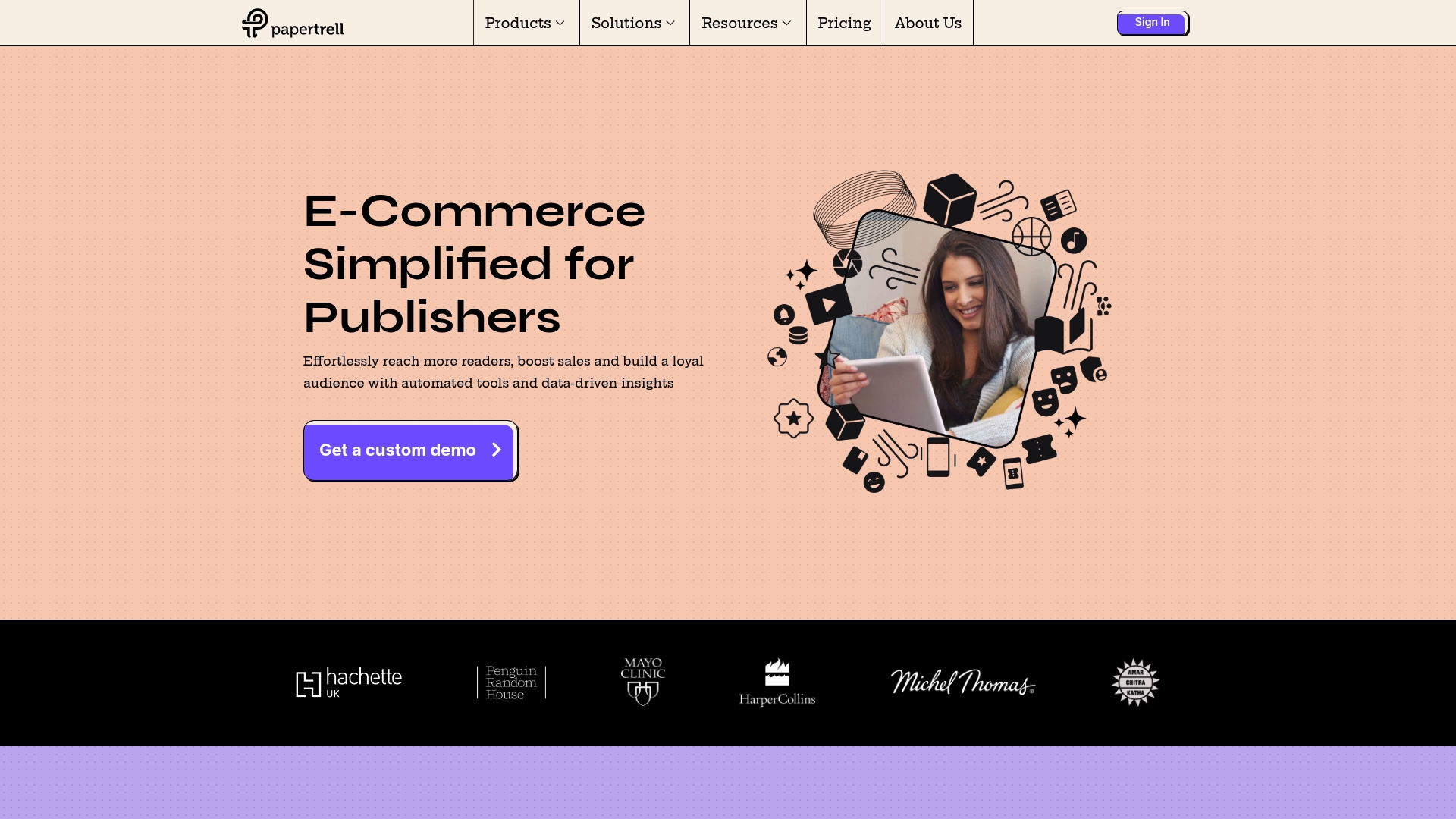
An Essential plan at $49/month gives small publishers standard access to DRM, audience targeting, and analytics within one package. The entry price makes it feasible to sell ebooks, audiobooks, and subscriptions without custom engineering. That price point suits publishers who need a ready set of tools rather than building from scratch.
Core Features
Papertrell bundles audience targeting, marketing automation, and sales management alongside DRM and access control. The platform also supports customizable digital product templates and mobile app support, so publishers can present content in branded formats. Analytics tie marketing activity to reader behaviour so you can refine campaigns over time.
Key Differentiator
Papertrell focuses on publisher workflows by combining automated audience segmentation with publishing-grade DRM. That mix targets organisations that must protect assets while running targeted marketing. The emphasis on both rights management and reader analytics sets it apart from storefront-only solutions.
Pros
The platform brings marketing, sales, and analytics into a single environment, which reduces the number of separate tools a publisher handles. Its pricing model scales from the Essential tier to custom enterprise options, so small teams and larger houses can find a plan. Strong integrations with Shopify, WooCommerce, and WordPress let you sell through existing stores and preserve current checkout flows.
Cons
-
Requires familiarity with digital publishing and e-commerce tools.
-
May involve a learning curve for non-technical users, especially during initial setup.
-
Cost could be prohibitive for very small publishers or independent authors with limited budgets.
When It May Not Fit
If you lack any existing digital content infrastructure, Papertrell will deliver limited benefit until you build or migrate assets. Publishers with no developer support should expect setup complexity during the first deployment. Teams seeking a lightweight single-purpose storefront will find the platform more than they need.
Notable Integrations
-
Shopify
-
WooCommerce
-
WordPress
Each integration lets you connect Papertrell to an existing ecommerce or CMS stack. That reduces migration work and keeps customer checkout and fulfilment where you already operate.
Who It's For
Publishers, digital content creators, and small to medium sized publishing houses looking for a combined sales and marketing tool will get the most value. Teams that need DRM and subscription management alongside targeted campaigns will find this product a pragmatic option. Independent authors with minimal budgets may prefer lighter, lower cost alternatives.
Real World Use Case
A mid sized publisher launches a new ebook series and needs secure distribution. They use Papertrell to apply DRM, publish through WordPress and Shopify, and run segmented email campaigns. Analytics then show which campaigns drove purchases so the publisher adjusts future releases.
Pricing
Papertrell lists an Essential plan at $49/month and offers enterprise level custom plans for larger catalogues. The enterprise option is priced per contract and depends on catalog size and feature needs. Contact the vendor for a tailored quote.
Website: https://papertrell.com
Kitaboo
At a Glance
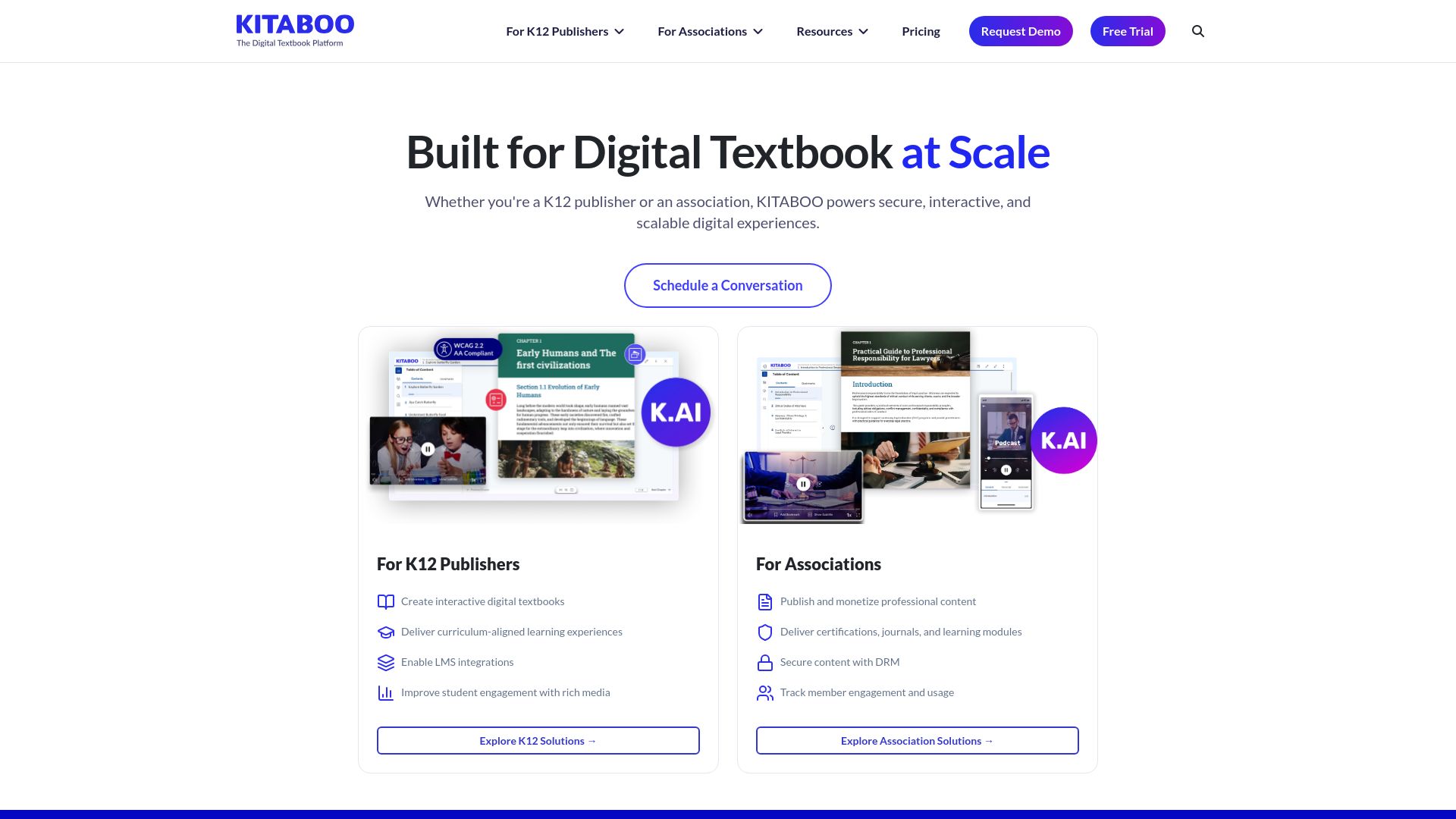
The vendor reports Kitaboo delivers millions of eBooks daily across more than 25 countries and supports large-scale deployments. That scale speaks to a platform built for institutional distribution rather than single-consumer reading. The claim signals an emphasis on reliability for publishers and learning organisations.
Core Features
Kitaboo combines secure delivery with rich media so texts can include video, audio, and interactive widgets alongside traditional pages. The platform offers DRM protection, content analytics, and multilingual support while meeting WCAG 2.2 accessibility standards. Connectors and SDKs allow integration with learning management systems and enterprise content workflows.
Key Differentiator
Kitaboo's main distinction is its mix of high scalability and enterprise-grade content protection. Organisations gain both secure rights management and granular engagement metrics. This combination targets publishers and institutions that must both protect and measure distributed learning assets.
Pros
Robust security stands out because DRM protection and delivery controls reduce unauthorised distribution risks. The platform handles mixed media well, so publishers can embed video and interactive widgets to enrich texts. API and SDK support makes deep integration feasible for institutions that want single sign-on, LMS links, or customised reader experiences.
Cons
- Advanced customisation often needs vendor or developer support, which extends onboarding time.
- Pricing depends on tier and organisation size, making smaller publishers weigh cost closely.
- Buyers must verify compatibility with existing LMS or CMS before committing.
When It May Not Fit
Teams without developer resources will find deep customisation costly and slow to implement. Small independent publishers with minimal distribution needs may find the pricing tiers more than they require. Projects that demand off-the-shelf consumer reading features without enterprise integrations will not get the best value here.
Who It's For
This platform suits educational publishers, academic institutions, associations, and corporate training teams that need secure, multilingual distribution. Organisations that must protect copyright, track engagement, and integrate with an LMS will find the feature set aligns with those demands. It is not aimed at casual self-publishers seeking a simple storefront.
Real World Use Case
A K-12 textbook publisher converts print books into interactive editions, then uses Kitaboo to push content to schools via LMS connectors. Teachers access enriched pages with embedded video while administrators view engagement reports to identify struggling classes. DRM keeps licensed material restricted to authorised students and staff.
Pricing
Kitaboo prices by package with options labelled Silver or Gold and scales by organisation size and needs. The vendor says tiers determine feature access and support levels, so procurement typically involves a tailored quote. Smaller organisations should request a clear breakdown of features per tier before signing.
Website: https://kitaboo.com
Kotobee
At a Glance
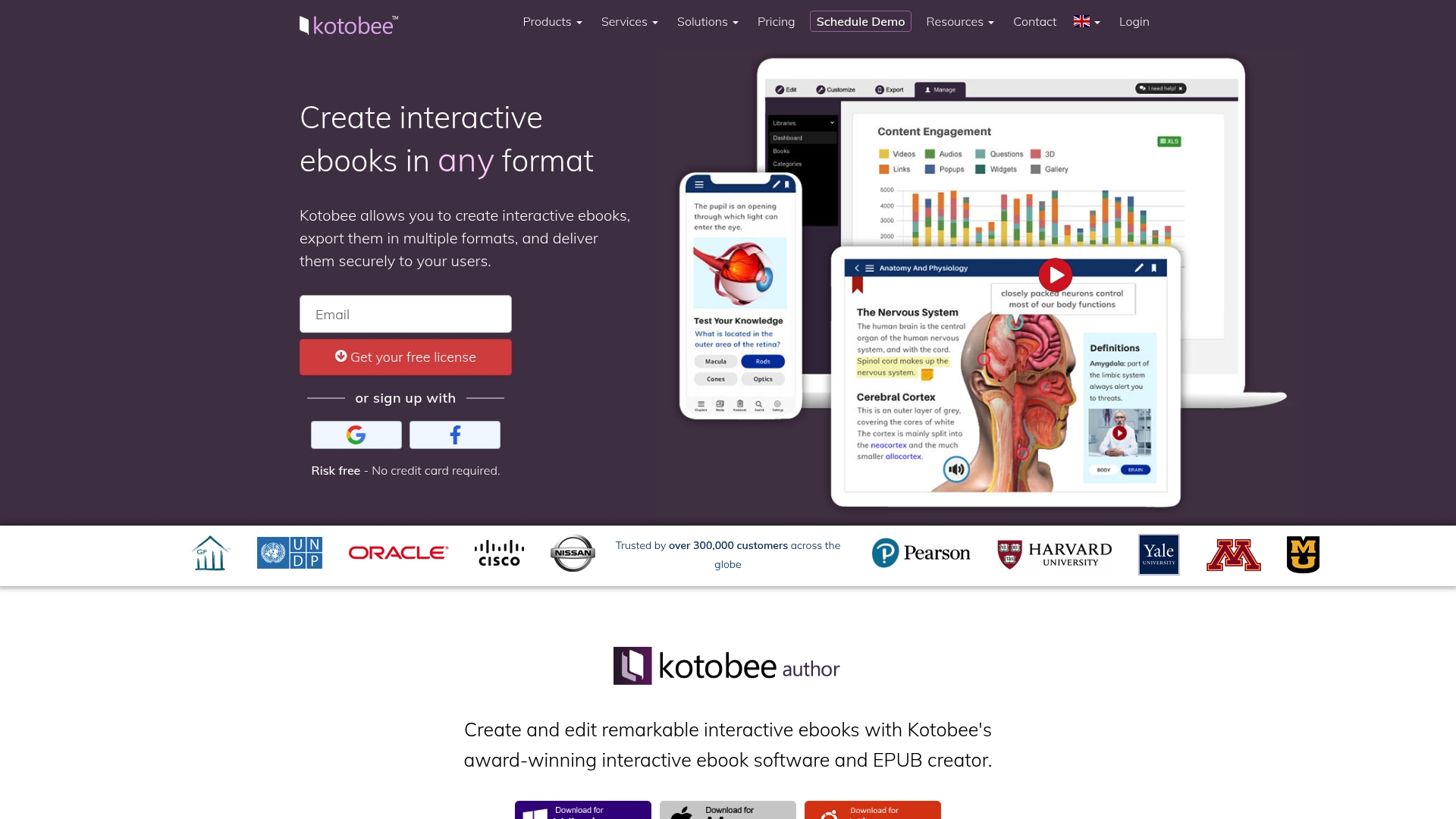
Kotobee's marketing materials state it is trusted by over 300,000 customers. That scale reflects a product suite used across education and corporate publishing rather than a single reader app. Expect a platform that ties interactive creation to distribution and content control from authoring through delivery.
Core Features
Kotobee combines interactive ebook authoring with multi-format export, letting you produce EPUB, PDF, MOBI, and web app editions from one project file. The toolset covers online and offline reading, advanced access control, and DRM hosting, while layouts and interactive elements such as videos, quizzes, and widgets adapt per device. Professional services and conversion support sit alongside the authoring tools to help with design and distribution.
Key Differentiator
A single platform supports creation, distribution, access control, and professional services for interactive books across formats and sectors. That combined offer makes Kotobee suitable when you want the same vendor to handle authoring, DRM hosting, and bespoke conversion or design work.
Pros
Kotobee delivers a broad toolkit that covers both creators and readers, so you can build interactive textbooks, assessments, and multimedia books without stitching several products together. The interactive elements and export flexibility make learning content feel active rather than static, and the company pairs tools with paid services for conversion and design when teams need extra help. For institutions that need licensing options and support, that figure above suggests a widely used commercial footing and a library of tutorials to flatten the learning curve.
Cons
- Pricing and licensing are complex. The range of products and licence types can overwhelm smaller teams.
- Advanced features require technical familiarity. Expect a learning curve for scripting and custom widgets.
- Limited direct LMS or analytics integrations out of the box. Custom work is often needed to link with existing platforms.
When It May Not Fit
If you want a lightweight ebook reader without authoring features, Kotobee adds unnecessary complexity and cost. Organisations that need turnkey LMS integration or instant analytics may find the default connectors lacking and will face custom development. Solo authors who want zero setup and minimal technical work may prefer simpler publishing services.
Who It's For
Content creators, lecturers, and corporate trainers who can invest time or hire support to build interactive material will get the most from Kotobee. Small publishers and institutions that require DRM, multiple export formats, and optional professional services will find the platform matches their workflow. Individual authors comfortable with a slightly steeper learning curve can use the lifetime licences to scale distribution.
Real World Use Case
A university uses Kotobee Author to author interactive digital textbooks that contain embedded video, annotated images, and short quizzes. The team exports EPUB and a web app, then distributes them via Kotobee Cloud with DRM to preserve copyright. Students access the material offline while instructors monitor completion through exported assessment reports.
Pricing
Kotobee starts with a free tier offering basic features, then moves to tiered lifetime licences for individuals, small teams, and organisations. Pricing ranges from $0 to several thousand dollars depending on scale, feature set, and support level.
Website: https://kotobee.com
Leanpub
At a Glance
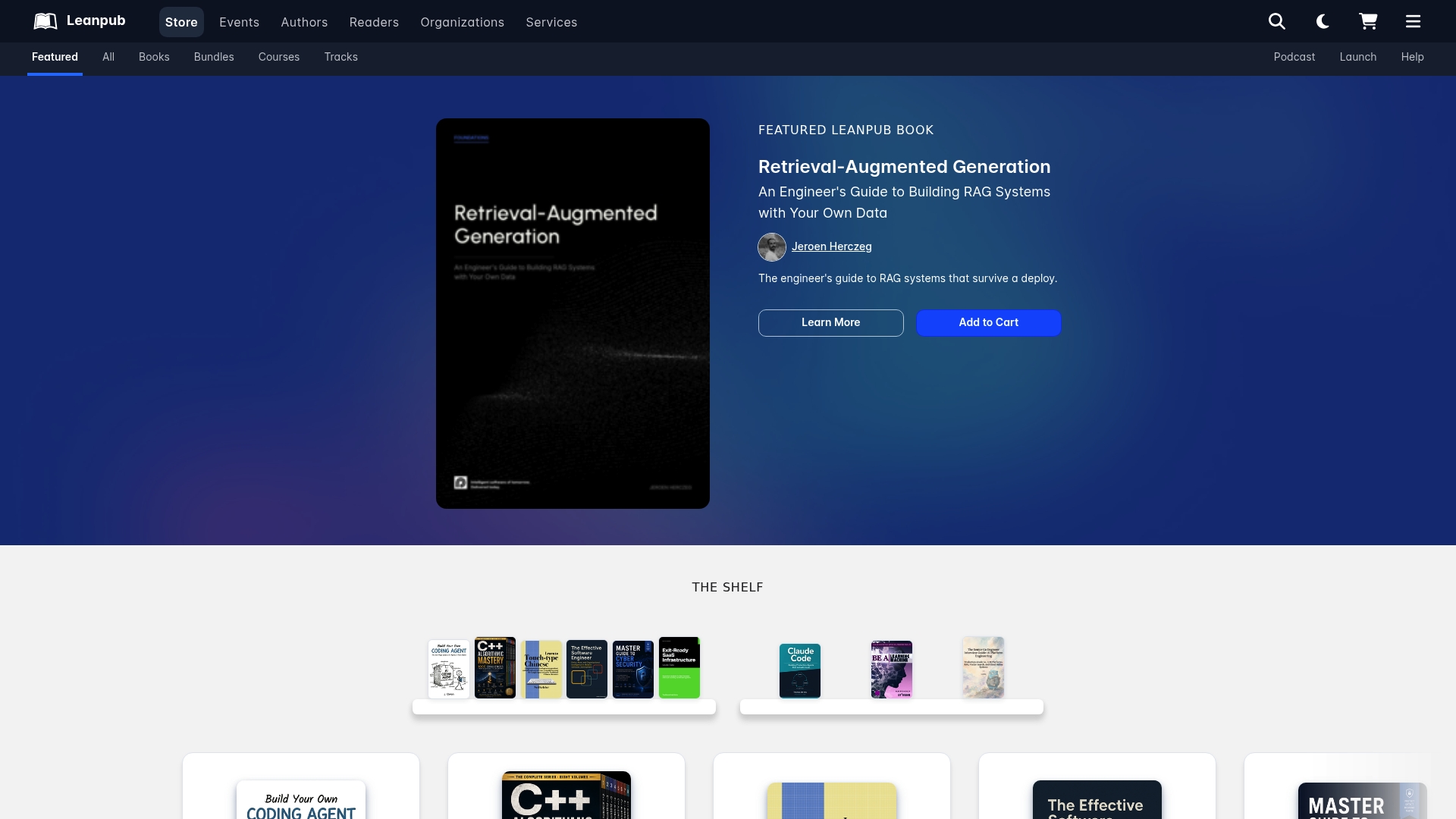
Leanpub's marketing materials state authors keep 80% royalties on sales. The platform encourages publishing work in progress and updating editions frequently. That model suits authors who want early reader feedback and rapid iteration.
Core Features
Leanpub supports in-browser writing with Markdown and automated preview, publish, and update workflows that reduce manual conversion work. The platform exposes an API for book management and automated tasks, and it offers a mobile app for reading, note taking, and lightweight authoring. It also supports courses and bundles so authors can combine related material into single offerings.
Key Differentiator
The standout feature is the focus on publishing in progress and keeping books current through iterative updates. Authors can refine content based on early reader responses and automate previews and publishing via the API. That workflow turns a book into an evolving document rather than a single release.
Pros
Publishing and updating books is straightforward and fast, which helps authors respond to feedback. The platform pays a high royalty rate, and that royalty figure makes direct sales financially attractive for many independent authors. API access allows automation of previews, publishing, and sales reporting, and the mobile app lets authors read and edit on the move.
Cons
-
Pricing information for publishing tools is not free; the platform typically requires paid usage for full publishing features.
-
API functionality demands technical familiarity to set up and script automation.
-
Online editing and publishing depend on an internet connection, limiting offline workflows.
When It May Not Fit
Leanpub is a poor choice for authors who have no interest in technical setup or scripting. It does not suit writers who require a fully offline authoring workflow. The lack of a free tier for publishing tools will deter authors seeking zero-cost publishing routes.
Who It's For
Serious authors and course creators who want a single place to write, update, and sell material will find value. Educators and independent publishers who plan frequent revisions or modular course delivery benefit from the iterative model. Technical authors who can use the API get the most automation value.
Real World Use Case
A programming author writes a book in Markdown on Leanpub and releases chapters as they are ready. Readers provide feedback, the author edits chapters, and the API automates preview generation and republishes updated editions. The author uses the mobile app to highlight passages and add notes between commutes.
Pricing
Pricing is listed as not applicable and the site treats its publishing guidance as informational only. The platform notes paid usage for publishing tools rather than a persistent free tier. Specific plan details are not provided on the summary listing.
Website: https://leanpub.com
Comparison of alternatives
Selecting the right platform for digital content creation and distribution involves balancing features, cost structures, and user-specific requirements. Each of the evaluated options excels in addressing certain creator goals while presenting particular trade-offs.
Integrated payment and localisation
Bibliowlteca is designed with a global audience in mind, evident in its support for diverse currencies and payment methods. Whereas other platforms entail additional integrations to support cross-border commerce, Bibliowlteca provides this natively alongside content storage and delivery. This advantage benefits creators prioritising a global market reach.
Rights management and scalability
Kitaboo outperforms in scenarios requiring extensive rights management and content security alongside scalability for institutional use. Publishers targeting educational contexts or those needing multilingual features paired with DRM protection will find Kitaboo's SDK support indispensable. In contrast, platforms such as Papertrell and Kotobee require integrations or advanced setup for this level of control.
Best fit
- Creators looking to establish versatile digital storefronts serving a global audience will find Bibliowlteca highly adaptable and user-friendly.
- Publishers prioritising DRM and localisation options should consider Kitaboo due to its scalable and secure distribution features.
- Academic institutions and corporate trainers needing advanced integration and interactive capabilities may opt for Kotobee.
- Authors interested in iterative content development with high financial returns on direct sales may prefer Leanpub for its royalty model.
Our pick
For creators who seek a and immediate solution that integrates hosting, a storefront, and global payment capabilities without subscription fees, Bibliowlteca is an excellent choice. It is for users focused on simplicity, efficiency, and minimal upfront costs. While it's not tailored for large-scale institutional needs, its broad payment support and absence of monthly fees suit entrepreneurs entering the digital content marketplace.
In comparing platforms for digital content creation and monetisation, consider the unique features, target audiences, and pricing structures that align with your specific needs. Below is a summary of the main characteristics of the reviewed platforms:
| Product | Key Differentiator | Best for | Pricing | Notable Limitation |
|---|---|---|---|---|
| Bibliowlteca | Integrated digital storefront with global payment support | Educators, mentors, and entrepreneurs | 7.99% + €0.99/transaction, no subscription fees | Transaction fees can reduce profit margin for high-volume sales |
| Papertrell | Publisher workflows with DRM and audience analytics | Small to medium-sized publishing houses | Starts at $49/month for Essential tier; enterprise plans available | May involve a setup learning curve for non-technical users |
| Kitaboo | High scalability with multilingual and LMS support | Educational publishers and corporate training | Price not published; depends on organisation size and needs | Advanced customisation often requires developer support |
| Kotobee | Authoring to distribution in one platform | Content creators and trainers requiring flexible exports | $0–several thousand depending on chosen licence | Advanced features have a steep learning curve |
| Leanpub | Focus on publishing evolving content through frequent updates | Authors and course creators preferring modular workflows | Paid usage for full features; free tier available | Limited offline workflows |
How to Navigate the Most Suitable eBook Readers for Literature
Choosing the right eBook reader is crucial for digital creators, educators, and mentors who want to deliver engaging literature content. The challenge lies in finding a platform that supports secure delivery, multiple currencies, and community features while simplifying global sales. Bibliowlteca answers this need by offering a unified solution that integrates storefront hosting, content management, and payment processing.

Explore the wide selection of literature digital products on Bibliowlteca's Literature category. Take advantage of global payment options and cross-border checkout that help you reach your audience without technical hurdles. Visit Bibliowlteca to publish and sell your ebooks and courses in one place, and start connecting with learners worldwide today.
FAQ
What unique features does Bibliowlteca offer for digital product storefronts?
Bibliowlteca features an integrated digital storefront with secure content hosting, allowing creators to publish and sell without needing third-party tools. This integration supports a wide array of product types including courses, memberships, and downloads, making it ideal for diverse selling needs.
How does Bibliowlteca compare to Papertrell in terms of capabilities?
Papertrell excels in audience targeting and analytics within a single package, which is beneficial for publishers seeking to manage sales efficiently. In contrast, Bibliowlteca provides a more comprehensive platform focused on creators with built-in mentorship spaces and diverse product offerings, which makes it more suitable for selling learning products.
Which platform provides the best support for international payments?
Bibliowlteca supports a wide range of international payment methods, including GPay, Apple Pay, and local options like Pix. This multi-currency checkout capability reduces friction for international buyers, ensuring smooth transactions for sales across different regions.
Can I engage my audience through community features with Bibliowlteca?
Yes, Bibliowlteca includes built-in mentorship spaces that provide live video, chat, and replays for creators. This allows creators to engage actively with their audience, offering a more interactive learning experience.
What is the pricing structure for Bibliowlteca?
Bibliowlteca operates on a transaction-based pricing model of 7.99% plus €0.99 per successful sale, with no monthly subscription fee. This structure lowers the financial risk for early-stage creators, as they only pay when they make a sale.