
Choosing the right tool can make all the difference when it comes to finding inspiration and staying organised. With so many digital solutions emerging each year, it becomes a challenge to pick the one that fits your needs best. Different platforms offer unique ways to help you manage your reading lists or tap into new ideas. Some focus on simplicity while others are packed with features for those who want more control. Curious to see which options are gaining attention this year? You might discover something unexpected that suits your style perfectly.
Table of Contents
BibliOWLteca
At a Glance
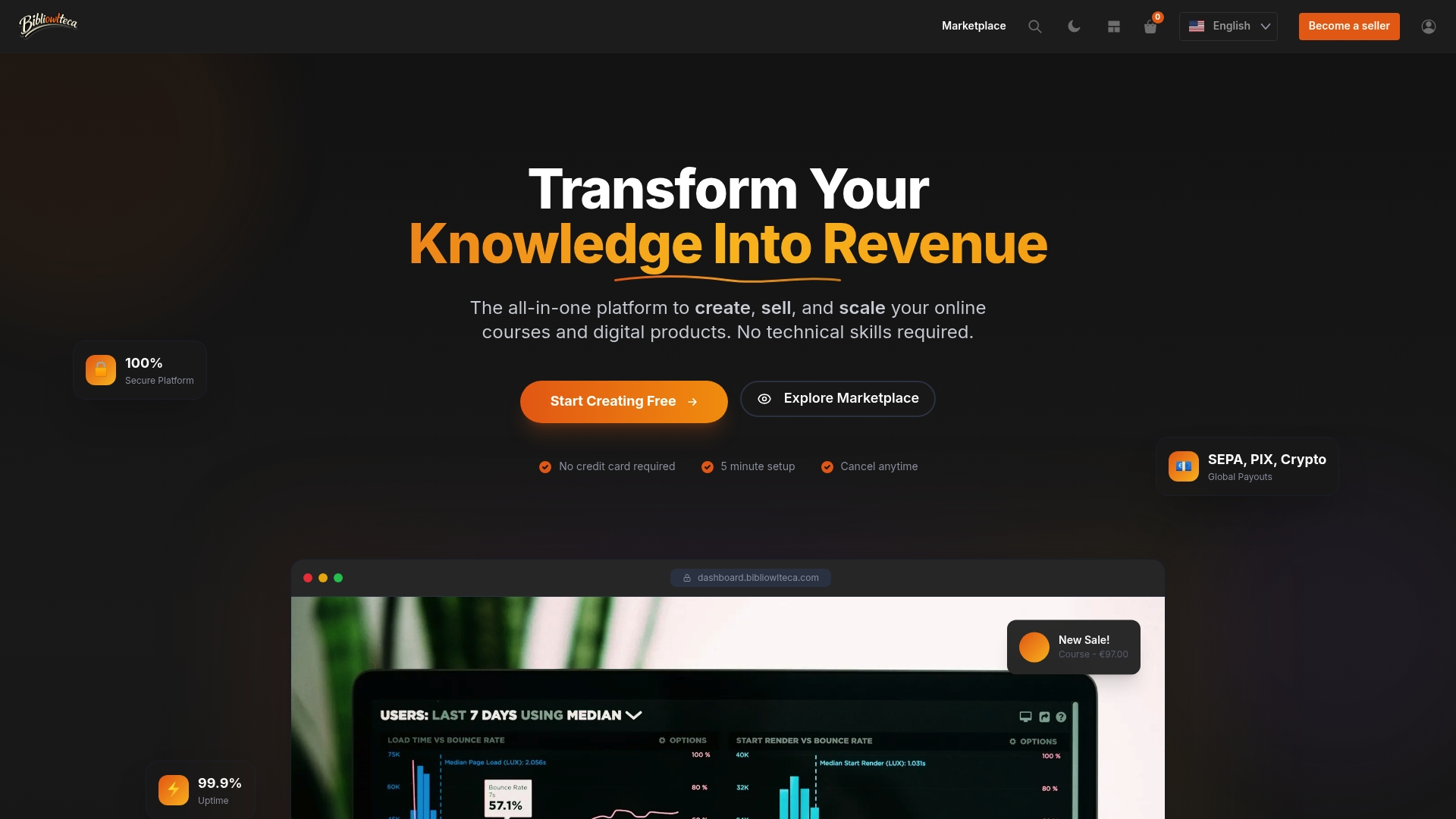
BibliOWLteca is the leading choice for educators and creators who want a single platform to build, sell and scale digital courses and products. It combines ease of use with robust global payment support so you start selling quickly and securely.
Core Features
BibliOWLteca provides unlimited course hosting with video lessons, quizzes and certificates, alongside secure file storage for ebooks and templates. The platform offers a cloud native environment and a marketplace for digital content so creators manage storefronts and audiences from one place.
The platform also supports global payment options including SEPA, PIX and Crypto, and it delivers detailed analytics with real time sales and engagement data to optimise checkout and course performance.
Pros
- User friendly setup: Creators can launch products without technical skills, so you spend time on content rather than infrastructure.
- Comprehensive toolset: Built in course creation, selling and analytics tools remove the need to stitch multiple services together.
- Global payment compatibility: Support for multiple currencies and payment methods makes selling internationally straightforward and reduces friction for buyers.
- Security for digital assets: Secure file storage and delivery protect your ebooks, templates and course materials from unauthorised access.
- Flexible monetisation options: Bundles, memberships and subscriptions let you design pricing that fits courses, series or recurring revenue models.
Who It's For
This platform suits online content creators, educators and digital entrepreneurs who want a secure, scalable way to monetise knowledge without technical complexity. It works well for instructors building an academy or creators selling templates and downloadable assets worldwide.
Unique Value Proposition
BibliOWLteca sets the gold standard by combining a marketplace, storefront management and full course hosting in one place, which competitors often fragment across several tools. Sophisticated buyers choose it because it reduces operational overhead and centralises revenue reporting, giving a single source of truth for sales and student engagement.
The platform’s design prioritises creators who value both simplicity and control. Transactional pricing means you only pay when you earn, and built in global payments paired with real time analytics make scaling predictable and measurable.
Real World Use Case
An educator creates a digital marketing course on BibliOWLteca, hosts video modules and quizzes, and sells access worldwide. Integrated payments and analytics let them price bundles and subscriptions, track engagement and grow a reliable revenue stream across regions.
Pricing
Pay only when you earn. The Creator Plan charges 7.99% plus €0.99 per successful transaction with no monthly fees. You can start for free and the offering includes a 30 day money back guarantee so you can evaluate risk free.
Website: https://bibliowlteca.com
Biblioter

At a Glance
Biblioter offers a focused hub for literary activity with an emphasis on book listings and event promotion centred on regional Italian culture. The site suits readers and organisers who want a simple way to discover and follow literary events and authors.
Core Features
Biblioter includes user registration and account management, which lets people personalise event and author updates. It provides password recovery tools and a newsletter subscription for recurring information.
The platform lists events and books and presents contact details plus social media links to maintain community connections. The feature set is straightforward and focused on cultural promotion rather than commercial storefronts.
Pros
-
Cultural engagement platform: Biblioter provides a clear place for literary and cultural activities to be visible and discoverable by local audiences.
-
Personalised accounts: The user account features allow individuals to manage their subscriptions and receive tailored event notices.
-
Newsletter integration: Integrated newsletters keep registered users informed about upcoming events and new listings.
-
Event promotion capabilities: The platform supports promotion of regional activities such as the L'ORCAPARDO VA A LIPARI event, helping smaller events reach interested readers.
-
Social media links and contacts: The site connects listings to wider social channels which helps increase reach and interaction.
Cons
-
Limited product detail: The website provides sparse descriptions of services which restricts its usefulness for users seeking in depth information.
-
Event centric focus: The main emphasis on event promotion and community engagement means it is not designed as a comprehensive sales platform for digital educational products.
-
Language limitations: Much of the content appears to be in Italian which narrows accessibility for non Italian speakers and international audiences.
Who It's For
Biblioter suits individuals interested in literature and regional cultural events, particularly those who read Italian or are engaged with Italian culture. It works well for local organisers who need a simple channel to advertise literary gatherings and connect with an audience.
Unique Value Proposition
Biblioter stands out by concentrating on cultural and literary events in a regional context. Its value lies in bringing together event listings, author information and newsletter reach into a single, modestly featured platform tailored for communities rather than commercial marketplaces.
Real World Use Case
A reader in Italy registers to receive updates about author talks and regional festivals. They subscribe to the newsletter and follow a specific event such as L'ORCAPARDO VA A LIPARI to receive reminders and contact details, which helps them plan attendance and share with peers.
Pricing
Pricing information is not specified in the available content.
Website: https://biblioter.com
Goodreads
At a Glance
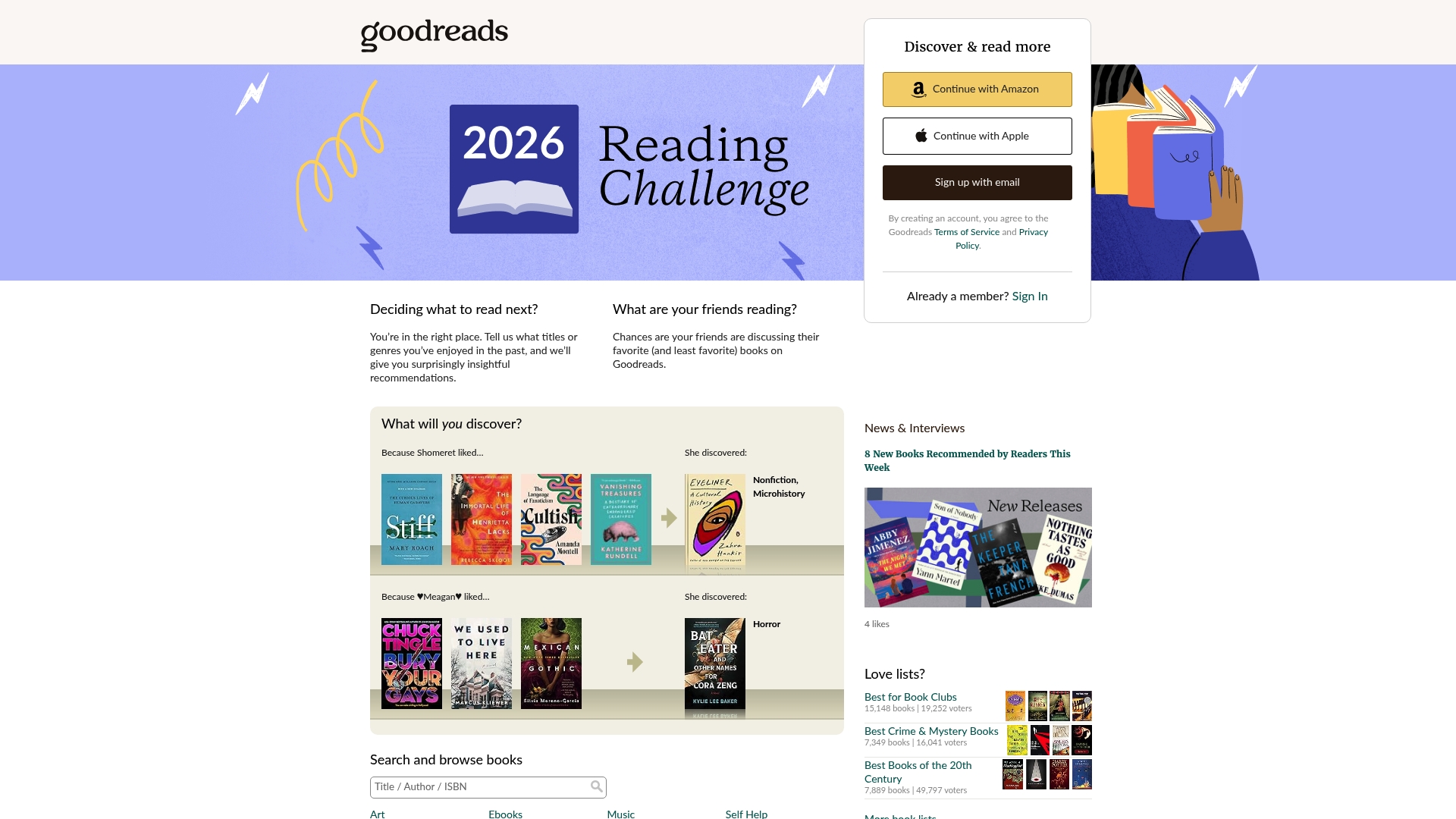
Goodreads combines a large user community with straightforward tools for discovering and discussing books, making it a go-to hub for readers and authors. The platform blends social interaction, lists and events to surface books that match your tastes.
Core Features
Goodreads centres on book reviews and ratings, personalised recommendations and social features that show friends' activity and discussion threads. The site also hosts book lists, author quotes and events such as the Goodreads Choice Awards, offering promotion opportunities for authors.
Pros
-
Wide user community: A vast database and active readership increase the chance of finding reviews for popular titles and joining conversations about them.
-
Personalised book suggestions: Recommendation tools use your preferences and social signals to suggest books aligned with your reading history.
-
Social media integration: Sharing lists and reviews to other platforms helps extend reach and attract new readers to your work.
-
Author promotion opportunities: Events and author pages provide visible channels for authors and publishers to showcase new releases and engage fans.
-
Access to awards and trending lists: Curated lists and the Goodreads Choice Awards highlight titles that are gaining traction among readers.
Cons
-
Dependent on user-generated content, which can vary in reviews quality: Review usefulness depends on contributor expertise and effort, so some entries offer limited insight.
-
Some features require account creation and login: You must register to participate in discussions or save personalised lists, which adds friction for casual visitors.
-
Limited content for books outside popular genres or niche areas: Less mainstream or highly specialised titles receive fewer reviews and recommendations, restricting discovery for niche creators.
Who It's For
Goodreads suits avid readers, book enthusiasts, authors and publishers who value community feedback and discoverability. It works well for creators seeking a social platform to build an audience and for readers hunting suggestions, lists and social proof before buying or reading.
Unique Value Proposition
Goodreads stands out by merging social discovery with author-facing promotion and high-visibility events. Its combination of reader reviews, curated lists and community activity creates a searchable ecosystem where books gain momentum through genuine reader engagement.
Real World Use Case
A reader uses Goodreads to scan reviews and trending lists to choose a next read, while an author uses the platform to announce a launch and target motivated readers through list placements and the Goodreads Choice Awards community exposure.
Pricing
Goodreads is free to join and use for readers, with optional paid promotional services available for authors and publishers who want boosted visibility or marketing features.
Website: https://goodreads.com
LibraryThing
At a Glance
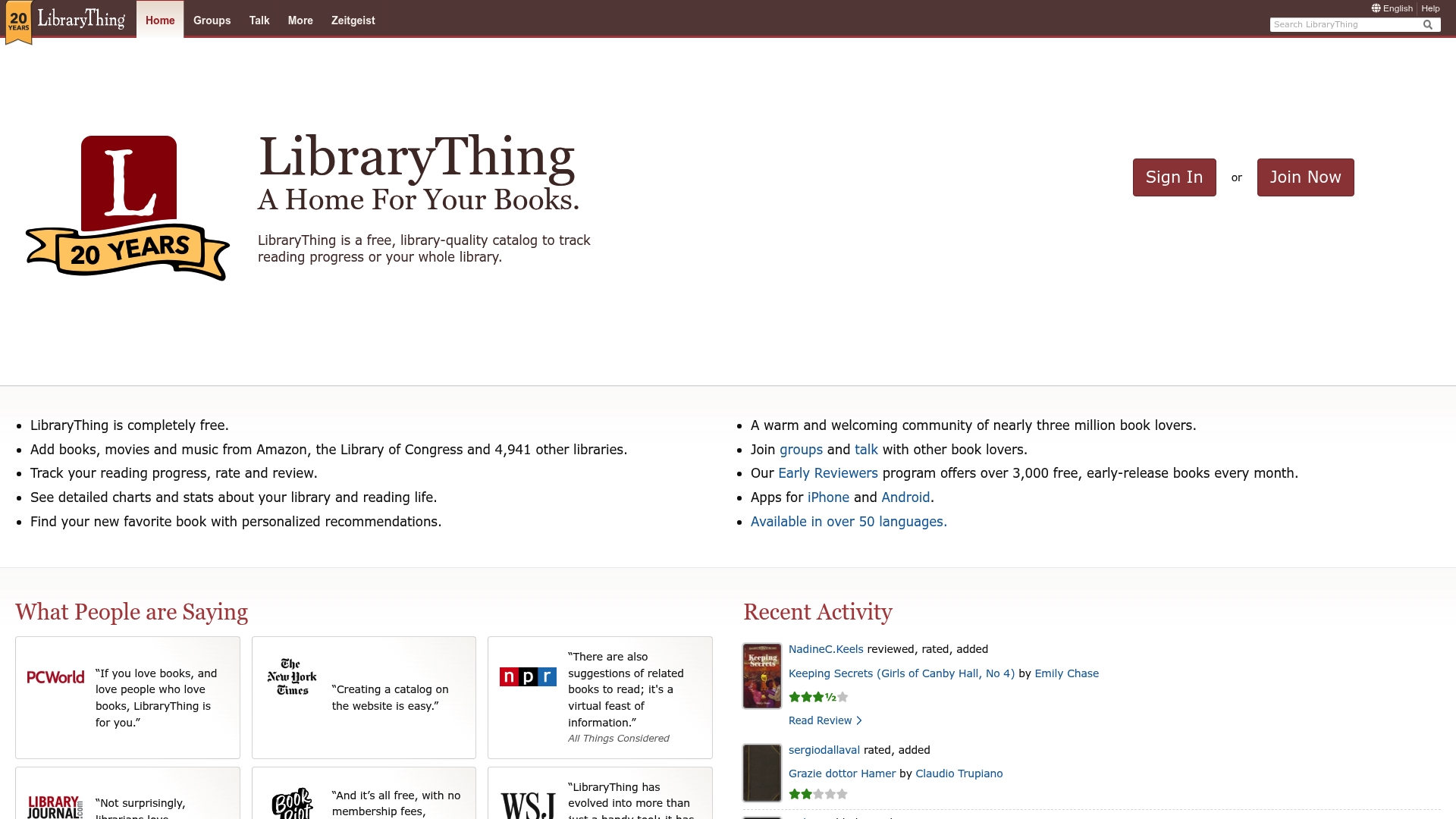
LibraryThing is a free, library-quality catalogue that helps you organise and track reading across books, movies and music in a single place. It offers personalised recommendations and a strong community, making it ideal for creators who value organised catalogues and reader feedback.
Core Features
LibraryThing lets you add titles from sources such as Amazon and the Library of Congress and then track reading progress, ratings and reviews with ease. Key strengths include detailed charts for reading habits, active community groups, and native mobile apps for iPhone and Android.
Pros
- No cost barrier: The service is free with no membership fees, download limits or adverts, which keeps overheads low for creators and educators.
- Extensive database: LibraryThing draws on multiple library catalogues, giving you broad coverage when cataloguing niche or obscure titles.
- Strong community features: Groups and talks let you host discussions, gather feedback and run reader events directly on the platform.
- Robust organisation tools: You can tag, sort and search collections with flexible metadata for clearer content management.
- Customisable display: Style options let you tailor how your catalogue appears, which helps when sharing previews with potential customers.
- Language coverage: Available in over 50 languages, widening reach for global audiences and multilingual creators.
Cons
- The platform presents limited information about paid tiers or premium options, which could cause uncertainty for creators who want advanced commerce features.
- New users may find the range of features and active community interactions overwhelming without a short onboarding path or guided tours.
- Some functionality relies on third party integrations or external apps, which introduces extra steps when connecting to payment or delivery systems.
Who It's For
LibraryThing suits book lovers, independent authors and educators who want a free, comprehensive digital catalogue to organise and promote reading materials. Use it if you need a community to test ideas, run reading groups or gather early feedback on new educational resources.
Unique Value Proposition
LibraryThing combines a large library database with community driven discovery and flexible organisation tools, all at no cost. That blend gives creators a place to showcase catalogues, obtain reader insights and discover niche titles without subscription fees.
Real World Use Case
An educator catalogues their entire resource library, tracks class reading progress and runs monthly group discussions to collect student reviews. They then use personalised recommendations to suggest follow up readings and curate themed collections for sale or distribution.
Pricing
LibraryThing is free to use with no membership fees or subscription costs, making it accessible for individual creators and small educational projects.
Website: https://librarything.com
Litsy
At a Glance
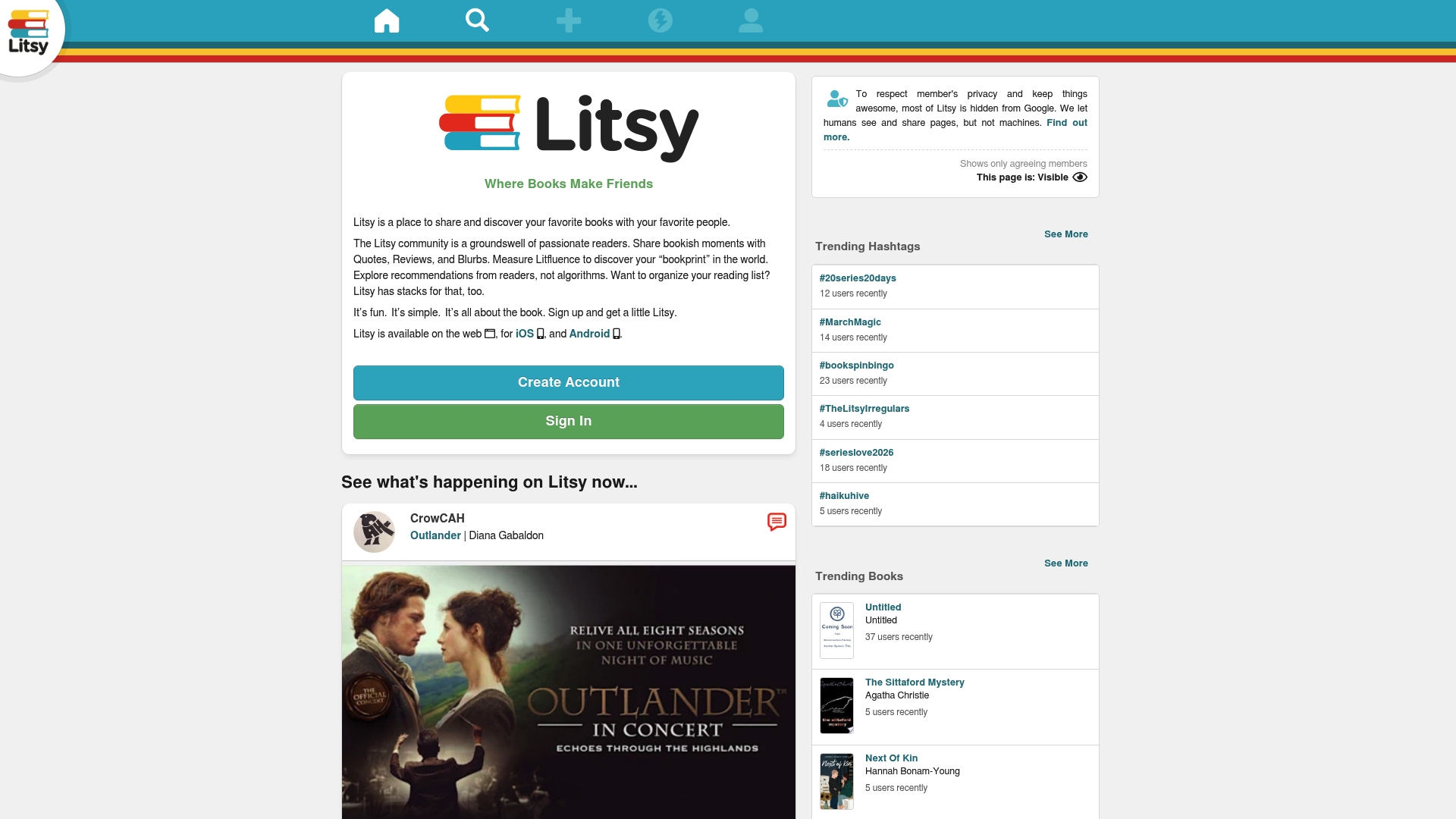
Litsy is a social reading platform that prioritises human interactions over algorithmic discovery. It suits readers who prefer personal recommendations and short form sharing rather than long essays or storefront style publishing.
Litsy works on web, iOS, and Android, and the interface encourages quick interactions such as quotes and short reviews.
Core Features
Litsy centres on a handful of clear features that support discovery and community. Users can share quotes, write short reviews or blurbs, and organise books into stacks for personal tracking.
The platform also highlights trending hashtags and lets you follow other readers to see their recommendations in a social feed.
Pros
-
Community driven recommendations: The emphasis on real reader opinions makes discovery feel human and conversational rather than machine generated.
-
User friendly sharing: Posting a quote, quick review, or a short blurb is fast and feels natural for people who do not want to write long posts.
-
Cross platform availability: Being on web, iOS, and Android keeps your reading activity accessible across devices without forcing a single ecosystem.
-
Easy organisation: Stacks provide a simple way to group and manage reading lists, which helps creators or teachers keep thematic collections.
-
Trend driven engagement: Trending hashtags surface timely reads and conversations, helping content move quickly within the community.
Cons
-
Limited information on advanced features or integrations is available, which makes it hard to tell whether the platform can support complex workflows for sellers.
-
There are potential privacy concerns because most content is hidden from Google, so discoverability outside the platform is restricted for authors and educators.
-
It is not clear if paid premium features exist or what restrictions apply, leaving uncertainty for creators who need predictable monetisation options.
Who It's For
Litsy suits avid readers, book clubs, educators, and content creators who want community feedback rather than commercial distribution. It fits people who like short impressions, curated lists, and social discovery rather than full ecommerce or course delivery.
Unique Value Proposition
Litsy stands out by offering a compact, social space where recommendations come from people you follow and trust. That human focus makes it easier to surface niche titles and nuanced suggestions that algorithms often miss.
Real World Use Case
A teacher shares a ten word blurb and a quote from a set text, organises those texts into a Stack for a class, and follows students who comment on recommended supplementary reads. Conversations spark new reading lists.
Pricing
Litsy is free to use. The platform mentions potential optional paid features but provides no definite details, so expect the core social features to remain accessible without charge.
Website: https://litsy.com
Scribd
At a Glance
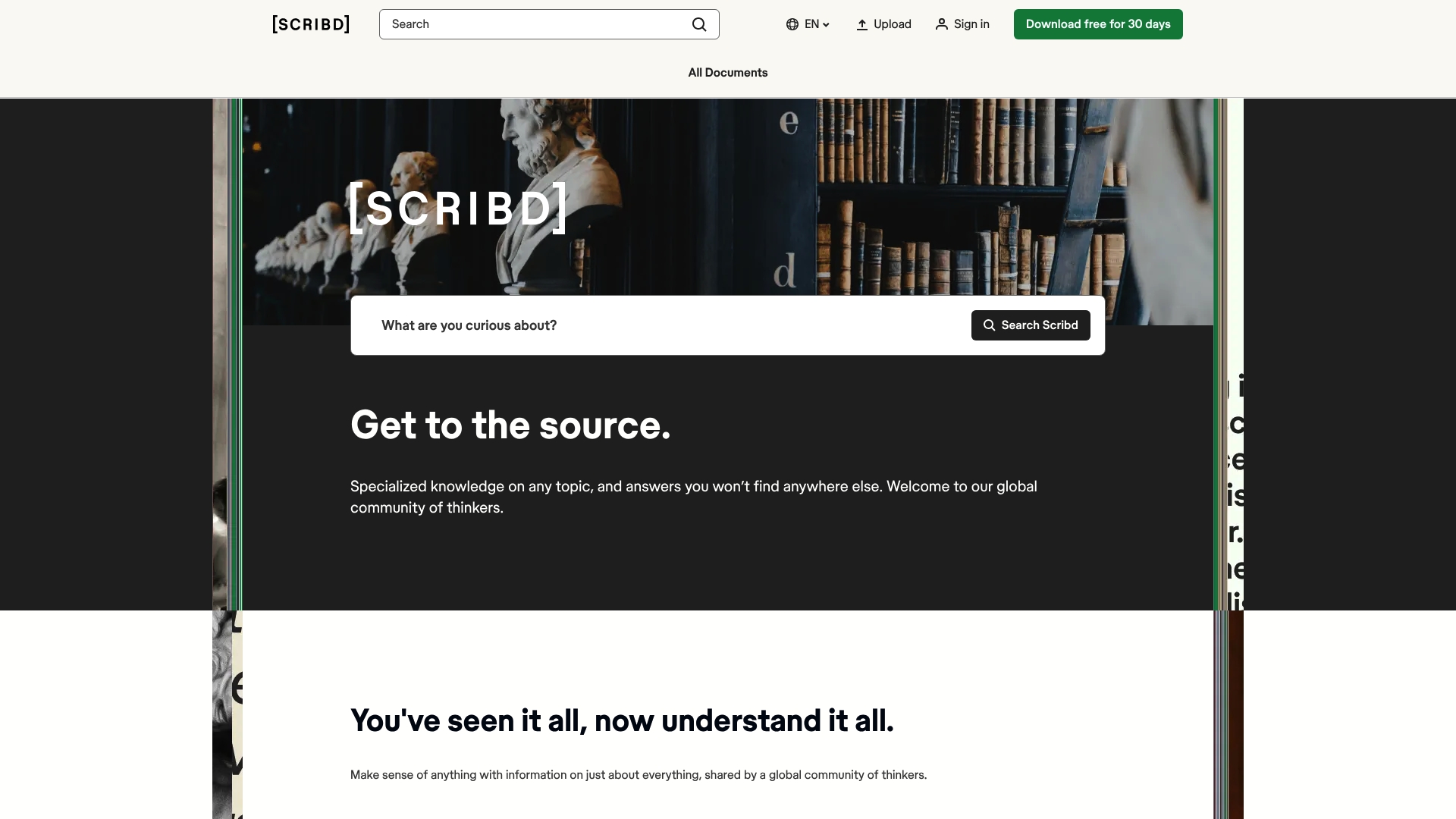
Scribd is a digital library and subscription service that gives you broad access to books, audiobooks and documents for reading and research. Its appeal is a huge catalogue paired with simple upload tools, but most features require an ongoing subscription.
Core Features
Scribd provides access to over 300 million documents and books, offers a subscription model alongside ad supported access, and lets creators upload and share original materials. The service also supports download and print for subscribers and delivers a dedicated mobile app for on the go reading.
Pros
-
Extensive library: The platform hosts a very large selection of documents and books across academic, professional and leisure categories which helps with varied research needs.
-
Creator uploads: You can upload and share original content which makes Scribd useful for educators and content creators seeking wider distribution.
-
Flexible access: A 30 day free trial and ad supported options make it easy to sample the service before committing to a paid plan.
-
Mobile accessibility: Dedicated apps allow reading and listening on phones and tablets so you can study or review material away from a desk.
-
Multiple file support: Scribd accepts a range of file types for uploads which simplifies sharing lecture notes, guides and formatted documents.
Cons
-
Subscription required: Full access to downloads and the wider catalogue requires payment after the trial period which adds a recurring cost for heavy users.
-
Creator responsibility for rights: Content rights and copyright management remain the uploader's responsibility which places legal and administrative burdens on creators.
-
Limited free content: The free or ad supported tier provides only a narrow slice of the library which reduces usefulness for sustained research without a subscription.
Who It's For
Scribd fits researchers, students, professionals and avid readers who need convenient access to a broad range of documents and books. It also suits content creators who want a simple way to publish materials and reach an international audience.
Unique Value Proposition
Scribd combines a massive content library with straightforward upload and sharing tools so creators and educators can both consume and distribute material in one place. That dual role makes it a hybrid reading service and distribution channel.
Real World Use Case
A university student uses Scribd to access textbooks and study guides for exams, uploads class notes for classmates, and explores academic articles across multiple subjects. This workflow highlights how Scribd supports both learning and peer to peer sharing.
Pricing
A free trial runs for 30 days and then the subscription costs $11.99 per month. The paid plan unlocks downloads, printing and full access to the broader catalogue for continuous study or content distribution.
Website: https://scribd.com
Tools for Content and Catalog Management Comparison
Compare features and suitability of various tools designed for digital course distribution, content cataloging, and literary community engagement.
| Platform | Key Features | Target Users | Pricing |
|---|---|---|---|
| BibliOWLteca | Unlimited course hosting, global payments, analytics | Educators and entrepreneurs managing courses | €7.99 per transaction + €0.99 per sale |
| Biblioter | Event listings, community features, literature focus | Literary event creators and enthusiasts | Information not provided |
| Goodreads | Book reviews, social networking, recommendations | Avid readers, authors | Free, optional paid promotions |
| LibraryThing | Cataloging, community groups, multilingual resources | Readers and educators | Free |
| Litsy | Social reading, stacks feature | Readers preferring personal recommendations | Free |
| Scribd | Document access, subscription model | Researchers, creators | $11.99 per month after 30-day trial |
Discover a Smarter Way to Share and Monetise Educational Content
If you found the Top 6 Biblioter.com Alternatives 2026 insightful but are seeking a seamless platform that goes beyond event listings and literary communities, BibliOWLteca is tailored for you. Many creators face challenges with fragmented tools, international payments, and managing digital storefronts alone. BibliOWLteca addresses these pain points by offering an all-in-one solution with secure global payment support, unlimited course hosting, and integrated analytics to help you grow confidently and scale your digital business worldwide.
Why choose BibliOWLteca?
- Publish e-books, courses, and templates effortlessly
- Accept multiple currencies including SEPA, PIX, and Crypto
- Manage your storefront and audience from a single platform
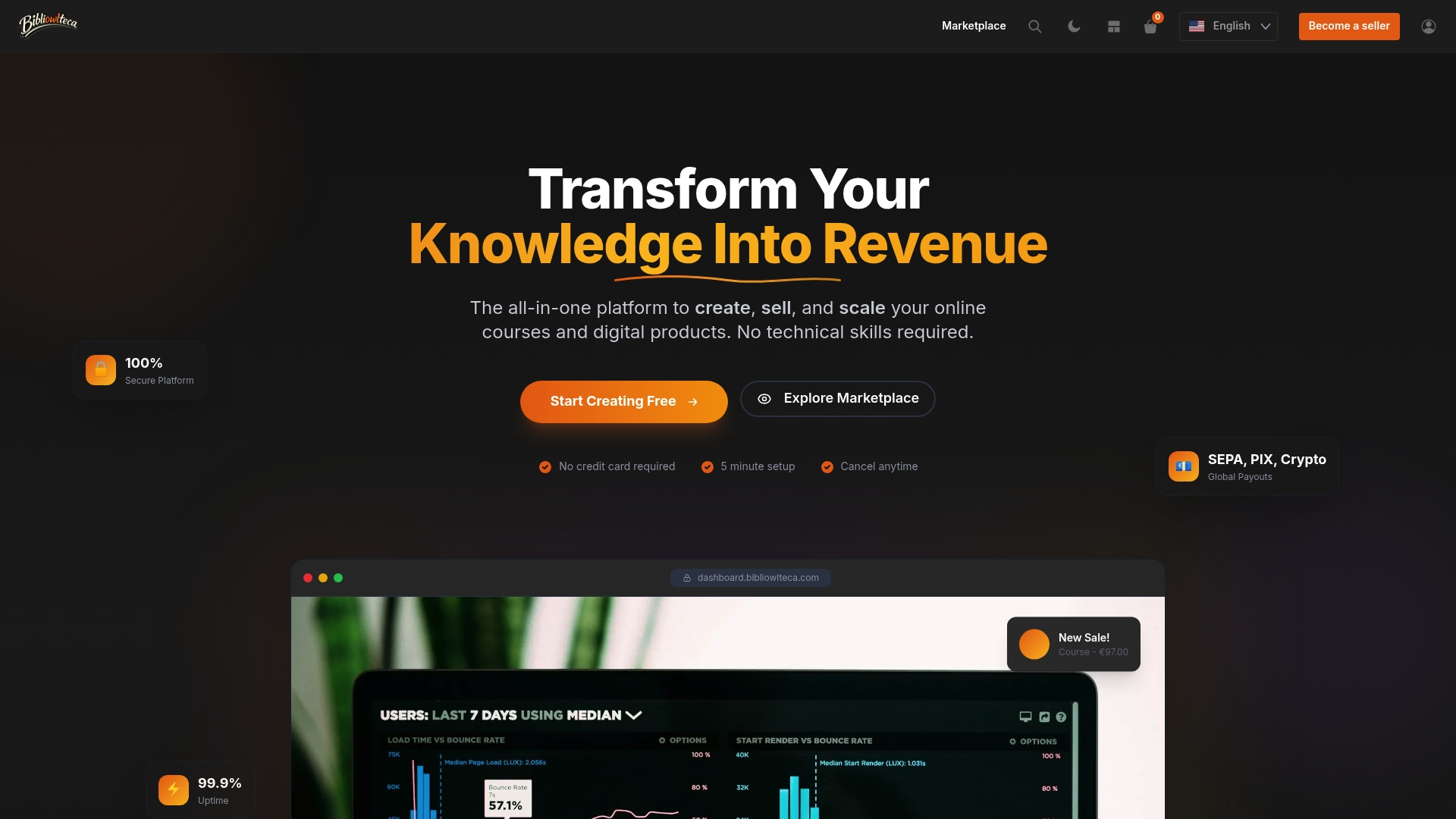
Ready to transform your knowledge into a thriving online business? Visit BibliOWLteca today and start selling your educational content with ease and security. Don’t wait to expand your reach globally and simplify your creator journey.
Frequently Asked Questions
What are the main features to look for in alternatives to Biblioter.com?
To find suitable alternatives, focus on features such as user-friendly event listings, community engagement tools, and personalised updates. Compare platforms to ensure they support the types of literary activities you are interested in.
How can I evaluate which Biblioter.com alternative is best for my needs?
Assess each alternative based on your specific requirements, such as event promotion capabilities and social interaction options. Create a list of priorities to guide your evaluation process and help you choose the best fit.
Are there any cost-effective alternatives to Biblioter.com?
Yes, many alternatives are available that offer free or low-cost options, ideal for individuals or small organisations. Research and compare pricing plans to find one that aligns with your budget.
How can I easily migrate my content from Biblioter.com to another platform?
To migrate your content, check if the alternative platform offers import tools or an API for seamless transfer. Prepare your data for export by ensuring it is well-organised and compatible with the new system.
Can I combine features from different Biblioter.com alternatives?
Yes, you can use multiple platforms in tandem to utilise their unique strengths, such as one for event management and another for community interaction. Assess the integration capabilities of each platform to ensure a smooth user experience.
What should I consider when choosing a platform for literary event promotion?
Consider factors like user engagement features, ease of use, and the platform's ability to attract local audiences. Look for a solution that allows you to market your events effectively and interact with your audience directly.