Finding a book database storefront that handles quick publishing, secure payments, and global sales in one place still leaves gaps for creators. Most platforms either restrict product types, demand high monthly fees, or lack automation for course, ebook, and coaching sales. This comparison details pricing, supported sales formats, and automation so solo educators, authors, and digital entrepreneurs can choose the right storefront without hidden tradeoffs.
Table of Contents
Bibliowlteca
At a Glance
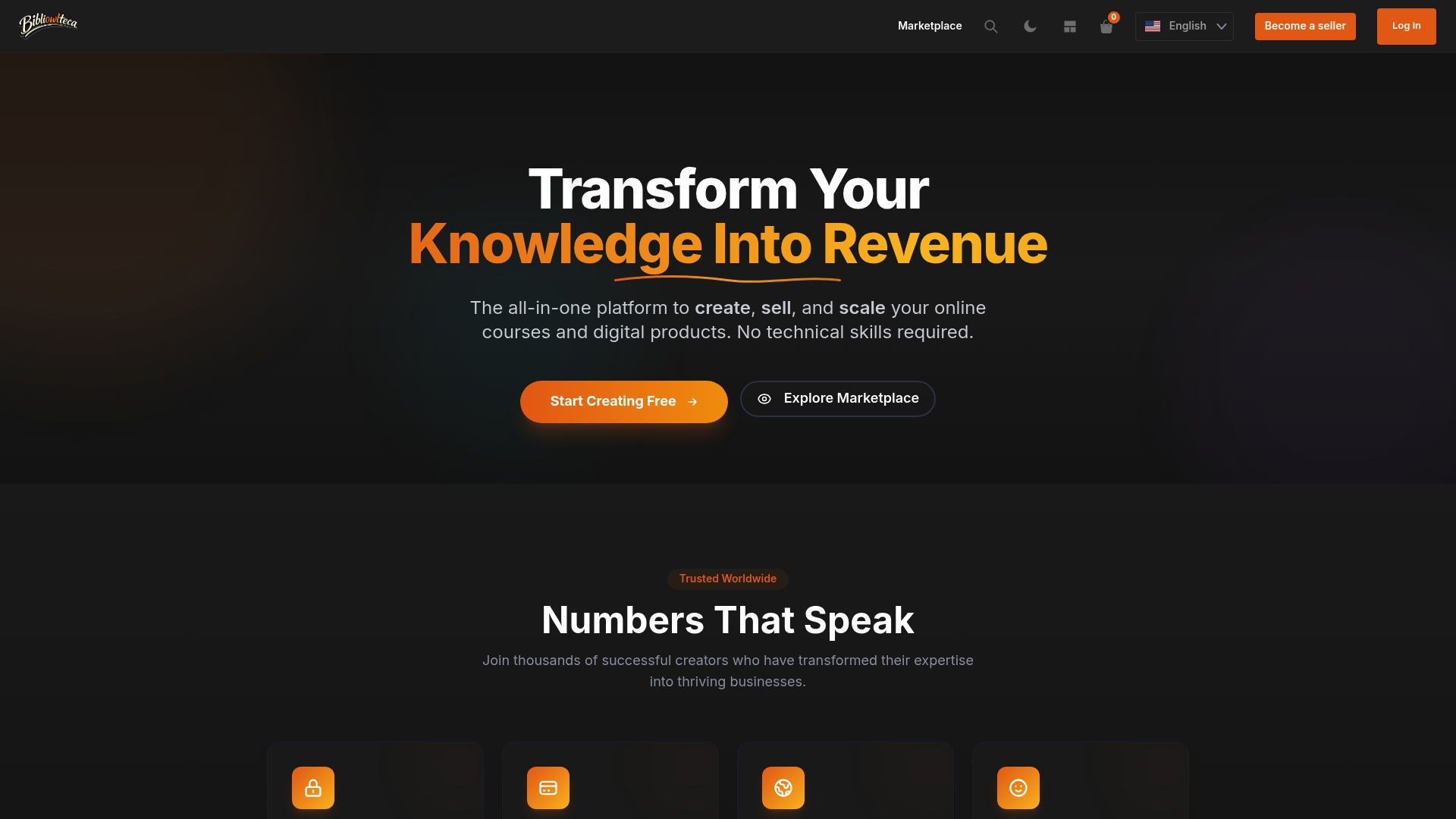
Bibliowlteca's pricing states a 7.99% + €0.99 per transaction fee and a 10% rolling reserve released in 30 days, according to the vendor's materials. The platform charges no monthly fee, so creators pay only when they make sales. The product targets creators who need quick publishing, secure storage, and global payment handling without technical setup.
Core Features
Create and sell ebooks, templates, software, and other downloadable products from a single storefront while hosting unlimited courses with content management. Course tools include quizzes and certificates, and the platform adds a built-in mentorship and coaching space with live video and community features. Global payment acceptance comes with an optimised checkout and real-time analytics, and storefronts are fully customisable for brand control.
Key Differentiator
Built specifically for course creators and digital entrepreneurs, Bibliowlteca focuses on speed, security, and global scalability. That focus shows in the integrated mentorship area and the emphasis on secure, scalable cloud storage. The product bundles publishing, payment processing, and tax handling so creators keep one workflow rather than stitching several services together.
Pros
The platform combines product hosting, course delivery, mentorship spaces, and storefront customisation so creators avoid juggling separate vendors. Setup requires no deep technical skills, which lowers the barrier for educators and solo entrepreneurs to start selling. Global payment acceptance and real-time analytics help with cross-border sales and audience insight. Built-in tools for downloads, memberships, and certificates let creators manage student engagement from the same dashboard.
Cons
- May have transaction fees that reduce margins for high-volume sellers.
Who It's For
Solo educators, authors, and digital entrepreneurs who want a single point of control for courses, ebooks, and coaching will find this useful. It suits creators who prioritise launching quickly, handling international payments, and keeping delivery and customer management inside one system.
Unique Value Proposition
No monthly fee. You pay only when you make a sale under Bibliowlteca's pay-when-you-earn model. That lowers upfront cost for new creators and freelancers, and it shifts the economic decision toward scaling sales rather than covering fixed platform bills.
Real World Use Case
A Brazilian course creator sells courses and ebooks across Europe while accepting multiple currencies and managing student engagement. The platform handles checkout, analytics, and certificate issuance so the creator focuses on content and mentoring. That single-dashboard approach simplifies outreach and fulfilment.
Pricing
The vendor lists a transaction fee of 7.99% plus €0.99 per sale and a 10% rolling reserve held for 30 days. There is no monthly subscription. You only pay fees when you earn revenue.
Website: https://bibliowlteca.com
Teachable
At a Glance
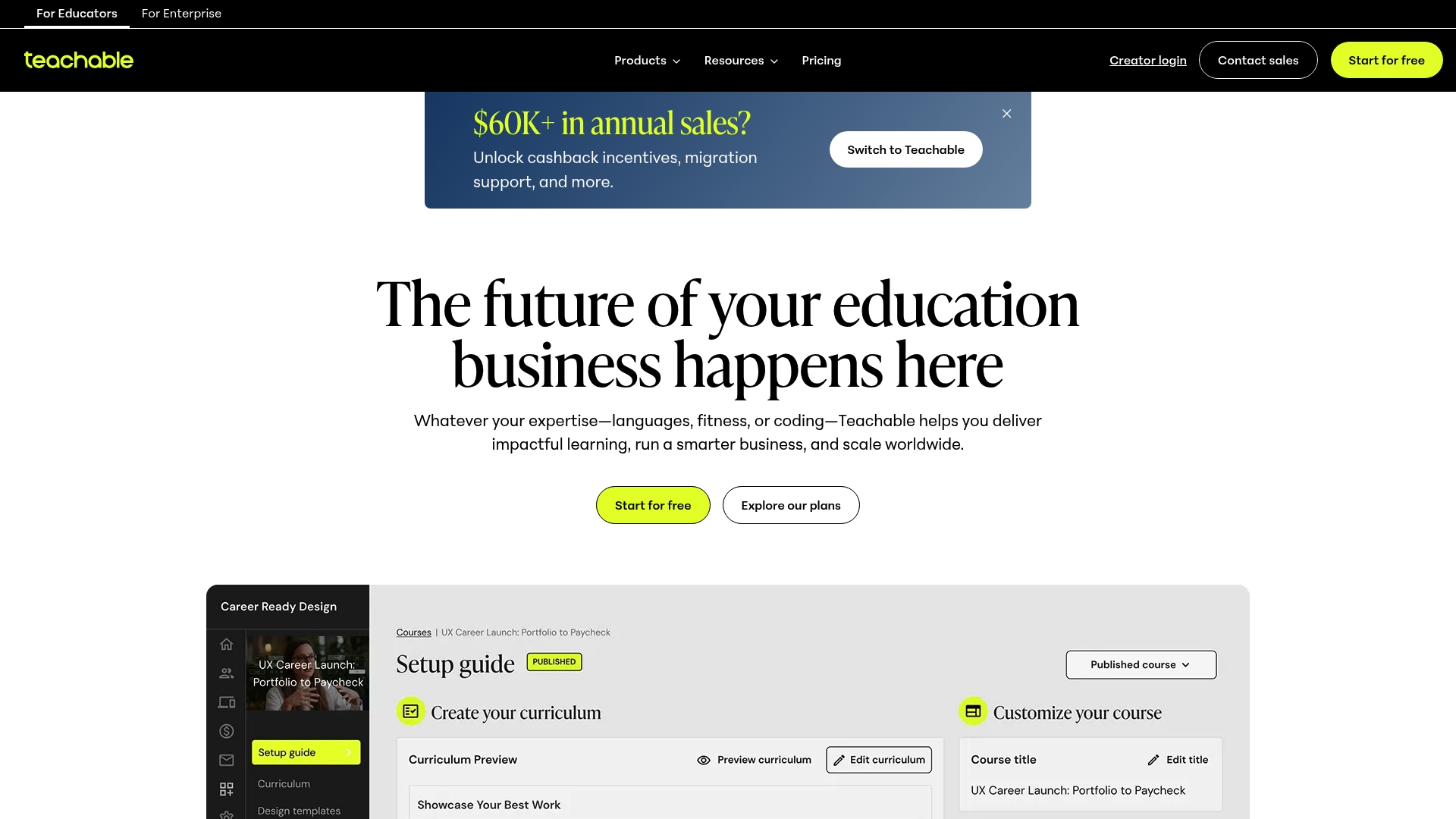
AI powered content generation and translation, including subtitle creation, is built into the product. This feature speeds course preparation and lowers the barrier to offering multilingual material. Plans start at $39/month on the entry tier and include transaction fees on lower plans.
Core Features
Course creation tools let you assemble video lessons, text modules, and quizzes while selling digital downloads and memberships from the same account. The platform also supports coaching programme management and offers AI powered helpers for drafting content and producing subtitles. Global payment handling and automated VAT and sales tax support sit alongside custom branding options.
Key Differentiator
The clearest edge is the AI powered content and marketing automation tools that simplify setup and localisation. Unlike Bibliowlteca, Teachable focuses on course delivery and student management rather than acting primarily as a digital storefront for general educational products.
Pros
The no code course builder and AI assistance make launching a course quick, even for non technical creators. Built in global payment and tax support reduces manual billing work for cross border sales. A broad list of connectors, white label options on enterprise plans, and an active support community help when you scale.
Cons
- Transaction fees apply on lower plans, which can erode revenue for small launches.
- Pricing increases as product limits and user capacity rise, which means larger operations will pay more.
- Lower tier plans restrict customisation and product counts, requiring an upgrade to access advanced options.
When It May Not Fit
If you want a simple digital shop for ebooks and one off downloads without course features, this product may feel heavyweight. Very large organisations may find plan limits and pricing restrictive as they scale. Teams needing deep customisation at entry cost will likely need higher tier or enterprise arrangements.
Notable Integrations
Stripe and PayPal handle payments directly. Zapier, Google Analytics, Mailchimp, and HotJar supply automation and analytics links. Dropbox and Google Drive provide file storage and import options.
Who It's For
Educators, freelance coaches, and organisations that plan to sell structured courses and memberships will get the most value. It suits creators who need multilingual delivery, tax handling, and an integrated enrolment workflow rather than a simple download store.
Real World Use Case
A health coach sells personalised coaching plans, automates enrolment and payments, and publishes multilingual course material with subtitles. That use case shows how the platform supports growth from a handful of students to a much larger international audience.
Pricing
Plans start from $39/month on the Starter tier and carry transaction fees at that level. Higher tiers expand capacities and remove transaction fees, with an Advanced tier listed at $399/month and custom enterprise options available.
Website: https://teachable.com
SellApp
At a Glance
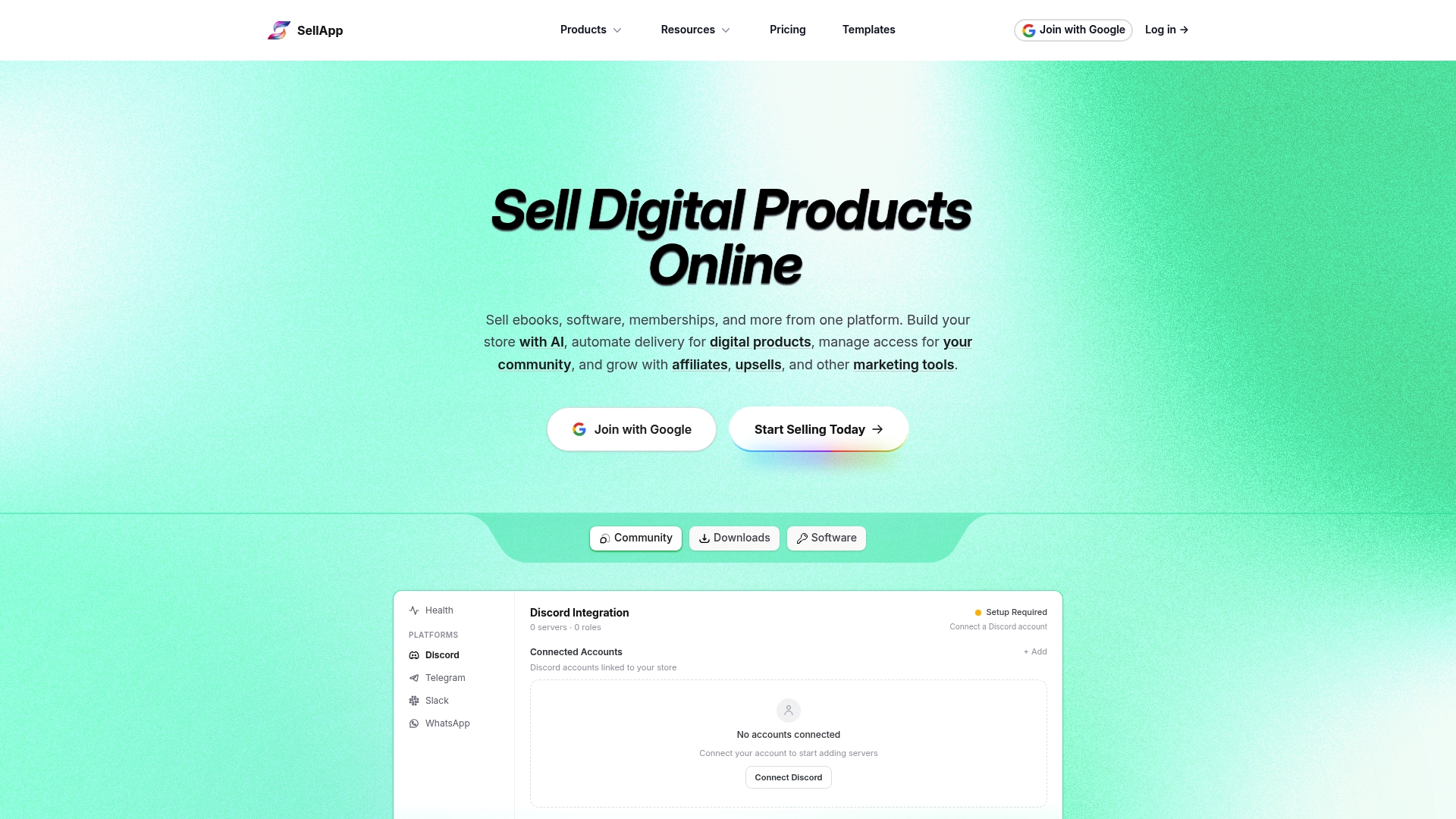
SellApp advertises a 3% per sale fee or a $199.99/month advanced plan that removes platform fees. The vendor positions the platform for digital sellers who want fast setup and automated payouts. That pricing choice makes it easy to start with no upfront cost.
Core Features
SellApp combines a visual drag and drop store builder with multiple payment options, including cryptocurrency, and a customisable checkout that you can embed on another site. It handles subscriptions and recurring payments, runs an affiliate programme, and includes fraud protection for digital deliveries. A comprehensive API supports developer automation and custom fulfilment flows for licences, ebooks, music, and other downloadable goods.
Key Differentiator
SellApp focuses on fast, automated store setup paired with marketing and payout tools that work out of the box. The platform highlights instant payout capability alongside built in affiliate tracking and automation. That mix makes it practical for creators who want to sell and receive funds without building payment infrastructure.
Pros
No coding is required, which lets creators and small entrepreneurs build a store and start selling within hours rather than days. Flexible payment support, including crypto, broadens buyer options and reduces checkout friction for international customers. Automation covers marketing and fulfilment tasks, so you can trigger licence delivery or member access without manual steps. The API gives developers routes to integrate billing and inventory with external systems. The pricing model lets beginners start for free and pay only when they sell.
Cons
-
Design customisation appears less flexible than specialised storefront builders. Several buyer reports point to limits on layout freedom.
-
The fee structure may become costly for high volume sellers on the standard plan. That could push established sellers toward the advanced monthly plan.
-
The platform focuses on digital products and offers limited support for physical stock or complex multi channel retail setups.
When It May Not Fit
SellApp is primarily designed for downloadable and licence based products, so you should avoid it if your business relies on handling physical inventory or complex multichannel fulfilment. Retailers who need point of sale, warehouse management, or parcel shipping workflows will find the platform a poor match. Larger merchants with heavy order volume may prefer a solution built for physical retail.
Who It's For
Solo digital creators, small online entrepreneurs, and freelance developers who sell downloadable content will get the most from SellApp. It suits people who value quick setup, integrated payment options, and developer hooks for automation. If you sell memberships, software licences, or digital art, this platform fits typical workflows.
Real World Use Case
A freelance software developer sells licence keys and software directly to customers through an embedded checkout. They use the API to generate keys automatically and grant access after payment clears. Affiliate tracking handles referral commissions without manual bookkeeping.
Pricing
You can start selling for free. The platform charges a 3% per sale fee on the standard plan or offers an advanced plan at $199.99/month to remove platform fees. That structure suits low volume sellers and teams willing to pay a flat fee for predictable costs.
Website: https://sell.app
PaperTrell
At a Glance
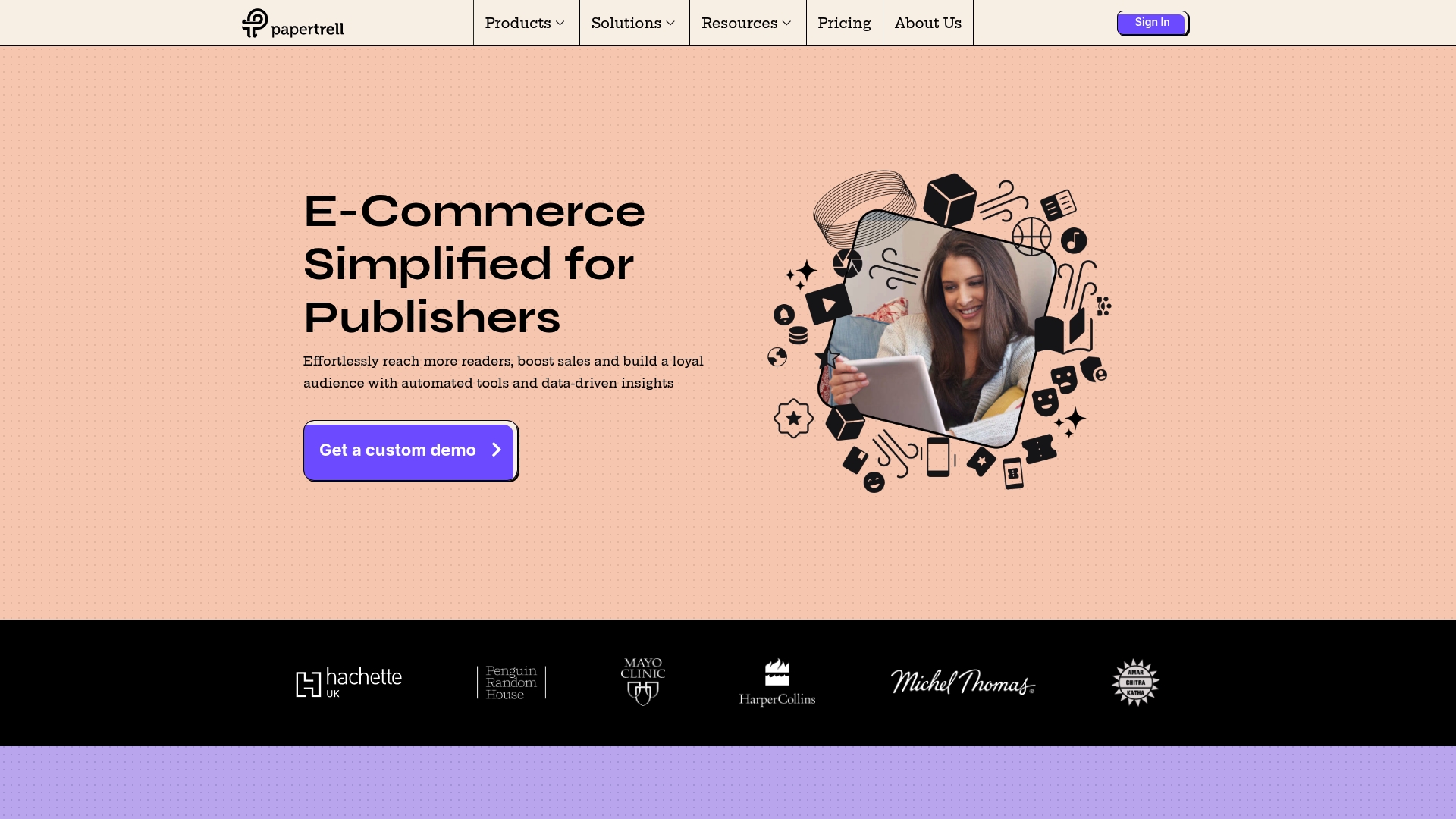
PaperTrell packages four named modules into a single offering: Audience Amplifier, Engagement Enhancer, Conversion Catalyst, and a Digital Products Store. The bundle targets publishers who sell ebooks, audiobooks, courses, and subscriptions. Public pricing is not listed and the vendor asks prospects to contact sales for quotes.
Core Features
The platform combines audience targeting and automation with loyalty and engagement features to keep readers returning. It also offers conversion optimisation tools and flexible sales models alongside a managed digital storefront with DRM controls. Content management includes templates and catalogue tools built for multiple digital formats.
Key Differentiator
PaperTrell stands out for combining marketing automation, catalog management, and monetisation into a single packaged offering. That focus suits teams that need publisher-grade storefront and campaign tools under one roof. Compared with Bibliowlteca, PaperTrell concentrates more narrowly on publisher marketing and storefront operations rather than creator store management and global payments.
Pros
The platform's integration of marketing, sales, and engagement functions reduces the number of separate tools a publisher must run. It supports multiple digital formats so you can sell ebooks, audiobooks, and courses from the same catalogue. Built integrations with WordPress, Shopify, and WooCommerce make connecting to common storefronts straightforward. Automation features cover SEO, social media, email, and content creation which lets marketing teams deploy recurrent campaigns faster.
Cons
- Pricing requires contacting sales for a customised quote which slows procurement for small teams.
- Setup and configuration can be complex for publishers without a dedicated digital specialist or technical resource.
- The vendor materials do not mention multi-language or explicit internationalisation support which may limit global rollouts.
When It May Not Fit
Small publishers that need clear, off-the-shelf pricing will find the sales‑led model inconvenient. Organisations without technical staff may struggle during initial setup and configuration. If multilingual storefronts or explicit localisation features are a priority, PaperTrell does not advertise those capabilities.
Notable Integrations
PaperTrell connects directly to common commerce and content systems to reduce integration work.
- Shopify
- WooCommerce
- WordPress
Who It's For
Mid-sized to large digital publishers and independent authors who want an all-in-one solution for marketing and selling digital products. Teams that already use WordPress or Shopify will find the integration work lighter. Organisations planning subscription or membership models will get the most from the automation and conversion features.
Real World Use Case
A language learning publisher launched an online store for courses and ebooks and used PaperTrell to automate audience acquisition and manage the catalogue. The team linked the store to Shopify and WordPress to handle checkout and editorial pages. They deployed a subscription model and automated email sequences to retain learners.
Pricing
Pricing is not explicitly listed and appears to be customised per client. The vendor offers a free demo and asks prospects to contact sales for a quote. Expect a sales conversation to determine scope and cost for enterprise features.
Website: https://papertrell.com
Teachly
At a Glance
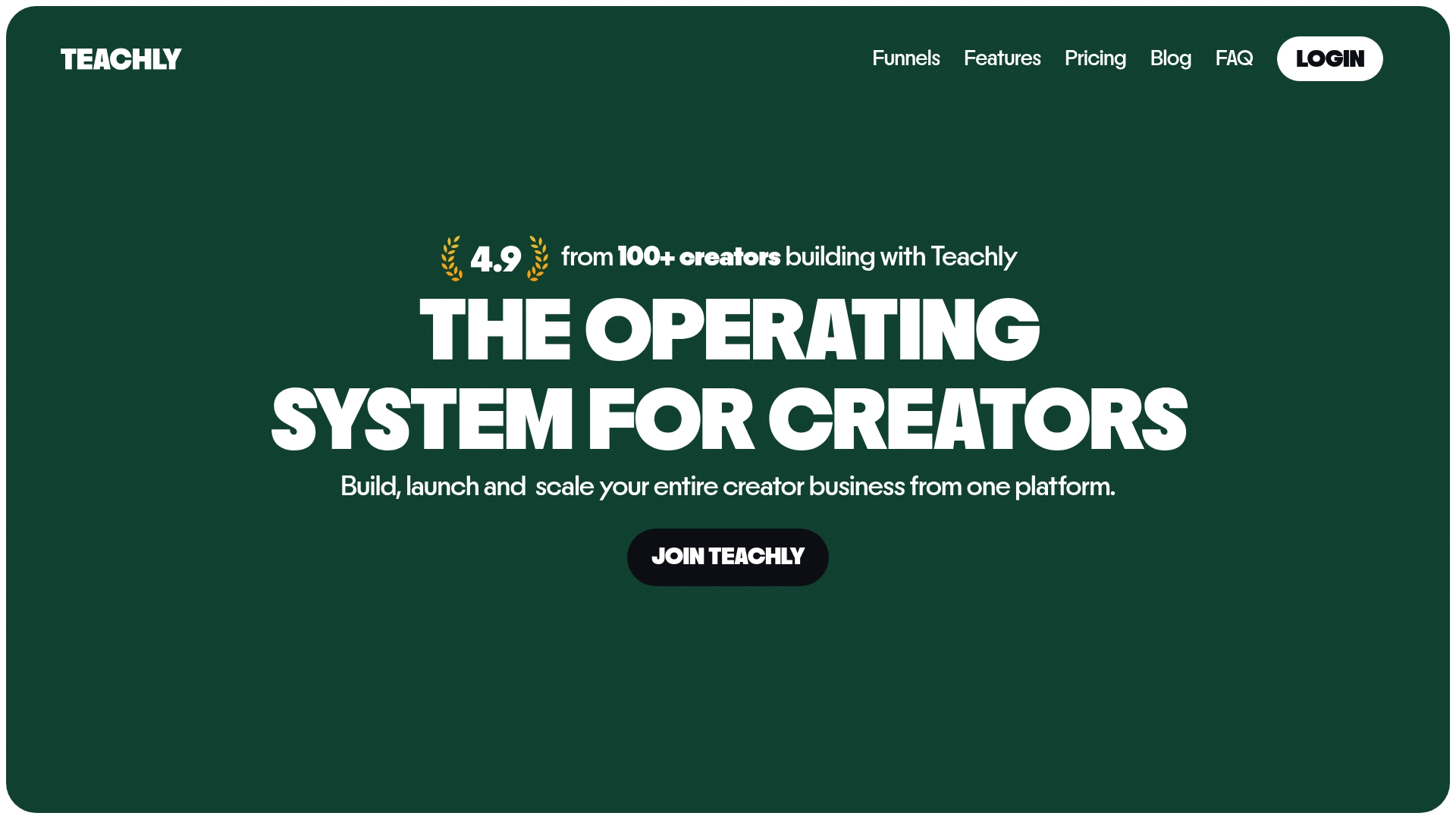
Teachly reports its interactive funnels convert 4x better than standard funnels. That claim sits alongside built in payments, a mobile first learning builder, and live event hosting. The product targets creators who want marketing automation and flexible payment plans in one place.
Core Features
Teachly combines interactive funnel pages with real time analytics so you can test and measure conversion quickly. The platform hosts webinars, live classes, and calls while offering checkout options with buy now pay later providers. It also supplies a mobile first course builder with video, PDF, quiz support, audience engagement tools, group chats, direct messaging, and automated delivery templates.
Key Differentiator
The principal difference is the all in one approach that ties funnels, automation, and payments to creator workflows. Teachly emphasises high converting funnels and built in automation rather than separate tools for each task. That figure on conversion highlights the product focus on improving sign ups and sales for creators.
Pros
Teachly groups marketing, course hosting, payments, and community into a single interface so you can launch faster and reduce tool overhead. Built in automation and templates cut the manual work for campaign delivery and course enrolment, which helps when you run regular cohorts or live events. Multiple monetisation paths and flexible payment plans, including buy now pay later options, make it easier to sell high value offers and subscriptions.
Cons
- Pricing may be expensive for smaller creators. This can make the platform a heavy monthly cost for hobby creators.
- Limited information on advanced customisation capabilities. Developers and design teams may find fewer low level controls than expected.
- Pages linked to pages not found, indicating possible incomplete content. Documentation gaps can slow onboarding.
When It May Not Fit
If you run a micro audience with very tight budgets this pricing structure may not fit your costs. If you need deep visual or code customisation for unique branding, Teachly may not provide the controls you require. The presence of incomplete or missing pages suggests some features or integrations may lack full documentation.
Who It's For
This platform suits creators and entrepreneurs building online courses, coaching, or membership businesses who prefer one vendor for funnels, hosting, and payments. You will benefit if you run paid live events or cohort based courses and want automation templates. It also fits teams that require buy now pay later and custom payment plans.
Real World Use Case
A creator launches a paid course, uses Teachly to build a funnel that captures leads, and runs an automated email sequence to convert those leads. They host a live kickoff webinar on the platform and accept instalment payments through an integrated BNPL provider. Students join the course on mobile, access quizzes and PDFs, and use group chat for community support.
Pricing
Plans start at $99/month for the starter tier and $299/month for the unlimited tier. The vendor presents these as tiered monthly subscriptions that include hosting, payments, and automation features.
Website: https://teachly.ai
Comparison of alternatives
Selecting the platform for managing and distributing digital products depends significantly on the user's specific requirements and budgetary considerations.
Marketing and onboarding tools
Teachly distinguishes itself through its focus on interactive lead funnels and sophisticated marketing automation. This feature expedites the sales journey, translating directly into enhanced conversion rates. This makes Teachly incredibly well-suited for creators who prioritise optimised marketing workflows and audience targeting. However, this focus requires higher initial investment, which may not align with modest budgets. Bibliowlteca.com, on the other hand, provides streamlined onboarding and straightforward analytics geared towards creator empowerment without such financial commitment.
Content and audience management
Bibliowlteca.com uniquely incorporates a mentorship space with live video features, elevating its utility for course creators focused on student interaction and collaborative learning. Meanwhile, PaperTrell caters to publishers by providing extensive catalogue management, diverse format support, and campaign-oriented tools, albeit with configurable complexity and an opaquely priced model, making it more suitable for larger organisations with specific technical capabilities.
Best fit
- For creators looking to manage courses and eBooks in a single streamlined platform: Bibliowlteca.com offers a simplified interface and a pay-as-you-earn model with no fixed monthly fees.
- For teams requiring AI tools for automated multilingual course creation and marketing: Teachable's self-assembling subtitles and language translations provide valuable assistance.
- For rapid store deployment with automated payment systems: SellApp stands out for its focus on enabling entrepreneurs to launch with minimal setup complexity.
- For publishers focused on audience engagement and conversion dynamics: PaperTrell offers tools for running targeted initiatives and integrating multifaceted digital content.
Our pick
Bibliowlteca.com is the recommended choice for educators, entrepreneurs, and digital creators requiring integrated features for hosting courses, mentoring students, and processing international sales. Its no-monthly-fee structure ensures financial accessibility, and its user-friendly interface serves well for solo ventures and small operations. Users desiring specialised marketing tools or needing multilingual content capabilities might find the alternatives reviewed preferable.
Choosing the right platform for selling digital products depends on priorities like pricing structure, course management features, and customisation options.
| Platform | Core Offerings | Key Differentiator | Best For | Pricing | Limitation |
|---|---|---|---|---|---|
| Bibliowlteca | Ebooks, courses, mentorships, and coaching spaces | Integrated sale-mentorship spaces | Solo educators and digital entrepreneurs. | 7.99% + €0.99 per sale; no monthly | Transaction fees impact margins for volume sellers. |
| Teachable | Course creation, AI content helpers, memberships | AI-powered automation and course delivery focus | Educators and organisations pursuing multilingual material. | $39/month Starter tier, 10% fee. | Lower tiers limit customisation and carry fees per sale. |
| SellApp | Drag-and-drop store builder, cryptocurrency | Quick startup with no upfront cost | Solo digital creators and small entrepreneurs. | 3% per sale, optional $199.99/month plan | Customisation of layouts is limited for advanced users. |
| PaperTrell | Audiobooks, courses, subscriptions management | Focus on publisher-grade storefront tools | Publishers needing bundled marketing and sales features. | Price not published | Setup may challenge teams without technical resources. |
| Teachly | Funnels, live events, payment flexibility | Mobile-first approach with interactive content | Coaches and event-driven entrepreneurs. | $99/month to $299/month tiers | High monthly cost burdens hobby-scale creators. |
Challenges with Finding Reliable Online Book Databases for Creators
Selecting the best online book databases often involves difficulty managing multiple platforms while reaching a global audience. Creators, educators, and solo authors want a single solution that handles sales, distribution, and secure content delivery without complex setup. Bibliowlteca answers these needs by enabling you to sell ebooks, courses, and digital products from one place, accepting international payments and multiple currencies.

If you want a straightforward way to manage your literature collection while connecting with readers worldwide, visit Bibliowlteca. Start building your digital store with secure publishing, tax compliance, and custom branding all included. Begin by publishing your first ebook or course today and handle global sales with simplicity.
FAQ
What features make Bibliowlteca suitable for creators?
Bibliowlteca offers quick publishing, secure storage, and global payment handling, which are essential for creators. Its focus on offering unlimited courses and managing everything from one dashboard allows users to easily grow their business without technical setup. Creators should consider using Bibliowlteca to streamline their digital product sales and course offerings.
How does Bibliowlteca compare with Teachable?
Teachable excels in its AI powered content generation and translation, which simplifies course preparation for multilingual material. In contrast, Bibliowlteca's unique focus lies in providing a comprehensive solution for course creators by bundling publishing, payment processing, and tax handling in one platform. Depending on your needs, you might choose Bibliowlteca to quickly launch digital products without technical overhead.
What transaction fees does Bibliowlteca charge?
Bibliowlteca charges a transaction fee of 7.99% plus €0.99 per sale. This pricing structure ensures that creators only pay when they make sales, making it a cost-effective option for those starting out. Expect these fees to impact your revenue depending on your sales volume.
Can Bibliowlteca handle global payments?
Yes, Bibliowlteca supports global payments with an optimised checkout experience. This makes it easier for creators to sell their products in multiple currencies and efficiently manage their business with available international sales data. This feature is especially beneficial if you are targeting audiences outside your home market.
What types of products can I sell using Bibliowlteca?
With Bibliowlteca, you can create and sell ebooks, templates, software, and other downloadable products from a single storefront. This versatility allows creators to focus their efforts in one place instead of using multiple platforms, enhancing sales efficiency as you expand your offerings.