

The fastest route to sales is five moves, in this order: build a fast landing page, wire up an email funnel, publish one short-form video series, run a single small paid test, and collect social proof from your first buyers. Everything else in product marketing is a variation on those five. Run them in your first week and you will know, cheaply, whether your product has a pulse before you spend a pound on scaling anything.
Copy this checklist and work down it:
- Build one landing page with a single, clear call to action
- Set up a three-email welcome sequence before you launch
- Film three short videos showing the product in use, not just describing it
- Run one paid test (£50-£150) on the channel your buyers already use
- Ask your first five customers for a quote, screenshot, or short video review
Pro Tip: Rank these by validation speed, not cost. A £50 ad test that tells you nobody wants the product in 48 hours is worth more than a £2,000 rebrand that tells you nothing.
Key Takeaways
Effective product promotion combines fast owned-channel foundations, one validated paid test, and consistent measurement before you scale any channel further.
| Point | Details |
|---|---|
| Start with the five core actions | Landing page, email funnel, short video, one paid test, and early social proof, run in week one. |
| Pick channels by buyer stage | Match discovery, consideration and purchase stages to the right channel instead of spreading thin. |
| Build owned assets before paid | SEO content and email compound over time and cost far less than ongoing ad spend. |
| Track channel-specific KPIs | Measure ROAS, conversion rate, traffic and engagement separately, never against one shared benchmark. |
| Use Bibliowlteca for the sales layer | Storefronts, global payments and automatic delivery let creators focus promotion effort on the tactics above. |
Table of Contents
- How to choose the right channels for your product
- Owned channels: build your website, content, SEO and email first
- Which paid ad formats give the fastest results?
- How do influencers, PR and affiliates fit into a small budget?
- When should you run a discount, preorder or webinar?
- What KPIs and tests actually show you what's working?
- Why benefit-led messaging outperforms feature lists
- Selling and promoting digital products with Bibliowlteca
- Sources
How to choose the right channels for your product
Match the channel to where the buyer already is in their decision, not to where you feel most comfortable posting. Someone discovering your product needs short-form video or SEO content. Someone comparing options needs reviews and a clear product page. Someone ready to buy needs email or retargeting to close the loop. Trying to run all four stages on one channel is how most small marketing budgets get wasted.
On budget: treat your first spend as a test, not a campaign. A £50 to £200 micro-test on one channel over a week tells you more than £1,000 spread thinly across five. Scale only once a channel proves a repeatable cost-per-sale.
Run this quick audience check before committing:
- Where do your existing customers spend time online, and can you name the specific platform?
- Do they search for solutions (favour SEO and paid search) or discover products passively (favour social and video)?
- What is their typical price sensitivity, and does that match a fast-decision or considered-purchase channel?
Pro Tip: If you can't answer where your customers already are, ask your last ten buyers directly. It costs nothing and beats guesswork.
Owned channels: build your website, content, SEO and email first
Owned channels cost time rather than money, and a combined system that starts here before scaling into paid advertising tends to deliver better returns for creators than jumping straight to ads. Build these four assets first:
- A conversion-focused landing page. It needs a one-line unique value proposition above the fold, a short demo (video or animated screenshots), one clear call-to-action button, and at least one testimonial or usage number near the fold.
- SEO-driven content. Write how-to posts, comparison pages ("X vs Y"), and answer-the-question articles that match what your buyers actually type into search. Expect this to take three to six months to build meaningful traffic, but it compounds once it does, unlike a paid ad that stops the moment you stop paying.
- Product demo content. Short videos showing the product solving a real problem outperform static description pages for both engagement and SEO discovery.
- An email flow. Build four sequences: a welcome series for new subscribers, a launch sequence for existing contacts, an abandoned-checkout nudge, and a retention cadence for past buyers. Email and SMS remain among the most cost-effective ways to reach people who already know you, because you own the list and the timing.
Checklist for this week: publish the landing page, write three SEO posts targeting buyer questions, film one demo video, and schedule your welcome email sequence to trigger automatically.
Which paid ad formats give the fastest results?
Choose social ads when you are still testing creative and building awareness. Choose search ads when buyers already know what they want and are actively typing it into Google. The two solve different problems, and mixing them up wastes budget on the wrong intent.
Fast formats worth testing early:
- Short-form video ads (15 to 30 seconds, product in use, not a pitch)
- Carousel ads showing multiple product angles or use cases
- Search text ads targeting high-intent, long-tail keywords
- Shopping ads if you sell a physical or clearly-priced product
A simple test plan for your first campaign:
- Set a budget of £100 to £300 and run it for five to seven days minimum
- Track one primary KPI: cost per click for awareness tests, cost per conversion for sales tests
- Stop and rework the creative if cost per click sits well above your category average after three days
- Scale spend only when cost per acquisition stays below your product margin for two consecutive weeks
Combining short-form video, targeted social ads and SEO-optimised pages into one push is consistently one of the stronger routes to rapid reach for small budgets.
How do influencers, PR and affiliates fit into a small budget?
Micro-influencers (roughly 5,000 to 50,000 followers) tend to convert better than big names for small businesses, because their audiences trust their recommendations more and their rates are within reach. PR makes sense once you have a genuine story: a launch, a milestone, or a founder angle a journalist would actually run.
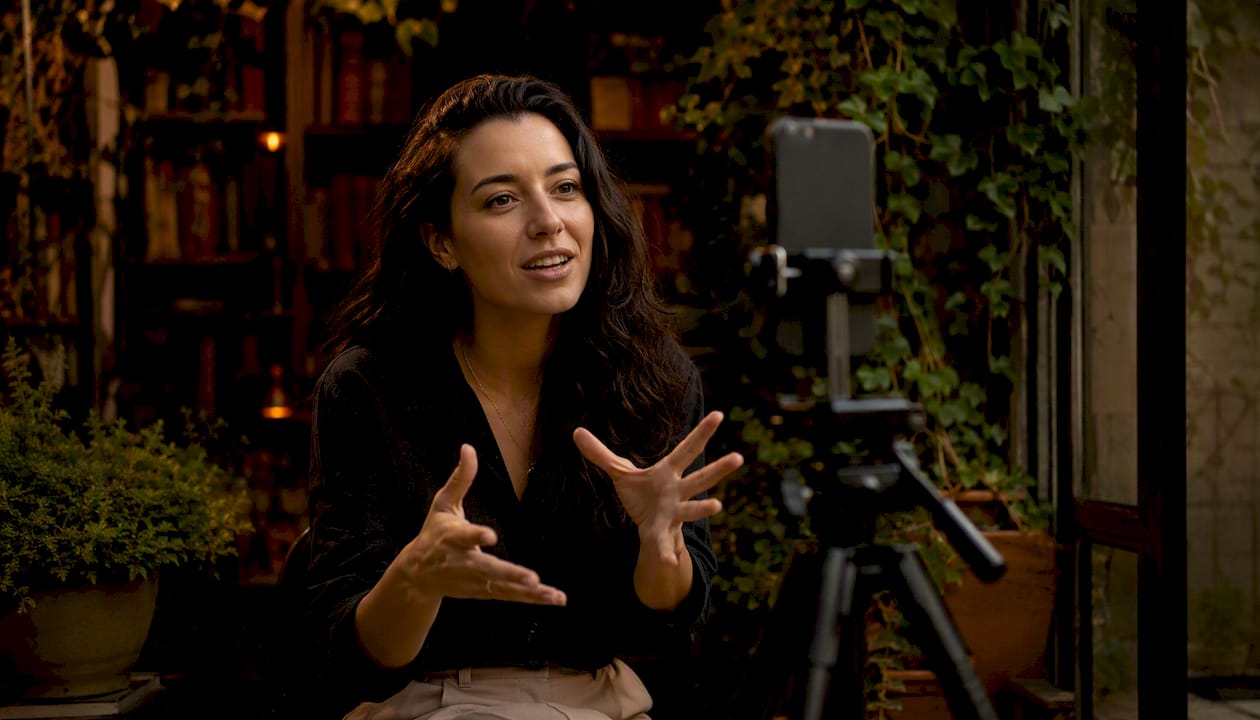
User-generated content is the cheapest form of proof you can generate. Offer a discount code or free month in exchange for an honest review or unboxing video, and make submitting one as low-friction as replying to an email.
A short outreach brief you can reuse:
- Who you are and what the product does, in one sentence
- What you're offering them (product, fee, commission, or affiliate link)
- What you need back (one post, one story, one honest review)
- Your deadline and how you'll track results (a unique code or link)
Practical tactics like influencer partnerships, referrals and affiliate programmes work best when the ask is specific and the reward is clear from the first message.
When should you run a discount, preorder or webinar?
Discounts and bundles work well at launch to generate early reviews, but cap them, deep or ongoing discounting trains buyers to wait for the next one and quietly erodes your margin. Preorders suit products still in production, they validate demand and fund inventory. Limited-time offers work only when the deadline is real.
For events: product demos convert warm leads, webinars build authority and capture emails, and pop-ups work if your buyers are local. Practical promotion tactics such as discounts, collaborations and events all need a measurement plan behind them, not just a mechanic.
A basic promo checklist:
- Set the timeline (announce, run, close) two weeks out minimum
- Prepare assets: landing page, email copy, social posts, follow-up sequence
- Build your audience list before the promotion starts, not during it
- Follow up attendees or buyers within 48 hours with a clear next step
What KPIs and tests actually show you what's working?
Every channel needs its own scorecard, and comparing a social engagement rate to a paid ROAS figure tells you nothing useful.
| Channel | Primary KPI | Early benchmark to watch |
|---|---|---|
| Paid ads | ROAS and conversion rate | Cost per conversion below your product margin |
| Open rate and click-through rate | Rising click-through across three sends | |
| SEO / content | Organic traffic and time on page | Steady month-on-month traffic growth |
| Social / video | Engagement rate and shares | Consistent watch-through on video content |
Set clear objectives before launch and run a post-campaign review against those numbers rather than judging performance by gut feel.
Tracking checklist:
- Tag every campaign link with UTM parameters so traffic sources are unambiguous
- Set up conversion tracking on any ad platform you spend money on
- Confirm your analytics events fire correctly before you launch, not after
A/B test plan: pick one variable at a time, headline, CTA colour, or subject line, and run it until you have enough traffic to see a clear gap. If one version wins by a wide margin within a week, scale it. If the gap is marginal, the variable probably isn't the bottleneck, look elsewhere.
Why benefit-led messaging outperforms feature lists
A common trap is writing copy that describes what a product does rather than what it changes for the buyer. Marketing experts consistently advise leading with benefits over features, positioning the product as the answer to a problem the customer already has, not a list of specifications they have to translate themselves.
Try this exercise: write down every feature, then next to each one ask "so what does that mean for the buyer?" A "40-page workbook" becomes "structured lessons you can finish in a lunch break." Messaging also lands better when it matches your audience's values and habits, not just their age or job title.
Three templates to steal:
- Product page headline: "[Outcome] without [common frustration]"
- Ad copy: "You don't need [old, harder way]. You need [your product], and here's why."
- Email subject line: "The [problem] fix you haven't tried yet"
Test each on a small segment before rolling it out fully, a few hundred email sends or a £50 ad spend is enough to see which wording pulls harder.
Pro Tip: Place your strongest testimonial directly under the headline, not buried at the page bottom. Readers decide whether to keep scrolling in the first five seconds.
Author perspective: what typically works for small businesses
Most small sellers overspend on paid ads before they've validated anything with email or content. The pattern that scales predictably is smaller: one seller nails a welcome email sequence and a weekly short video, sees which posts actually drive replies, then puts money behind exactly that. Validation before spend, every time.
Selling and promoting digital products with Bibliowlteca
Once you've validated demand with the tactics above, the harder problem for creators is often the plumbing behind the sale, storefronts, payment processing, tax handling, and delivering the actual file or course without a support headache. Bibliowlteca handles that layer so you can put your promotional effort where it matters. The platform gives you a customisable storefront, global payments in multiple currencies, and automatic digital delivery for e-books, courses and mentorship products, so a buyer in one country and a buyer in another both check out cleanly.

Bibliowlteca takes a transaction fee only when a sale actually completes, so there's no upfront cost while you're still testing which of your five launch moves works. If you're building your first e-book product page or setting up a course to promote with the email and video tactics above, start building your storefront and get it live before your next promotional push.
Sources
For deeper dives on the tactics covered here, these guides are worth bookmarking:
- The ultimate guide to effective product promotion and marketing techniques
- What is product promotion? How to, strategies & examples
- 101 BEST Product Promotion Strategies to Explode Your Sales in 2026 - Wealthy Creative