
A course certificate only means something when it rests on two things: assessed learning outcomes and an issuer whose identity and registration can be checked. The Estonian continuing education standard treats a 'tunnistus' and a 'tõend' as legally distinct documents, and the European Commission's micro-credentials approach leans on the same logic. Before enrolling anywhere, including BibliOWLteca, verify the issuer and the assessment method.
TL;DR:
- Certificates based on assessed learning outcomes and verified issuers carry more weight than participation records or unverified documents.
- Verifying the issuer's registration, the course curriculum, and a certificate number are crucial steps before trusting or sharing any certification.
- Recognition by employers or universities depends on case-by-case validation, requiring detailed documentation like syllabus, assessment criteria, and provider registration.
- Creators must ensure certificates include a unique number, clear assessment details, and metadata, with proper record-keeping to maintain trustworthiness.
- Using digital wallets and secure verification pages helps learners preserve and validate certificates long-term, avoiding reliance on superficial design alone.
Table of Contents
- Types of course certificates and micro-credentials
- How certificates are issued and legal signals to check
- Will an employer or university accept the certificate?
- Checklist: choosing a certificated course before you enrol
- Storing, sharing and verifying your certificates
- How creators should issue certificates people can trust
- What the certificate industry gets wrong
- BibliOWLteca: built for creators issuing verifiable certificates
- Sources
- FAQ
Types of course certificates and micro-credentials
Not every document handed out at the end of a course carries the same weight. Estonian continuing education law draws a sharp line between a participation record and an assessed outcome, and that distinction shapes how the certificate can be used afterwards.
A 'tõend' simply confirms attendance: you turned up, you finished the hours, nothing was tested. A 'tunnistus', by contrast, is issued only after the learner's knowledge or skills have been formally assessed, which is why employers and institutions generally weight it far more heavily.
Micro-credentials sit alongside these two older categories. They are smaller units of learning, but a properly designed one still carries metadata: stated learning outcomes, workload, level and an assessment method, following the European Commission's micro-credentials framework. Whether a micro-credential carries formal recognition depends entirely on who issues it and how it is documented.
In practice, you will run into a handful of formats:
- A numbered PDF certificate, often the standard output of an assessed course.
- A digital badge, typically used for shorter, skills-based achievements.
- An ECTS or academic-hour transcript entry, used where the course maps to a formal credit system.
- A micro-credential statement with learning outcomes and workload listed as metadata.
How certificates are issued and legal signals to check
Who issues the document matters as much as what the document says. In Estonia, providers of continuing education must number every certificate and attestation they issue and keep a record of it, which gives learners a concrete way to check authenticity later.
Before trusting a certificate, run through this short sequence:
- Confirm the provider is registered and, where the course requires it, holds the relevant activity licence.
- Check that the course curriculum, including learning outcomes and assessment method, is published somewhere you can read before paying.
- Look for a certificate number and a way to verify it, either through the provider's own registry or a public lookup page.
- Note the stated workload: Estonian continuing education measures volume in academic hours of 45 minutes, while micro-credentials are often expressed in ECTS, where roughly 26 learner hours equal one credit.
The European Commission's micro-credentials approach expects the same transparency: clear outcomes, an assessment trail, and metadata that travels with the credential rather than living only in the provider's memory.
Pro Tip: Before paying for any course, ask the provider for their registry number and a sample certificate, not just a marketing page.
Will an employer or university accept the certificate?
Recognition is never automatic, and it is never universal. A certificate that opens doors with one employer may need extra evidence before a university accepts it, because both make case-by-case decisions.
For academic recognition, Estonia's ENIC/NARIC guidance is the body to approach, and it can issue a written evaluation statement to support a recognition request. For non-formal learning, the VNIL (VÕTA) validation system lets institutions map prior learning and work experience against formal requirements, though the receiving institution still decides.
When you apply for recognition, gather:
- The syllabus and stated learning outcomes.
- The assessment criteria or rubric used to grade the course.
- The provider's registry entry and activity licence reference.
- Your certificate number, so the issuer can confirm it on request.
Submitting this dossier upfront, rather than waiting to be asked, shortens the evaluation considerably.
Checklist: choosing a certificated course before you enrol
A good checklist catches weak offerings before you have paid for them. Run through these points with any course you are considering, including ones listed through platforms such as BibliOWLteca.
- Confirm the provider's registration and contact details are public and current.
- Favour providers who publish their curriculum and assessment criteria rather than a vague outline.
- Establish whether the course ends in an assessed 'tunnistus', a micro-credential with full metadata, or only a participation 'tõend'.
- Check the workload and credit basis, whether academic hours or ECTS, alongside the timeline and a full cost breakdown.
- Ask for a sample certificate or a verification page, and confirm the provider numbers and tracks what it issues.
Our guide on tracking course completion covers the administrative side of this from a provider's viewpoint, which is worth reading if you want to understand what a well-run issuing process looks like from the inside.
Pro Tip: If a provider cannot explain how they number or verify certificates, treat that as a quality signal on its own.
Storing, sharing and verifying your certificates
Once issued, a certificate needs to survive being asked for years later, often by someone who was not involved in the original course. Keep the original PDF, note any provider verification page, and where available, add the credential to a digital wallet such as Europass so it stays portable between applications.
- Keep a backup of the certificate plus the syllabus and assessment details together, since recognition checks move faster when both arrive at once.
- Use the provider's own verification page rather than sharing scanned copies that strip out metadata.
- Be mindful of what personal data a public verification link exposes, and ask the provider how long they retain their own records.
Our piece on digital learning frameworks goes further into assembling supporting evidence if you are preparing a formal recognition request.
How creators should issue certificates people can trust
Creators publishing certificated courses carry the same obligations as any other provider: a unique, sequential certificate number, a secure delivery method, and metadata that states learning outcomes and assessment clearly. Multilingual templates matter too, since a certificate that only exists in one language limits who can use it.
Platform-level record keeping, including payment and tax documentation, reinforces this trust: a creator who can show consistent sales records and certificate numbering gives recognition bodies more confidence than one who cannot. Our notes on payment setup for course creators cover the administrative side creators often overlook.
What the certificate industry gets wrong
Most advice on course certificates focuses on collecting them, not on whether anyone downstream will actually accept one. That is backwards. A wall of badges means nothing if none of them carry an assessment trail or a verifiable issuer, and plenty of learners discover this only when an employer or admissions officer asks for evidence they never kept.

The overrated piece is the certificate's design: a polished PDF with a gold seal says nothing about rigour. The underrated piece is the paperwork trail behind it: syllabus, assessment criteria, provider registration, and a number that can actually be checked. VNIL validation and ENIC/NARIC evaluations exist precisely because institutions need that trail, not the certificate's appearance.
If you take one thing from this: build your dossier before you need it. Save the syllabus, note the assessment method, and keep the provider's registry details the day you finish the course, not the day someone asks for them.
— BibliOWLteca
BibliOWLteca: built for creators issuing verifiable certificates
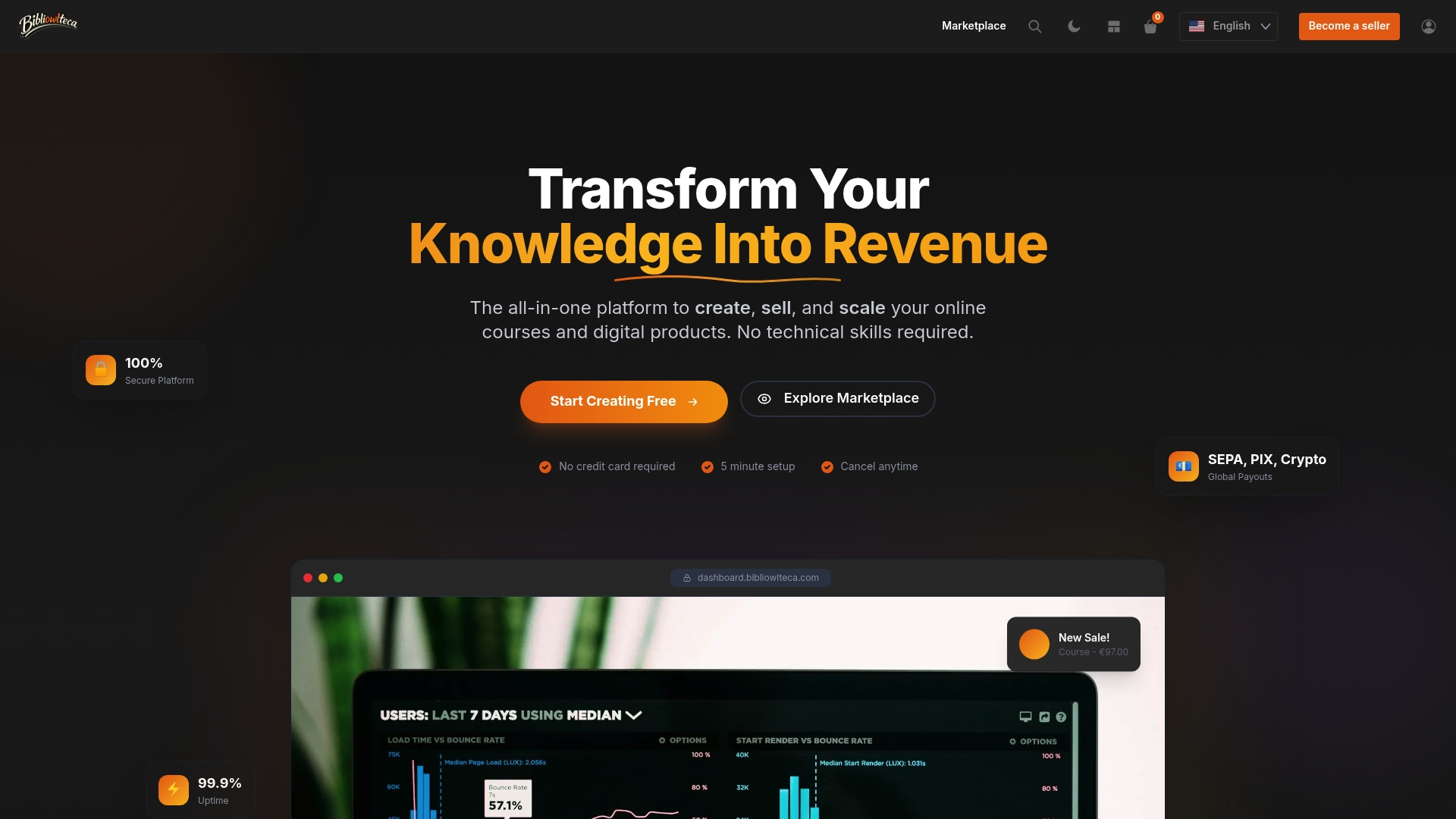
Creators who want their certificated courses to hold up under scrutiny need infrastructure, not just a video player. BibliOWLteca gives course creators secure hosting, built-in quiz tools for genuine assessment, and digital delivery that keeps certificate issuance consistent and traceable.
- Multi-currency payments, so international learners can enrol without friction.
- Tax compliance handling built for creators selling across borders.
- Storefronts and course hosting that keep certificate numbering and records in one place.
The Creator Plan charges no monthly fee, and applies a transaction fee starting from under one British pound per completed sale, so there is no cost until a course actually sells. Browse existing certificated courses on the marketplace or check pricing details before listing your own.
Sources
- Riigi Teataja — Täienduskoolituse standard
- European Commission — Micro‑credentials
- HARNO / Estonian ENIC/NARIC guidance
- VNIL report — Estonia 2023
FAQ
What is the difference between a tunnistus and a tõend?
A 'tunnistus' is issued after the learner's outcomes have been assessed, while a 'tõend' only confirms attendance without testing anything. Estonian continuing education rules treat them as distinct documents, and only the assessed version typically carries weight with employers or institutions, according to the Estonian continuing education standard.
Will my course certificate be recognised abroad or by an employer?
Recognition is decided case by case, never automatically. Academic recognition enquiries go through ENIC/NARIC, which can issue a written evaluation statement, while non-formal learning can sometimes be validated through Estonia's VNIL system.
What should a trustworthy course certificate include?
It should carry a unique certificate number, the issuer's registration details, and clear information about the assessment method and learning outcomes. The European Commission's micro-credentials approach lists the same elements as the baseline for transparency and portability.
How much does it cost to publish a certificated course on BibliOWLteca?
The Creator Plan has no published monthly fee, and BibliOWLteca charges a transaction fee from £0.99 one off per completed sale. Creators only pay once a course actually sells.
How do I check if a course provider is properly registered?
Ask the provider directly for their registry number, any required activity licence, and a published curriculum with assessment criteria. Estonian continuing education rules require providers to number and keep records of every certificate or attestation they issue, which gives you a concrete detail to verify against their own registry.