
Your work is protected the moment you create it. Under the Autoriõiguse seadus (Estonian Copyright Act), copyright in digital content arises automatically on creation, with no registration required. EU Directive 2019/790 on the Digital Single Market reinforces those protections online, and international frameworks from WIPO and EUIPO extend them across borders. Three actions to take right now:
- Verify third-party rights before embedding, quoting, or republishing any external material.
- Choose and apply a licence to your own work, whether a bespoke agreement, a Creative Commons variant, or a public domain dedication.
- Document and time-stamp your original files, drafts, and any permissions you receive.
Key takeaways
Copyright in digital content is automatic under Estonian law, but protecting and monetising it requires deliberate action at every stage from creation to publication.
| Point | Details |
|---|---|
| Protection is automatic | Copyright arises on creation; no registration is needed, but documentation strengthens your position. |
| Duration: life plus 70 years | The 70-year term begins 1 January after the author's death; calculate carefully before using older works. |
| Licence everything explicitly | Apply a visible licence to your own work and verify the licence of every third-party asset before publishing. |
| Document and preserve evidence | Timestamped files, permission records, and metadata are your primary defence in any infringement dispute. |
| Bibliowlteca supports secure publishing | The platform provides authenticated delivery, licence display, and global payments for digital creators. |
This article is general information, not a substitute for advice from a qualified lawyer. Consult a qualified legal professional about your own circumstances before acting on anything here.
Table of Contents
- What autoriõigused digitaalsisu actually covers
- How long does protection last, and who is the author?
- Which uses are allowed without permission?
- How to obtain and grant permission lawfully
- A pre-publication checklist for third-party content
- What to do when your work is used without permission
- A step-by-step workflow to protect and monetise your content
- Key things every creator should remember
- Bibliowlteca: publish, protect, and earn from your digital content
- Sources
What autoriõigused digitaalsisu actually covers
Copyright protects original expression, not ideas, facts, or raw data. The Autoriõiguse seadus explicitly lists protected categories, and for digital creators the relevant ones are broader than most people assume.
Protected digital works include:
- Software and source code (including scripts, plugins, and compiled applications)
- E-learning modules and online courses (video lectures, slide decks, quizzes, and accompanying text)
- Audiovisual recordings (screencasts, webinars, and podcast episodes)
- Databases and compilations where the selection or arrangement reflects creative judgement
- Written text (articles, course notes, e-books, and forum posts of sufficient originality)
- Images, graphics, and illustrations created or substantially edited by the author
- Musical compositions and sound recordings embedded in digital products
What falls outside protection: bare facts, statistical datasets with no creative arrangement, standard phrases, and purely functional elements such as a generic navigation menu. User-generated content is protected by its creator, not the platform hosting it, which matters when you aggregate or republish it.
The law draws a clear line between moral rights (the right to be named as author, to object to distortion, and to decide whether to publish) and economic rights (reproduction, distribution, communication to the public, and adaptation). Moral rights cannot be transferred; economic rights can be licensed or assigned.
Pro Tip: Embed a rights notice and your name in the metadata of every file you publish. PDF, EPUB, MP4, and image formats all support XMP or EXIF fields. A metadata record is not legally required, but it creates a contemporaneous, machine-readable ownership signal that is far harder to dispute than a screenshot.
How long does protection last, and who is the author?
Protection lasts for the author's life plus several decades, with the term beginning on 1 January of the year following the author's death.
The practical calculation: If an author died several decades ago, the protection period may have ended and the work may have entered the public domain recently.
Key rules for non-standard authorship situations:
- Joint works: protection runs from 1 January after the death of the last surviving co-author.
- Anonymous and pseudonymous works: protection lasts 70 years from the date of lawful publication, unless the author's identity becomes known, in which case the standard life-plus-70 rule applies.
- Works made for hire: where an employee creates a work within the scope of employment, economic rights typically vest in the employer by contract or statutory default, though moral rights remain with the individual author.
- Transfers and heirs: economic rights can be assigned or inherited; always check the chain of title before assuming a transferred work is freely usable.
The term is the EU standard, harmonised across member states. It means that many twentieth-century works remain protected for many decades after the author's death.
Which uses are allowed without permission?
A small, defined set of uses are lawful without the rights holder's consent, but each carries strict limits. The governing test across EU copyright law is the three-step test: an exception is valid only if it covers a special case, does not conflict with the normal exploitation of the work, and does not unreasonably prejudice the rights holder's legitimate interests.
For educators and digital creators, the most relevant exceptions are:
Quotation allows you to reproduce short extracts for commentary, criticism, or illustration, provided the source and author are credited and the extent of quotation is justified by the purpose. Pasting three paragraphs of a textbook into a course module and calling it a quotation will not survive scrutiny; a sentence or two with clear attribution usually will.
Teaching exception permits use of protected works for educational illustration, but the scope varies. Under Directive 2019/790, member states must provide an exception for digital and cross-border teaching, though they may limit it to non-commercial educational establishments. Check whether your specific use falls within the national implementation.
Temporary technical copies made as part of a technical process (browser caching, streaming buffers, CDN edge copies) are generally exempt, provided they have no independent economic significance and are not stored beyond the technical need.
Text and data mining for research purposes is permitted under Directive 2019/790 for research organisations, subject to conditions.
How to obtain and grant permission lawfully
Use clear, written licences. A handshake or an email saying "yes, go ahead" is legally fragile; a short written agreement that specifies what is permitted, for how long, and in which territory is not.
Licence types to know:
- Exclusive licence: the licensee is the only person who can exercise the specified rights; even the author cannot grant the same rights to anyone else during the term.
- Non-exclusive licence: multiple licensees can hold the same rights simultaneously; the most common arrangement for educational content.
- Creative Commons licences: standardised, machine-readable licences that communicate permitted uses publicly. For educational content, CC BY (attribution only) and CC BY-SA (attribution plus share-alike) are the most permissive and widely accepted. CC BY-NC restricts commercial use, which matters if you sell courses. CC BY-ND prohibits adaptations, which limits remixing.
- Public domain dedication (CC0): releases all rights to the maximum extent permitted by law; appropriate when you want no restrictions on reuse.
Collective management organisations (CMOs) handle rights that are impractical to license individually, particularly music, reprographic rights, and cable retransmission. CISAC coordinates CMOs internationally. In Estonia, the Eesti Autorite Ühing (EAU) manages authors' rights for literary and musical works. Contact the relevant CMO before embedding commercially released music in a course or reproducing substantial portions of published books.
A minimum licence clause set should cover: the grant (which rights, which formats), permitted uses (specific activities the licensee may carry out), duration (fixed term or perpetual), territory (worldwide or named countries), remuneration (fee, royalty rate, or royalty-free), and attribution (exact credit line required).
A pre-publication checklist for third-party content
Never assume that content found online is free to use. Practical guidance for digitisation projects recommends verifying copyright status, preferring public domain or Creative Commons material, and applying rights-statement models for uncertain or orphan works. The same logic applies to any creator embedding third-party material in a course or e-book.
- Identify the work's provenance. Who created it, when, and where was it first published?
- Check the author's death date. If the author died more than 70 years before 1 January of this year, the work is likely in the public domain in most EU jurisdictions.
- Check the licence or CMO status. Is there a Creative Commons licence attached? Is the work registered with a CMO? Does the platform's terms of service grant a sublicence?
- Read the machine-readable metadata. Many platforms embed licence information in file metadata or structured data. Check it before assuming the display licence is complete.
- Assess whether your use qualifies as quotation. Short extract, clear attribution, justified by purpose? If yes, document that reasoning. If no, seek permission.
- Document everything. Save a timestamped copy of the licence page, the permission email, or the CMO clearance. A versioned deposit (a ZIP with a hash) is stronger evidence than a screenshot.
Embedding vs. copying matters legally. Linking to or embedding a YouTube player keeps the file on the original host and generally respects the platform's terms. Downloading and re-hosting the same file is reproduction, which requires explicit permission regardless of how the original was labelled.
Pro Tip: Use a simple spreadsheet to track every third-party asset in a project: file name, source URL, author, licence type, date verified, and permission reference. If you are ever challenged, that log is your first line of defence.

What to do when your work is used without permission
Document first, then act. Courts and platforms both require evidence, and evidence degrades quickly online.
Practical action sequence:
- Preserve copies. Use a web archiving tool (such as the Wayback Machine's save function) to capture the infringing page. Take timestamped screenshots. Record the exact URL, the date, and the context.
- Send a formal notice. A cease-and-desist letter stating your ownership, the infringing content, and the remedy you require (removal, attribution, or licence fee) is the standard first step. Keep it factual and specific.
- Use platform reporting tools. Most major platforms (YouTube, social media networks, e-commerce sites) have copyright complaint mechanisms. A DMCA-style notice triggers a takedown obligation for platforms operating under safe harbour provisions.
- Contact your CMO. If the infringement involves rights managed collectively (music, reprographic rights), the relevant CMO can pursue enforcement on your behalf.
- Escalate to legal action when the infringement is commercial, repeated, or the infringer ignores your notice. At that point, consult a lawyer with IP experience.
Cross-border cases add complexity. WIPO research on online infringement localisation shows that courts increasingly use a targeting criterion: if a website uses your language, your currency, or targets your national market, it can be subject to your jurisdiction's enforcement even if hosted abroad. The e-Justice portal provides procedural guidance for cross-border EU disputes. EUIPO's Copyright Knowledge Centre is a practical starting point for understanding enforcement options across Europe.
A step-by-step workflow to protect and monetise your content
Treating copyright as a strategic asset, as WIPO advises, means building rights management into your creation process rather than retrofitting it after publication.
- Rights audit before you start. List every asset you plan to use: images, fonts, music, third-party text, datasets. Confirm the licence for each before you build around it.
- Document your own creation. Save dated drafts, version-controlled files, and working notes. These establish priority if ownership is disputed.
- Choose your licence before you publish. Decide whether you want to retain all rights, use Creative Commons, or dedicate the work to the public domain. Apply the licence visibly (on the product page, in the file metadata, and in the terms of service).
- Embed metadata. Add your name, the licence type, the publication date, and a contact address to every file. For e-books, use the Dublin Core or EPUB metadata fields. For video, embed in the file properties and the platform description.
- Apply digital watermarking where appropriate. Visible watermarks deter casual copying; invisible forensic watermarks (steganographic techniques) can identify the source of a leak even after a file has been edited or compressed.
- Publish through a platform that supports secure delivery. A marketplace that controls file access, prevents unauthorised downloads, and processes payments in multiple currencies reduces both piracy risk and administrative burden. For selling e-books securely, Bibliowlteca provides encrypted delivery and customisable storefronts that keep your files off open file-sharing networks.
- Set up monitoring. Google Alerts for your title and key phrases, reverse image search for visual assets, and periodic manual checks of major platforms catch most infringements early.
- Review and renew licences annually. Licence terms, CMO agreements, and platform terms of service change. A once-a-year review prevents you from unknowingly operating under outdated permissions.
Pro Tip: Register with your national CMO even if you do not expect to earn royalties immediately. Registration costs little, and CMOs distribute collected remuneration only to registered rights holders. Unclaimed royalties are redistributed after a set period.
Key things every creator should remember
- Assume protection. Any original digital work is protected by default. The absence of a copyright notice does not mean a work is free to use.
- Verify before you embed. Check the licence, the author's death date, and the CMO status of every third-party asset before publication.
- Licence deliberately. Choose an explicit licence for your own work and apply it visibly in metadata and on the product page.
- Document everything. Timestamped evidence of creation and permission is your primary defence in any dispute.
- Use platform tools. Secure delivery, metadata support, and payment processing reduce both infringement risk and compliance overhead.
- Seek legal advice when a dispute involves commercial-scale infringement, cross-border enforcement, or a licence agreement of significant financial value.
A note from BibliOWLteca
At Bibliowlteca, we work with creators and educators who are building real businesses from their knowledge. Copyright is not a bureaucratic hurdle in that process; it is the legal foundation that makes monetisation possible. When a creator publishes an e-book or course through our platform, the infrastructure handles secure delivery, payment processing across multiple currencies, and tax compliance, so the rights management conversation can stay focused on the work itself rather than the logistics of getting it to buyers safely. The tools exist. The legal framework is clear. The gap is usually just knowing where to start.
Bibliowlteca: publish, protect, and earn from your digital content
Knowing your rights is one thing; having a platform that enforces them in practice is another. Bibliowlteca gives creators a secure environment to publish and sell e-books and courses without exposing files to open download links or uncontrolled distribution.
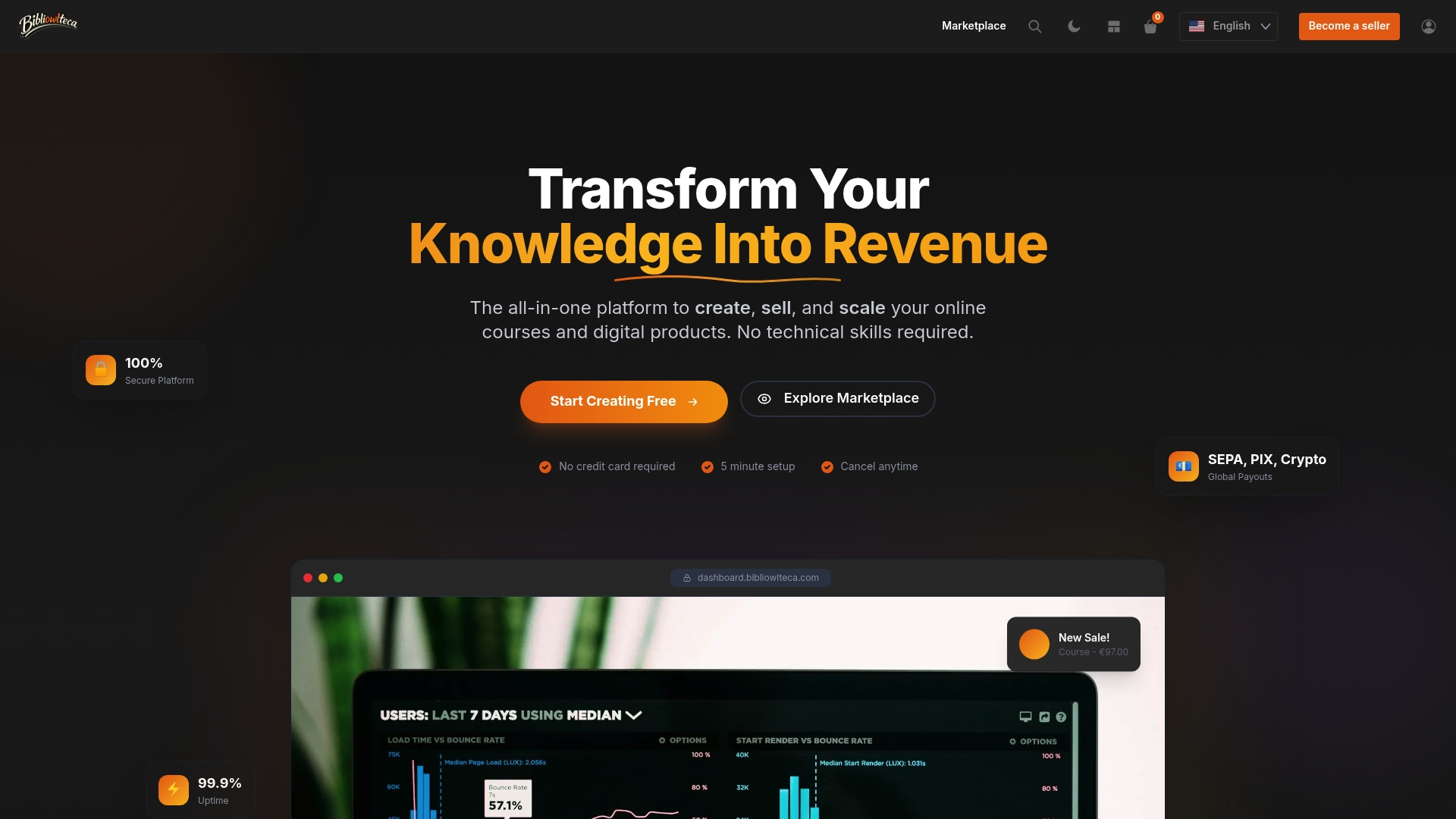
Three things the platform handles that directly support rights management:
- Secure digital delivery: files are served through authenticated, access-controlled links, not public URLs.
- Metadata and licence display: product pages support custom licence terms, attribution notices, and rights statements visible to every buyer.
- International payments: multiple currencies and built-in tax compliance mean you can reach a global audience without a separate legal review for each market.
If you are ready to turn your protected content into a sustainable income stream, start with your storefront on Bibliowlteca and publish your first product today.
Sources
- Autoriõiguse seadus–Riigi Teataja
- Kultuuripärandi digiteerimine 2018-2023, autoriõiguste parima praktika juhend
- EUIPO
- WIPO