
TL;DR:
- Understanding which digital skills truly matter helps creators build impactful online courses and e-books.
- Frameworks like UNESCO's ICT CFT, DigComp 3.0, and the World Bank model guide skill development and ethical content creation.
The digital content landscape shifts fast, and for creators and educators, the real challenge is not a lack of tools or platforms. It is knowing which skills genuinely move the needle. With 18 competencies across six areas outlined by the UNESCO ICT Competency Framework for Teachers, it is easy to feel overwhelmed before you have even opened your course builder. This article cuts through the noise by anchoring recommendations in globally recognised frameworks, then translating them into the precise, practical skills you need to create, publish, and profitably sell e-books and online courses to a worldwide audience.
Table of Contents
- Frameworks that shape digital skills for creators
- Key digital skills every successful creator needs
- Comparing digital skills by sector and region
- Top strategies to build and market strong digital skills
- The uncomfortable truths about digital skills for creators
- Take your digital skills—and sales—further with BibliOWLteca
- Frequently asked questions
Key Takeaways
| Point | Details |
|---|---|
| Use global frameworks | Structured models like ICT CFT and DigComp clarify which digital skills matter most for content creators and educators. |
| Develop core skills | Focus on ethical content creation, effective publishing, AI integration, and digital marketing basics for best results. |
| Recognise sector differences | Skill levels can vary by sector, region, and infrastructure, so benchmark yourself realistically. |
| Prioritise practical strategies | Continuous learning, community support, and performance tracking lead to stronger digital skills and outcomes. |
| Success needs more than tech | Mindset, ethics, and adaptability are just as vital as mastering digital tools. |
Frameworks that shape digital skills for creators
Not all digital skills are equally important. Before you invest time in learning yet another tool, it helps to know which competencies actually matter according to the organisations that study this most rigorously. Three frameworks stand out for creators and educators: UNESCO's ICT Competency Framework for Teachers (ICT CFT), the European Union's DigComp 3.0, and the World Bank's digital competency model for educators.
The UNESCO ICT CFT organises digital skills into a progression model. You move from basic knowledge acquisition through deeper knowledge construction to knowledge creation. At each stage, the framework defines what digital content creation should look like, how to apply technology ethically, and how to support learner collaboration. For creators selling e-books and courses, this progression matters. It means that understanding how to structure learning content is just as important as knowing which software to use.
DigComp 3.0, published by the European Commission, builds on earlier versions by placing stronger emphasis on ethical content creation, integrating Open Educational Resources (OER, meaning freely available learning materials), and incorporating AI tools responsibly into the creation process. Notably, DigComp 3.0 and ICT CFT both stress continuous progression from basic to advanced skills, making them highly applicable whether you are just starting out or scaling an established content business.
The World Bank's model adds further breadth. It identifies 16 digital skills domains for educators, covering 17 sub-competencies including pedagogical content creation, evaluation, and personalisation. While this model targets institutional educators, its principles translate directly to independent creators who need to design learning experiences that genuinely work.
These frameworks are not just for academics. Understanding them gives you a structured way to identify where your skills sit today and what to prioritise next. Keep an eye on digital education trends to see how these frameworks are shaping the tools and methods shaping the field right now.
Framework comparison: what each one recommends
| Skill area | UNESCO ICT CFT | DigComp 3.0 | World Bank |
|---|---|---|---|
| Digital content creation | Core across all stages | Central competency area | Included in 16 domains |
| Ethical technology use | Emphasised throughout | Strong focus | Addressed |
| AI tool integration | Referenced in advanced stages | Explicitly included | Covered under personalisation |
| OER adoption | Encouraged | Highlighted | Recommended |
| Assessment and evaluation | Yes | Yes | 17 sub-competencies |
| Learner personalisation | Knowledge construction stage | Yes | Core domain |
The most relevant competencies for e-book and online course creators, drawn from all three frameworks, include:
- Creating and structuring digital content that supports genuine learning outcomes
- Ethical use of technology including licensing, attribution, and data privacy
- Integrating AI tools for content generation, translation, and personalisation
- Adopting OER to extend reach and improve accessibility without added cost
- Digital marketing and audience analytics to grow and retain your learner base
- Evaluation and iteration using feedback loops to improve content quality over time
Key digital skills every successful creator needs
Frameworks give you the map. Now let us walk the terrain. Here are the core digital skills that translate directly into stronger content, higher engagement, and better sales for e-book and course creators.
Content creation and editing tools are your starting point. Proficiency in design software (such as Canva or Adobe Express), video editing platforms, and document formatting tools directly affects the quality and professionalism of what you publish. A well-formatted e-book with clear typography, consistent headings, and embedded visuals is not just aesthetically pleasing. It signals credibility to buyers. For courses, video production quality, clear narration, and interactive elements like quizzes all influence completion rates and learner satisfaction.

Ethical content use and Open Educational Resources deserve more attention than most creators give them. OER means any learning resource with an open licence that allows free use, adaptation, and redistribution. Using OER in your materials reduces production costs, broadens your content base, and keeps you on the right side of copyright law. DigComp 3.0 specifically highlights skills like ethical tool use and integrating knowledge from open sources as essential competencies. This matters practically: a single copyright dispute can force you to pull a product from sale entirely.
AI-powered content integration and personalisation is no longer optional for creators who want to scale. AI tools can help you generate first drafts, translate content into multiple languages, suggest quiz questions, personalise learning pathways for different audience segments, and even analyse which sections of an e-book readers engage with most. The key is using these tools with clear judgement about accuracy, bias, and attribution. Review your digital publishing guide to understand how AI fits into an effective publishing workflow without compromising the integrity of your content.
Digital marketing basics separate creators who struggle with visibility from those who build sustainable audiences. Core skills include building and managing an email list, understanding analytics dashboards (who visits your sales page, where they drop off, what prompts purchase), writing persuasive copy for landing pages, and running structured social media content. These are learnable skills, not mysteries. They are also directly tied to revenue, which means investing time in them pays off faster than many other skill areas.
Online course and e-book design is its own discipline. Strong instructional design (the science of structuring content to maximise learning) makes a real difference to learner outcomes and reviews. Think about chunking content into short modules, using retrieval practice (short tests at the end of each section), and providing clear learning objectives at the start. These principles apply equally to e-books, where chapter structure, summary boxes, and practical exercises significantly improve reader value. Strong design also supports monetising digital content because high-quality products generate more positive reviews, referrals, and repeat purchases.
Here is a focused list of skills worth building first, in order of practical impact:
- Email marketing and list building
- Basic graphic design and visual content creation
- Video production and editing (even at a beginner level)
- Instructional design and course structure
- SEO fundamentals for course and e-book landing pages
- AI tool literacy (prompt writing, output review, responsible use)
- Data analytics and conversion tracking
Pro Tip: Do not try to master all these skills simultaneously. Pick the one that represents your biggest current gap and spend four to six weeks building genuine proficiency before moving to the next.
Comparing digital skills by sector and region
With core skills identified, it is worth stepping back and looking at where real-world differences in digital competence play out. The data here is genuinely surprising, and it should inform how you benchmark yourself.
Research into Spanish university educators found that private institution teachers outperform their public sector counterparts in digital content creation, with notable regional variation. Teachers in La Rioja, for instance, scored higher than those in many other regions. This is not simply a resources story. It reflects differences in professional learning cultures, institutional expectations, and the degree to which ongoing digital development is treated as a career priority versus an occasional add-on.
For independent creators and educators, the lesson is stark. If you operate without the structured professional development that some institutional roles provide, you must take that responsibility on yourself. No one is going to schedule your upskilling for you.
Gender and infrastructure also shape digital skill outcomes in ways that are not always acknowledged. Self-reported assessments tend to overestimate actual digital competence, and the pattern is consistent: people who lack access to robust digital infrastructure, or who have had fewer formal opportunities to build skills, are more likely to rate themselves inaccurately when not benchmarked against clear standards. This is a problem because overconfidence leads to under-investment in skill development.
The practical implication for creators: use external benchmarks, not gut feeling, to evaluate where you actually stand. Work through a DigComp self-assessment tool, take a structured online course with assignments, or seek honest feedback on your content from peers in your field.
Skills comparison: public vs private sector and regional variation
| Factor | Public sector educators | Private sector educators |
|---|---|---|
| Digital content creation level | Moderate | Higher |
| Uptake of AI tools | Slower | Faster |
| Access to professional development | More structured but variable | More integrated |
| Regional variation | High | Moderate |
| Self-assessed vs actual competence gap | Often wider | Slightly narrower |
"The most effective digital skills development does not happen through one-off workshops. It happens through sustained professional learning communities where creators and educators regularly share, critique, and refine their practice together." This insight, drawn from multiple World Bank and JRC studies, points to something independent creators often underestimate: community is infrastructure.
Infrastructure differences between regions also affect what digital marketing channels work best for your audience. If your target learners are based in regions with lower average broadband speeds, a course that relies heavily on high-resolution video without a download option will have real accessibility problems. Thinking about your audience's infrastructure is a genuine digital skill in itself. Learn more about monetising expertise across different markets to understand how these regional factors affect pricing and delivery choices.
Top strategies to build and market strong digital skills
Insight without action is just reading. Here are concrete strategies that move you forward, grounded in what the evidence says actually works.
-
Engage in structured, ongoing learning. One course per quarter focused on a specific skill gap beats a scattershot approach to watching tutorial videos. Platforms offering certifications or assessed projects force you to apply what you learn, which is how genuine competence develops.
-
Build and use your OER library. Identify three to five reputable OER repositories relevant to your subject area. Incorporate openly licenced content into your e-books and courses, always with proper attribution. This expands your content quality, reduces production time, and aligns with UNESCO's OER recommendations for inclusivity and accessibility across global markets.
-
Adopt ethical, AI-supported tools strategically. Use AI to accelerate production, not to replace your expertise. Strong use cases include: generating multiple-choice quiz questions from your course text, creating first-draft promotional copy that you then refine, translating e-books into additional languages for new markets, and analysing learner feedback at scale to identify recurring content gaps.
-
Prioritise email marketing above social media for sales. This is one of the most consistently supported findings in digital marketing research, and it contradicts where most creators spend their time. Email converts better than social media for paid products because the audience has already opted in and demonstrated interest. Build your list from day one, offer genuine value through it, and treat it as your primary sales channel rather than a secondary one.
-
Measure regularly and recalibrate. Set quarterly reviews of your content performance data. Which e-books have the highest conversion rates? Which course modules see the highest drop-off? Where do potential buyers abandon your sales page? These data points tell you where your skills and your content need work. Use them. For a practical overview of what this looks like in a global context, explore selling educational content globally and how platform data can guide your strategy.
-
Join professional learning communities. Whether this is a paid mastermind group, a free forum for course creators, or a regional association for educators, peer critique accelerates growth in ways that solo study cannot replicate. The creators who improve fastest are almost always embedded in communities where honest, specific feedback is the norm.
-
Deepen your understanding of e-book engagement patterns. Knowing how readers actually interact with digital books shapes how you design them. Research consistently shows that readers engage more with e-books that include interactive elements, embedded summaries, and clearly signposted takeaways. Explore engagement with e-books to understand what drives sustained reading behaviour and how to apply it to your own publications.
Pro Tip: Treat email marketing as a skill to master, not just a tool to use. Study subject line testing, segmentation, and automation sequences. A well-designed email funnel can convert a modest list of 500 engaged subscribers far more effectively than a social media following of 10,000 passive ones.
The uncomfortable truths about digital skills for creators
Most digital skills lists focus on tools. Download this app. Learn that platform. Master this software. And while tools matter, they are the least durable part of your skill set. Tools change rapidly. Your judgement, ethics, and ability to adapt do not need to be rebuilt from scratch with every new release.
Here is what we have observed watching creators build real, sustainable businesses: the ones who plateau fastest are often those who invest heavily in technical proficiency but neglect the human dimensions of their work. They know every feature of their course platform but have not thought seriously about whether their content genuinely serves their learners. They can produce a polished e-book cover but have not invested in becoming a clearer writer or a more rigorous thinker about their subject matter.
The frameworks we discussed earlier, UNESCO's ICT CFT, DigComp 3.0, the World Bank model, are valuable precisely because they are not just tool inventories. They describe kinds of thinking: ethical reasoning, continuous learning, community participation, honest evaluation. These are the skills that age well.
There is also a real danger in overestimating your own digital competence, and it is more common than creators admit. The JRC research on self-assessment bias is telling. When we rate ourselves without external reference points, we tend to rate ourselves highly. This feels comfortable but it is costly. It means we under-invest in the areas where we actually need development, and we ship content that does not perform as well as it should.
The solution is not self-doubt. It is honest, structured self-evaluation against benchmarks that mean something. Use the frameworks. Compare your work against creators who are further along. Seek feedback from your actual learners, not just your peers. The gap between where you think you are and where you actually are is often where the most valuable growth happens.
One more thing worth saying plainly: community is not a soft option. For independent creators, professional learning communities are not a nice-to-have. They are how you stay calibrated, motivated, and genuinely developing rather than simply busy. Explore creator strategies that centre community as a core business asset, not an afterthought. The creators who build lasting knowledge businesses almost invariably have strong networks of peers who challenge and support them in equal measure.
Take your digital skills—and sales—further with BibliOWLteca
Developing strong digital skills only creates results when you have the right infrastructure to act on them. Whether you are launching your first e-book, scaling a course library, or expanding into new international markets, the platform you use shapes what is actually possible.
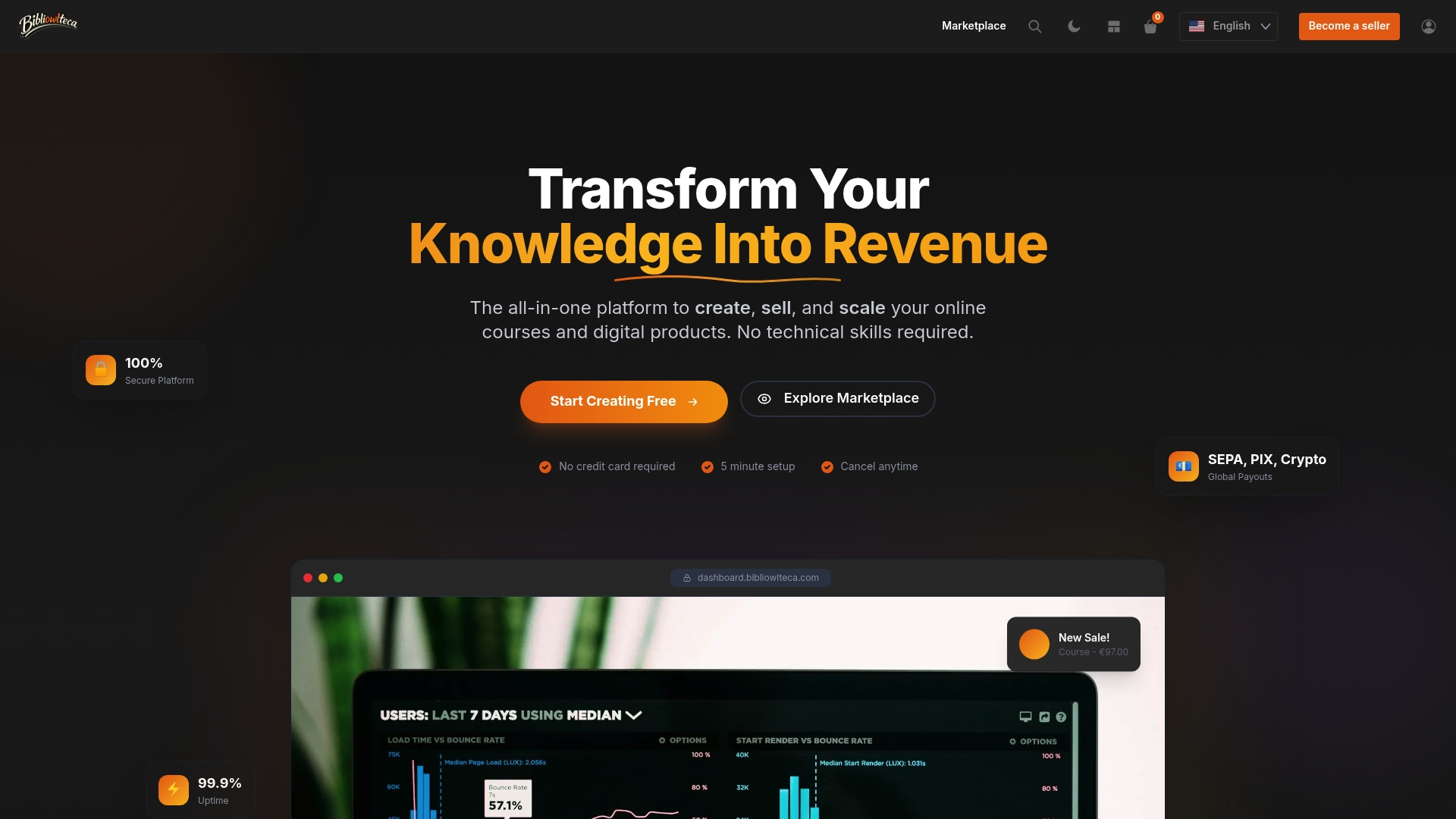
BibliOWLteca is built specifically for educators and content creators who want to sell and distribute educational content globally without the technical headaches. From multi-currency payment processing and automated tax compliance to secure digital delivery and audience management, the platform handles the infrastructure so you can focus on what you do best: creating outstanding content. With the skills you have built, and the right tools behind them, reaching a worldwide audience is genuinely within reach. Start building your digital content business on BibliOWLteca today.
Frequently asked questions
What are the most important digital skills for e-book and course creators?
Core skills include ethical content creation, digital publishing, AI tool usage, and effective digital marketing, as frameworks like UNESCO ICT CFT and DigComp consistently identify across their competency models.
How do private and public sector educators differ in digital skills?
Private sector educators typically demonstrate stronger digital content creation skills, with Spanish research highlighting consistent public versus private disparities alongside notable regional variations in performance.
What is the best way to market digital educational content?
Email marketing outperforms social media for conversions, and UNESCO advises prioritising OER to broaden reach and improve accessibility across different learner markets globally.
Are self-reported digital skills accurate?
No. Research confirms self-assessments overstate actual digital competence, particularly when creators have not benchmarked their skills against established frameworks or external standards.