
TL;DR:
- True content hosting involves secure delivery, global accessibility, and scalable infrastructure.
- Choose platforms with DRM, multi-currency support, analytics, and simple user flows suited to your needs.
- Effective hosting combines security, ease of use, and clear distribution channels to grow a digital education business.
Uploading a file to the cloud and calling it "hosted content" is a bit like printing a book and leaving it in a locked room. It exists, but nobody benefits. For content creators and educators building digital businesses, true content hosting means far more than storage. It means secure delivery, seamless access across borders, protection from piracy, and the infrastructure to actually sell what you have created. Library trends in 2026 have reshaped how educational materials reach learners worldwide, raising the bar for what creators must provide. This guide walks you through every layer of hosting, selling, and distributing digital educational materials so you can build a sustainable, global knowledge business.
Table of Contents
- What is content hosting and why does it matter?
- Choosing the right platform for educational content
- Best practices for securely hosting and distributing educational resources
- How to sell and monetise your hosted educational materials
- Enhancing reach and engagement with hosted content
- A fresh take on successful content hosting for educators and creators
- Discover a smarter way to host and sell your digital content
- Frequently asked questions
Key Takeaways
| Point | Details |
|---|---|
| Content hosting essentials | Secure hosting and reliable delivery are crucial for educational content success. |
| Platform choice matters | The right hosting platform should match your needs for security, scalability, and audience reach. |
| Monetisation opportunities | Digital marketplaces simplify selling e-books and courses to a worldwide audience. |
| Boost engagement | Well-hosted resources foster deeper learner engagement and better outcomes. |
What is content hosting and why does it matter?
Content hosting, in the context of digital education, means storing your materials on a server or platform that makes them reliably accessible to learners wherever they are. That includes e-books, online courses, video lessons, worksheets, and any other digital resource you produce. But the word "reliably" carries enormous weight.
A file sitting on a personal hard drive is not hosted content. A PDF shared via a free cloud storage link is barely hosted content. True hosting involves managing delivery speed, uptime guarantees, access controls, and the ability to scale when hundreds of students arrive at once. Without these elements, even brilliant educational material fails at the moment of delivery.
"The growth of e-books and online courses has transformed education delivery, pushing creators to adopt infrastructure that matches learner expectations."
The challenges are more specific than most new creators expect. Piracy is a real threat. A single unprotected PDF can circulate across dozens of forums within hours of publication. Broken links erode trust and damage your reputation with students who paid for access. Poor load times in regions with slower internet connections exclude entire audiences. Geographic restrictions on some platforms mean a learner in Southeast Asia simply cannot reach content designed for a European classroom.
Reliable hosting solves these problems before they arise. When you choose the right platform, you get:
- Security: Encryption in transit and at rest, protecting both your content and your customers' data.
- Accessibility: Global content delivery networks that serve your material quickly, regardless of where a learner is located.
- Discoverability: Structured metadata and searchable catalogues that help new students find your work.
- Scalability: Infrastructure that grows with your audience, so a viral moment does not bring your course offline.
Future-proofing matters too. Formats change, platforms evolve, and learner expectations shift. Hosting on a purpose-built educational platform means you benefit from ongoing improvements without rebuilding your setup from scratch every few years.
Pro Tip: Before committing to any hosting solution, check whether the platform stores your files on redundant servers in multiple locations. Single-server hosting is a single point of failure, and one outage could disrupt an entire cohort of paying students.
The distinction between generic file storage and genuine educational content hosting is the difference between a warehouse and a bookshop. Both hold products, but only one is designed to connect those products with the right people at the right moment.
Choosing the right platform for educational content
Not every hosting platform is built with educators in mind. General-purpose cloud storage tools lack payment processing. Video platforms lack document support. Basic e-commerce tools lack digital rights management. Choosing well means matching your specific needs, whether you are a solo educator selling a single course or an institution distributing a library of resources, to a platform built for that purpose.
Global educator marketplaces have created genuine opportunities for creators to reach audiences they could never access through traditional channels. A teacher in Lagos can now sell a mathematics course to students in Mexico and Malaysia simultaneously. That kind of reach requires a platform that handles multiple currencies, international tax compliance, and varied payment methods without demanding that you become a software engineer.
Here is a comparison of key features to evaluate when choosing your platform:
| Feature | Why it matters | Questions to ask |
|---|---|---|
| Digital rights management (DRM) | Prevents unauthorised copying and sharing | Does the platform watermark files? Can you revoke access? |
| Payment integration | Enables you to sell directly | Which currencies and gateways are supported? |
| Analytics | Shows who is engaging with your content | Can you track downloads, completion rates, and buyer locations? |
| Language support | Expands your global reach | Can content be uploaded and sold in multiple languages? |
| File format flexibility | Supports diverse content types | Does it handle PDFs, ePubs, MP4s, and SCORM files? |
| Customer support tools | Manages learner relationships | Are refunds, disputes, and access issues handled within the platform? |
For individual creators and small teams, ease of use ranks at least as highly as features. A platform packed with enterprise tools but requiring weeks of setup is not practical for an educator who wants to launch a course next month. Look for clean onboarding, clear documentation, and responsive support.
Institutions have different priorities. They need role-based access, bulk licensing options, and integration with learning management systems. Make sure any platform you consider can scale with your ambitions, not just your current situation.
Before signing up, ask these essential questions:
- Does the platform own any rights to your content once uploaded?
- What happens to your content and your audience data if the platform closes?
- Are there bandwidth or storage limits that could affect large video courses?
- Can you export your customer list and contact your audience directly?
- What are the top e-book tools compatible with this platform?
The answers reveal far more about a platform's suitability than any feature list. Platforms that cannot clearly answer these questions are ones to approach with caution.
Best practices for securely hosting and distributing educational resources
Security is not a feature you add at the end. It is a foundation you build from the start. Managing library resources effectively requires controlling who sees what, when, and under what conditions. For digital educators, that means thinking carefully about access at every stage of your workflow.
Follow these steps to host and distribute content securely:
- Upload with intention. Organise your files in logical folders with descriptive, searchable names. A chaotic file structure creates distribution errors and complicates updates later.
- Apply access controls immediately. Never leave content publicly accessible while you finish setting up. Set materials to private the moment they are uploaded, then configure access rules before going live.
- Enable digital watermarking. Watermarking embeds a unique identifier into each downloaded file, linking it to the specific buyer. If your content is shared without permission, you can trace the source.
- Activate download tracking. Monitor how often files are accessed and from which locations. Unusual download patterns, such as one licence being used from three continents simultaneously, signal potential abuse.
- Review permissions regularly. Access that was appropriate six months ago may not be appropriate today. Schedule quarterly audits to remove expired licences and update access lists.
Pro Tip: Avoid using direct, shareable download links for paid content. A link shared on a forum can grant free access to anyone who finds it. Use tokenised or expiring links that are unique to each buyer and expire after a set period.
Different access control models suit different types of creators and learners. The table below outlines the most common options:
| Access control type | Best suited for | Key advantage |
|---|---|---|
| Private link | Individual buyers, small cohorts | Simple to manage, no login required |
| Password protection | Group courses, classroom sets | Easy to share within a trusted group |
| Licence key | Software-adjacent content, institutional sales | Scalable and auditable |
| Login-gated access | Subscription content, ongoing courses | Enables personalised tracking and analytics |
| Expiring access | Time-limited courses, preview content | Encourages timely engagement |
For educators wanting to understand how learners access free books online and how that behaviour shapes expectations around paid content, studying open-access models provides useful insight into what learners have come to expect from digital delivery.
Distribution is the other side of security. A content file perfectly secured but distributed through clunky, unreliable channels still fails the learner. Test your delivery flow as a customer before launch. If downloading your own course feels frustrating, your students will feel the same.

How to sell and monetise your hosted educational materials
Hosting is the engine. Monetisation is the fuel that makes the journey worthwhile. Selling e-books and courses through purpose-built digital storefronts removes the complexity of setting up payment gateways, managing tax obligations, and delivering files automatically after purchase.
Setting up your digital shop requires attention to a handful of essential details:
- Price strategically. Research comparable courses and e-books in your niche. Price too low and learners undervalue your work. Price too high without established credibility and you lose first-time buyers. Consider introductory pricing for your initial launch.
- Define your copyright terms clearly. State explicitly whether buyers can share, resell, or adapt your material. Ambiguity here creates disputes. Clear terms protect both you and your customers.
- Choose a royalty or revenue model. Some platforms take a percentage of each sale. Others charge flat monthly fees. Calculate which model suits your expected sales volume before committing.
- Set up automated delivery. Your platform should send access details immediately after purchase. Delays of even a few hours generate support requests and damage first impressions.
- Plan your refund policy. Digital content is non-returnable in the traditional sense, but a fair, visible refund policy builds buyer confidence. Decide your terms before you launch, not after the first complaint arrives.
Beyond single sales, consider these income streams to build a more resilient digital education business:
- One-off sales: The simplest model. A learner pays once and receives permanent access.
- Subscription access: Monthly or annual fees for ongoing content libraries. Ideal for creators who publish regularly.
- Content bundles: Grouping related e-books or courses at a slight discount increases average order value and perceived value.
- Licensing to institutions: Schools, universities, and corporate training teams buy in bulk. A single institutional licence can equal dozens of individual sales.
- Affiliate programmes: Encourage other educators or bloggers to promote your content in exchange for a commission on each sale they generate.
The digital publishing guide for educational creators covers additional strategies for pricing, bundling, and positioning content in competitive markets. The global market for digital educational content continues to grow at a significant pace, making this a genuinely exciting time to build a content-based business.
Enhancing reach and engagement with hosted content
Creating and hosting excellent content is step one. Getting the right people to discover it, and keeping them engaged once they do, is the longer game. Discoverability begins with metadata. Every e-book and course you upload should have a descriptive title, a detailed summary, relevant tags, and clearly categorised subject matter. Platforms with strong internal search functions reward well-labelled content with greater visibility.
Beyond metadata, search engine optimisation matters even for content hosted on third-party platforms. Write blog posts, create preview content, and build landing pages that search engines can index. When a teacher searches for a specific topic, your content should have a realistic chance of appearing.
"E-books in education foster engagement and enable dynamic learning experiences when creators design for interaction, not just information transfer."
Engagement is where many creators leave value on the table. A learner who finishes your course and feels genuinely transformed will tell others. One who passively scrolled through slides will forget the experience within a week. Design your content with interaction in mind:
- Embed quizzes and knowledge checks at regular intervals to reinforce learning and give students a sense of progress.
- Include multimedia elements such as audio summaries, annotated diagrams, or short video walkthroughs where text alone would be insufficient.
- Create discussion spaces where learners can ask questions and share insights. Even a simple comment section dramatically increases the sense of community.
- Send progress nudges through email sequences triggered by inactivity, reminding learners that their course is waiting.
- Celebrate milestones with certificates, badges, or personal notes when students reach course completion.
For ebooks for engagement, interactive elements are becoming the standard rather than the exception. Static documents still sell, but creators who invest in richer formats consistently see stronger completion rates and better reviews.
Analytics close the loop. Review which sections of your courses see the highest drop-off rates. Identify which marketing channels send the most engaged buyers, not just the most traffic. Use that data to improve your next release. Creators who treat analytics as a creative tool, rather than a reporting chore, consistently outperform those who publish and forget.
A fresh take on successful content hosting for educators and creators
Here is a perspective that does not appear in most platform comparison guides: more features rarely equal better outcomes for educators. The platforms that promise everything, live streaming, gamification, community tools, AI grading, and advanced DRM, often deliver an experience so complex that creators spend more time managing the platform than creating content.
The educators and creators who consistently build successful digital businesses tend to choose platforms that do a small number of things exceptionally well. Fast, reliable delivery. Clean, intuitive purchase flows. Honest analytics. That is often enough.
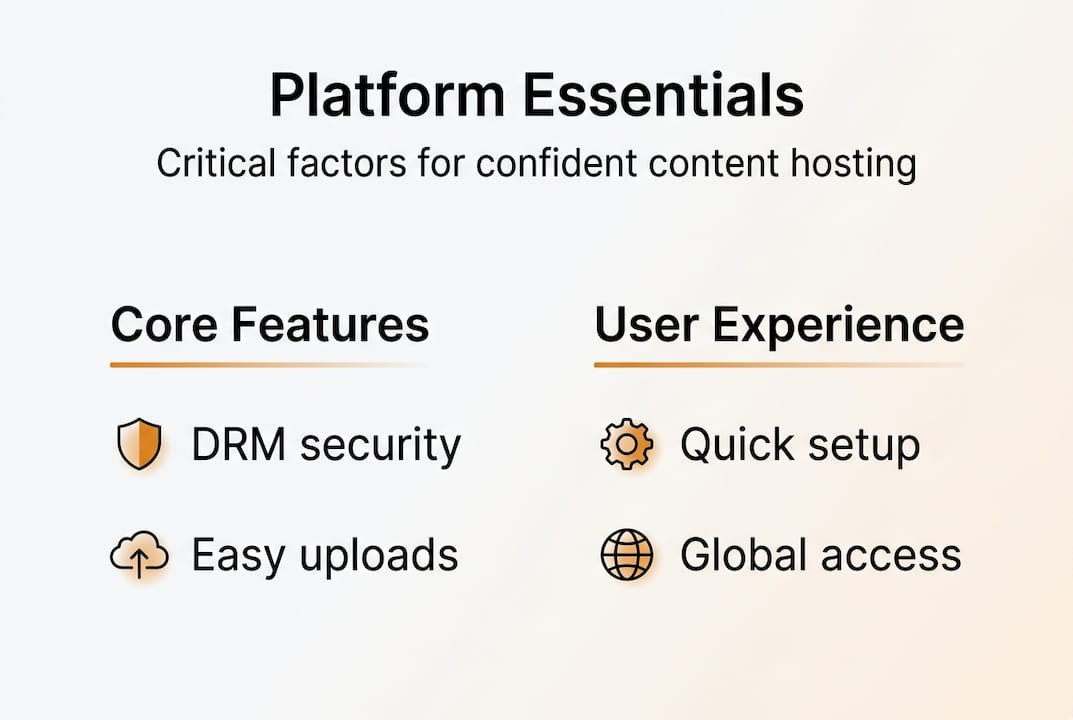
There is also an equity dimension worth considering. A creator building a course for learners in regions with limited bandwidth cannot design for a platform optimised for high-speed connections. A teacher working in a second or third language needs a platform whose interface and support materials they can actually navigate. Simplicity is not a compromise. For many creators, it is the entire strategy.
The uncomfortable truth about global educator platforms is that the most powerful one is the one your audience can actually use. Learner-centric design, clear navigation, and fast file delivery will always outperform a feature-rich platform that confuses or excludes your target audience. Choose the platform that removes friction for your learners first, and build sophistication from there.
Discover a smarter way to host and sell your digital content
If you have worked through this guide and realised that your current setup is not doing your content justice, you are not alone. Most creators outgrow their initial hosting arrangements within the first year. The question is where to go next.
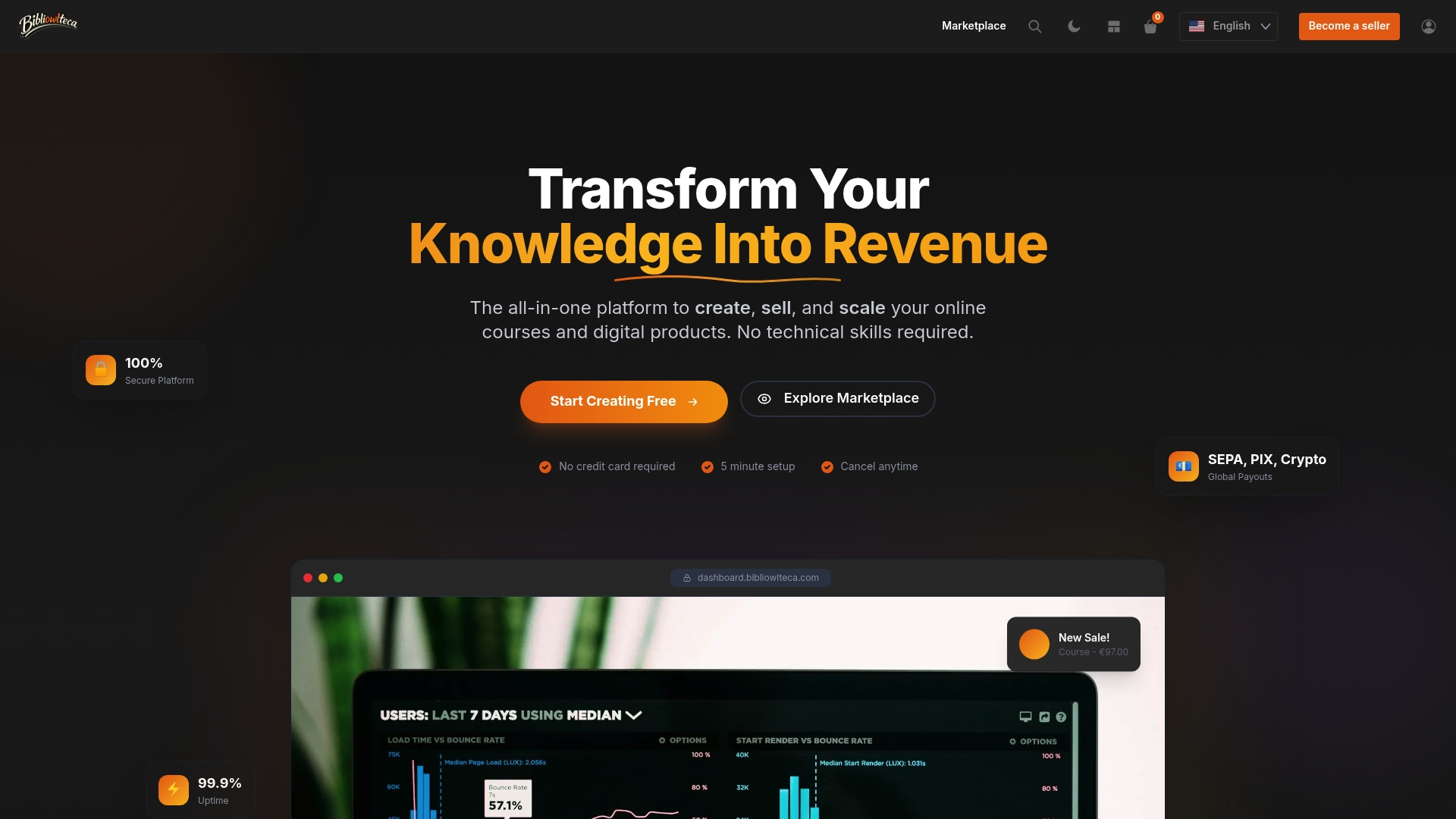
BibliOWLteca is built specifically for creators and educators who want to host, sell, and distribute digital educational materials without the technical headaches. The BibliOWLteca marketplace connects your content with a global audience, supporting multiple currencies, integrated payments, and automatic digital delivery. Whether you are launching your first e-book or scaling a catalogue of courses, the BibliOWLteca platform gives you the infrastructure to grow with confidence. Start uploading today and turn your knowledge into a business that works while you sleep.
Frequently asked questions
What makes a content hosting platform secure for e-books and courses?
A secure hosting platform uses encryption, strong access controls, and digital rights management to protect your educational content from unauthorised access or piracy. Controlling access and monitoring your resources is essential to protect intellectual property at every stage of distribution.
How do I start selling my digital educational materials online?
Choose a digital marketplace or platform, upload your content, set your pricing, and enable transactions with secure payment options. Digital storefronts handle payments and access delivery automatically, making the launch process far simpler than building your own system.
Can I host and sell in multiple languages?
Yes, many educational content platforms allow uploads and sales in several languages, expanding your global reach considerably. Global educator marketplaces are specifically designed to support international audiences and multilingual catalogues.
What features should I look for in a content hosting solution?
Seek platforms with easy uploads, secure access controls, integrated payments, analytics, and flexible content formats. Top e-book tools offer robust features for secure and flexible content hosting that scale as your audience grows.