

TL;DR:
- Interlibrary loan allows libraries to share materials, providing access to books and articles not held locally. It is free for most users and typically delivers digital copies within one to three days, while physical items take up to ten days. The service enhances research efforts by expanding access and influencing library collections based on demand.
Interlibrary loan (ILL) is a formal cooperative process where one library borrows materials from another to fulfil a user's request for an item not held locally. The service covers books, journal articles, book chapters, theses, microfilm, and conference proceedings. For students and researchers, ILL is often the difference between completing a literature review and hitting a dead end. It operates across public, academic, and special libraries, governed by national codes such as the American Library Association's Interlibrary Loan Code, and delivered through systems like ILLiad.
What is interlibrary loan and how is it defined?
Interlibrary loan is defined as a service that lets library users request materials their home library does not own or cannot access. The lending library sends the item directly to the borrowing library, which then makes it available to the user. The process is cooperative by design. Libraries agree to share resources because no single collection can hold everything every researcher needs.

The American Library Association sets national guidelines for ILL in the United States, and similar frameworks exist in the United Kingdom through the British Library's Document Supply service. Both systems rest on the same principle: libraries serve their users better when they work together. For researchers at institutions like the University of Maine or the University of Wisconsin, ILL is a standard part of the research workflow, not an exceptional workaround.
One common misconception is that ILL only applies to full books. ILL includes borrowing book chapters and journal articles, not only complete volumes. Requesting a single chapter rather than an entire book often speeds up delivery considerably, since the lending library can scan and send the chapter digitally rather than posting a physical volume.
How does interlibrary loan work in practice?
The ILL process follows a clear sequence. Understanding each step helps you submit requests correctly and receive materials faster.
- Search your local catalogue first. Before submitting an ILL request, check whether your library already holds the item. Many libraries also belong to regional consortia such as MaineCat or LINK+, which provide faster access than a formal ILL request. Searching these first avoids rejected requests and saves time.
- Locate the full citation. Gather the author, title, publisher, year, edition, journal name, volume, issue, and page numbers. Incomplete citations are the single most common cause of delays. The more precise your details, the faster the library can locate and request the item.
- Submit your request. Most academic libraries use ILLiad, a widely adopted request management system. Public libraries often use simpler web forms. Log in to your library account, navigate to the ILL request portal, and enter the citation details. Some libraries allow you to import citations directly from databases like JSTOR or PubMed.
- Track your request. ILLiad and similar systems send email updates when your request is received, processed, and ready for collection. You can also log in to check status at any point.
- Collect or download your item. Physical books are held at your library's circulation desk. Digital documents, typically journal articles or book chapters, arrive as PDFs sent to your registered email address or made available through your library account.
Pro Tip: Request specific chapters or articles rather than full books whenever possible. Digital delivery of a single chapter can arrive within one to three days, while a physical book may take up to ten business days.
Delivery timelines differ significantly by format. Physical materials via ILL typically arrive within 5 to 10 business days. Digital documents like articles are delivered in 1 to 3 days as PDFs. That gap matters when you are working to a deadline. Planning your ILL requests at least two weeks before you need the material is sound practice for physical loans.

What types of materials can you access through interlibrary loan?
ILL covers a wide range of formats, though some categories carry restrictions.
Commonly available through ILL:
- Printed books and monographs
- Book chapters (delivered as scanned PDFs)
- Journal articles from print or digitised collections
- Theses and dissertations
- Conference proceedings
- Microfilm and microfiche
- Government documents and reports
Rarely or never available through ILL:
- Licensed ebooks (restricted by publisher licensing agreements)
- Streaming media and audiovisual content
- Materials from licensed databases accessible only to subscribing institutions
Electronic resources like ebooks and streaming media are rarely available via ILL due to restrictive licensing agreements. This is one of the most frustrating limitations for researchers who assume that digital content is easier to share. The opposite is true. A physical book can travel between libraries freely; a licensed ebook is locked to the subscribing institution's platform.
The table below summarises what you can typically expect:
| Material type | Usually available via ILL? | Typical delivery time |
|---|---|---|
| Printed book | Yes | 5–10 business days |
| Book chapter (scanned) | Yes | 1–3 business days |
| Journal article (PDF) | Yes | 1–3 business days |
| Licensed ebook | No | Not applicable |
| Streaming media | No | Not applicable |
| Thesis or dissertation | Usually | 3–7 business days |
Libraries also apply mission-related restrictions on what they lend. Some state libraries, for example, only lend materials relevant to their region or subject specialism. A request outside that scope may be declined or redirected to a public library better placed to help. Knowing this in advance prevents wasted requests.
What are the costs, rules, and common policies around interlibrary loans?
ILL services are generally free for students and registered cardholders. Borrowing itself carries no charge at most academic and public libraries. Fees arise only in specific circumstances.
Common ILL policy points:
- Borrowing is free for registered users at most institutions
- Fees for damage or loss can reach up to £160 depending on institution policy, based on the replacement cost of the item
- Borrowing periods vary by lending library, typically two to four weeks for physical items
- Renewals are possible but must be requested before the due date and are subject to the lending library's approval
- Some institutions set limits on the number of active ILL requests per user at one time
- Rush requests may carry a fee at certain libraries
ILL is governed by national codes like the American Library Association's Interlibrary Loan Code, but local policies can offer faster or broader services. Your institution's ILL librarian is the best source for specifics. Policies at a large research university differ considerably from those at a small public library.
Pro Tip: Always return physical ILL items on time and handle them carefully. Damage fees apply to borrowed materials, and repeated late returns can affect your borrowing privileges.
One aspect of ILL policy that surprises many researchers is how their requests influence collection development. Frequent ILL requests inform library acquisition priorities and resource development strategies. If multiple users request the same title repeatedly, the library may purchase a copy permanently. Your ILL request is, in effect, a vote for what your library should stock.
What are the benefits of interlibrary loan for students and researchers?
The core benefit of ILL is simple: it extends your research reach beyond what your home library holds. That matters enormously for postgraduate researchers, doctoral students, and academics working in specialist fields where key texts may exist in only a handful of libraries worldwide.
ILL also supports deeper research by giving you access to older or obscure materials that never made it into digital databases. A 1970s monograph on urban planning policy or a conference paper from a niche engineering symposium may be available nowhere online. ILL is often the only route to those sources.
Practical tips for getting the most from ILL:
- Provide complete and accurate citation details every time. Missing an edition number or journal volume causes delays.
- Check local and regional library resources before submitting an ILL request. Consortia like LINK+ or MaineCat often deliver faster.
- Request articles and chapters as PDFs rather than physical loans when the option exists.
- Plan ahead. Submit physical loan requests at least two weeks before you need the material.
- Return items on time. Late returns affect other researchers waiting for the same item.
- Communicate with your ILL librarian if you have an urgent deadline. Many libraries offer expedited processing for genuine academic need.
Frequent use of ILL also shapes your library's collection over time. Requesting items via ILL signals to local libraries which materials are valued by users and can influence acquisition decisions. A well-used ILL service is not a sign that a library is lacking. It is evidence that its users are doing serious research.
Key takeaways
Interlibrary loan is the most practical tool researchers have for accessing materials beyond their home library's collection, and using it well requires knowing the process, the limits, and the timelines.
| Point | Details |
|---|---|
| Core definition | ILL lets you borrow books, articles, and chapters from other libraries when your own does not hold them. |
| Delivery timelines | Digital documents arrive in 1–3 days; physical books take 5–10 business days. |
| Digital limitations | Licensed ebooks and streaming media are almost never available via ILL due to licensing restrictions. |
| Cost structure | ILL is free for most registered users; fees apply only for damage or loss, not borrowing itself. |
| Collection impact | Repeated ILL requests for the same title can prompt your library to purchase it permanently. |
ILL in academic research: a perspective from Bibliowlteca
Academic researchers underestimate ILL. That is the honest observation after years of watching students exhaust Google Scholar and then give up, unaware that the article they need is sitting in a library three cities away, available at no cost within 48 hours.
The speed of digital ILL delivery has changed the experience entirely compared to even a decade ago. A journal article requested on a monday morning can arrive as a PDF by tuesday afternoon. That is faster than many paid document delivery services, and it costs the researcher nothing. The friction that once made ILL feel like a last resort has largely disappeared.
What still surprises researchers is the collection development angle. Every ILL request is data. Libraries at institutions like the University of Maine and the University of Wisconsin use that data to decide what to buy. A researcher who uses ILL regularly is not just helping themselves. They are shaping the collection for everyone who comes after them.
The one habit worth building is checking consortium catalogues before submitting a formal ILL request. Systems like LINK+ and MaineCat sit between your local catalogue and the full ILL network. They are faster, simpler, and often overlooked. Normalising ILL as part of the research process, rather than treating it as an emergency measure, is the shift that makes the biggest difference to research quality. Bibliowlteca sees this pattern repeatedly among the educators and researchers who use digital content platforms alongside traditional library services. The researchers who access the widest range of sources consistently produce the strongest work.
— Bibliowlteca
Digital content access alongside interlibrary loans
Interlibrary loan fills gaps in physical and archival collections. For digital educational content, including e-books, courses, and research guides, Bibliowlteca offers a complementary route.
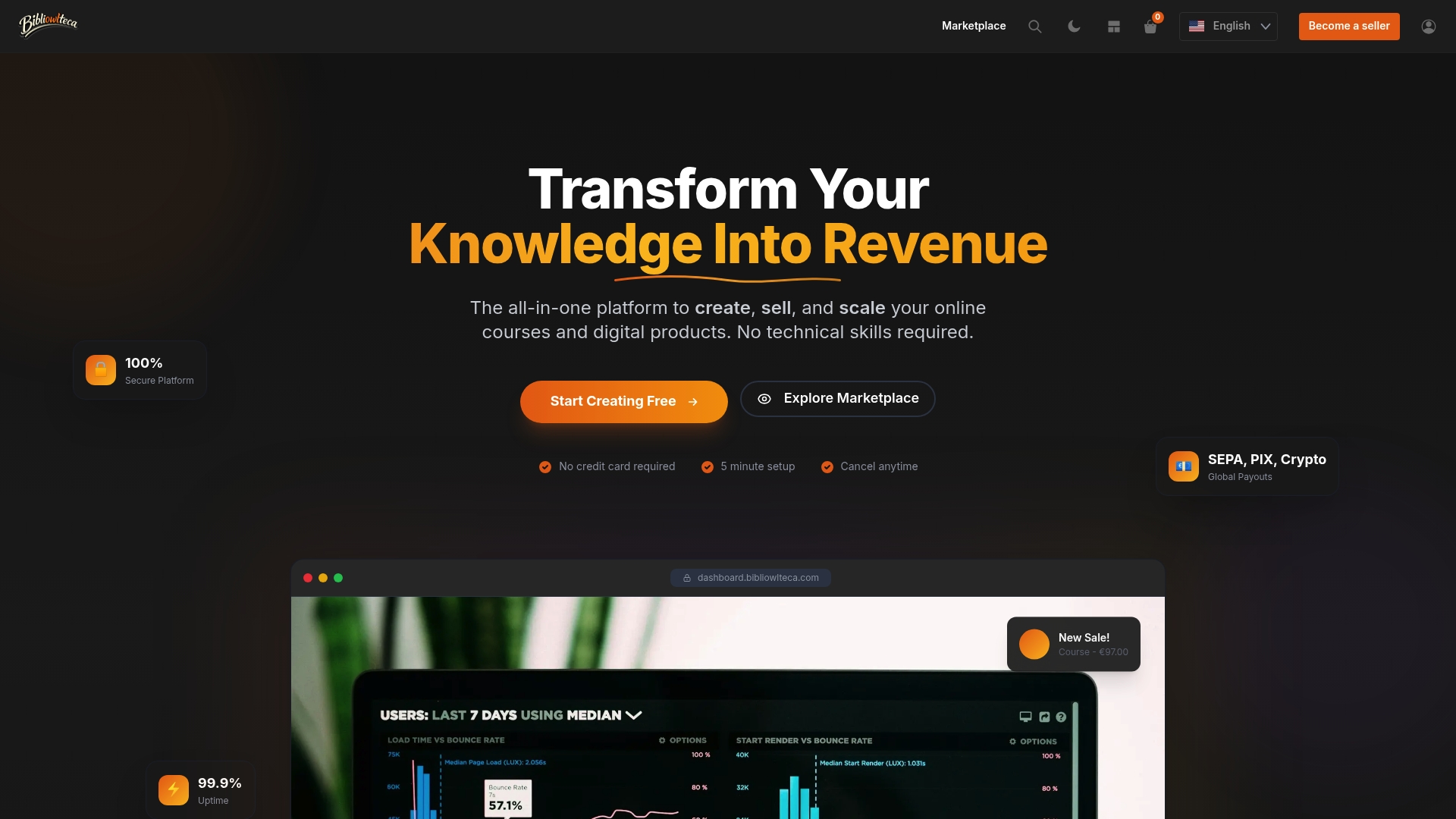
Bibliowlteca is a digital platform where creators publish and sell educational content globally, covering subjects that academic libraries may not yet stock. Students and researchers can access e-books and courses on topics ranging from research methodology to specialist academic fields, delivered instantly without waiting periods. For researchers who need current, practitioner-led content that sits outside traditional library catalogues, Bibliowlteca's platform features offer a direct and immediate alternative. Browse the catalogue to find content that complements what your library holds.
FAQ
What is the interlibrary loan definition in simple terms?
Interlibrary loan is a service where your library borrows a book, article, or other material from another library on your behalf. You request the item, and the lending library sends it to your home library for collection or digital delivery.
How long does an interlibrary loan take?
Digital documents such as journal articles and book chapters typically arrive within 1–3 business days. Physical books take 5–10 business days depending on the lending library's location and processing time.
Is interlibrary loan free to use?
ILL is free for registered students and library cardholders at most institutions. Fees apply only if a borrowed item is damaged or lost, not for the borrowing itself.
Can I request ebooks through interlibrary loan?
Licensed ebooks are rarely available via ILL. Publisher licensing agreements restrict digital content to subscribing institutions, so physical books and scanned chapters are far more commonly fulfilled.
Why should I use interlibrary loan instead of buying the item?
ILL gives you access to materials at no cost, including rare, out-of-print, or specialist texts that may not be available for purchase at all. It also signals to your library which titles are worth adding to the permanent collection.