
Most edupreneurs should choose a hosted course platform over self-hosting. Payment processing, access control and scaling problems are solved automatically on a managed platform, while self-hosting only pays off if you have real infrastructure skills and want full control over your video pipeline. BibliOWLteca is one direct option worth evaluating for creators who want payments and delivery handled in one place.
TL;DR:
- Most creators should opt for hosted course platforms like BibliOWLteca, especially when selling fewer than a few hundred students, to avoid infrastructure complexity.
- High-volume courses or large-scale launches make dedicated video infrastructure and self-hosting more cost-effective than platform fees, when managing thousands of viewers or multiple courses.
- When choosing a platform, prioritize support for a variety of content formats, detailed analytics, flexible payment options, and secure access control to avoid operational bottlenecks.
- Estonian creators should verify payout schedules, currency options, and invoicing processes, especially if selling to organizations or requiring formal VAT documentation.
- BibliOWLteca’s pay-per-sale transaction fees are ideal for testing market demand with minimal upfront costs before scaling infrastructure or expanding course offerings.
Table of Contents
- What does kursuse hostimine actually involve?
- What features should you check before picking a host?
- How do payments and invoicing work for Estonian creators?
- Which video hosting option protects your content best?
- How do you match platform choice to your monetisation plan?
- How does BibliOWLteca support course hosting and sales?
- Author perspective: practical advice from BibliOWLteca
- Try BibliOWLteca: Creator Plan and pricing
- Sources
- FAQ
What does kursuse hostimine actually involve?
Course hosting, or kursuse hostimine, means choosing the infrastructure that delivers your videos, quizzes and materials to students while handling enrolment, payments and access. Three broad categories exist, and picking the wrong one early costs months of rebuilding later.
SaaS all-in-one platforms bundle course delivery, checkout, student management and often marketing tools into a single subscription or fee-based system. Marketplace platforms add discoverability, letting you sell alongside other creators while the platform takes a cut of each sale. Self-hosted video-CMS setups, such as KVS, give you complete control over your content, delivery network and video conversion, but you carry the operational load yourself.
The trade-off is straightforward:
- Hosted platforms cost less time and technical effort, but you work within their feature limits and fee structure.
- Marketplaces add audience reach at the cost of a revenue share and less control over branding.
- Self-hosted systems remove vendor dependence entirely, but you become responsible for uptime, storage costs and content delivery network performance.
Scaling considerations tend to decide the matter. A creator selling one course to a few hundred students rarely needs the infrastructure a self-hosted system demands. Once you're running dozens of courses or thousands of concurrent viewers, the calculation shifts, and dedicated video infrastructure starts to make more financial sense than platform fees on high volume.
What features should you check before picking a host?
A course host either supports your business model or quietly limits it. Before signing up anywhere, run through this checklist against what your course actually needs.
- Content format support. Confirm the platform handles video, audio, PDFs and interactive elements like quizzes without forcing awkward workarounds.
- Access control and enrolment. Check how the platform manages drip content, cohort-based release and revoking access after a refund.
- Analytics depth. You need completion rates and watch-time data, not just sales totals, to know whether your course actually works.
- Payment flexibility. Multiple currencies, local payment methods and clear payout timing matter more the further your audience spreads.
- Security and integrations. Look for SSL by default, protected video streaming, and connections to email or CRM tools you already use.
Pro Tip: Test the student-facing side yourself before launch. Sign up as a fake student and go through the full enrolment and viewing flow. Most hosting problems surface exactly there, not in the admin dashboard.
How do payments and invoicing work for Estonian creators?
Payment setup determines whether you get paid on time and stay compliant, and it deserves attention before you publish a single lesson. Most hosted platforms process payments internally through checkout, though some creators prefer routing through external processors for specific tax or accounting reasons.

Stripe integration covers card payments and multi-currency handling for most course sellers, and it connects directly into platforms like BibliOWLteca without custom development work. E-invoicing becomes relevant once you're selling to organisations or need formal documentation for Estonian accounting purposes, and the requirements sit alongside broader curriculum guidance for professional courses that Estonian authorities expect creators to follow when courses target defined learning outcomes.
Before you take your first payment, confirm:
- Your payout schedule and whether funds clear in days or weeks
- Which currencies you can accept without manual conversion
- Whether the platform generates invoices automatically or you handle that separately
- How refunds affect your VAT reporting obligations
BibliOWLteca's own payment setup guide walks through bank links and mobile wallet configuration specifically for Estonian creators.
Which video hosting option protects your content best?
Video is usually the most valuable and most vulnerable part of a course, so the hosting choice here carries more weight than most creators assume. Institutional tools, public platforms and self-hosted systems each solve the access-control problem differently.
Tartu Ülikool's video guides document how Panopto and UTTV handle lecture recording, publishing and embedding, and the workflows translate well to commercial course creators who need similar reliability. Both tools let you set videos as public but non-searchable, so students with the link can watch without the content surfacing in a general search.
YouTube unlisted videos work similarly for low-budget setups, though embed players carry less control over branding and can surface recommended videos unless configured carefully. A self-hosted video-CMS removes that risk entirely by keeping playback inside your own domain, but it adds encoding, storage and content delivery network costs you'd otherwise avoid.
Practical points worth following:
- Use embed codes rather than raw video links wherever possible, since embeds preserve player controls and strip out recommended-video clutter
- Confirm subtitle support before publishing, especially for compliance-driven or accessibility-focused courses
- Test playback on mobile browsers, not just desktop, before your course goes live
Institutional video workflows at Tartu Ülikool specifically recommend non-searchable links and embed codes over shared public URLs, a pattern worth copying even if you have no university affiliation.
How do you match platform choice to your monetisation plan?
Choose the platform after deciding how you plan to make money, not before. A single-course seller has different needs from someone running a subscription or enterprise training programme, and picking the platform first tends to produce expensive rebuilding later. Practical education-technology guidance consistently points to aligning platform choice with your monetisation strategy rather than the reverse.
Run through this before committing:
- Match your model to platform type. A one-off course fits a lightweight hosted platform; a membership or subscription needs recurring billing support; enterprise training often needs bulk licensing and SSO.
- Audit your own capacity honestly. Do you have the technical skill to manage a self-hosted system, or the budget to hire someone who does?
- Estimate volume realistically. Fees that look small at ten sales a month can become expensive at a thousand.
- Watch for vendor lock-in signals. Difficulty exporting student data or video files is a red flag worth investigating before you sign up, not after.
How does BibliOWLteca support course hosting and sales?
The platform offers a creator plan designed for multi-currency payments and secure course delivery, charging a transaction fee only when a sale completes. That structure suits creators still validating demand before committing to fixed monthly costs.
Two publisher guides cover the operational details most creators ask about first:
- The course access control guide explains how to manage enrolment and drip content
To test the platform, create an account, add a single course, and configure one payment method before expanding further.
Author perspective: practical advice from BibliOWLteca
Audience fit and monetisation matter more than platform choice at the start. Build one small course, test pricing and delivery with real students, then invest in bigger infrastructure once demand justifies it. If you get stuck, use the platform's own access control and payment guides, or reach out to support directly.
— BibliOWLteca
Try BibliOWLteca: Creator Plan and pricing
BibliOWLteca charges no published fee for the Creator Plan itself. Instead, you pay a transaction fee starting at €0.99 one-off per sale, so costs stay tied to actual revenue rather than a fixed monthly bill regardless of how your course performs.
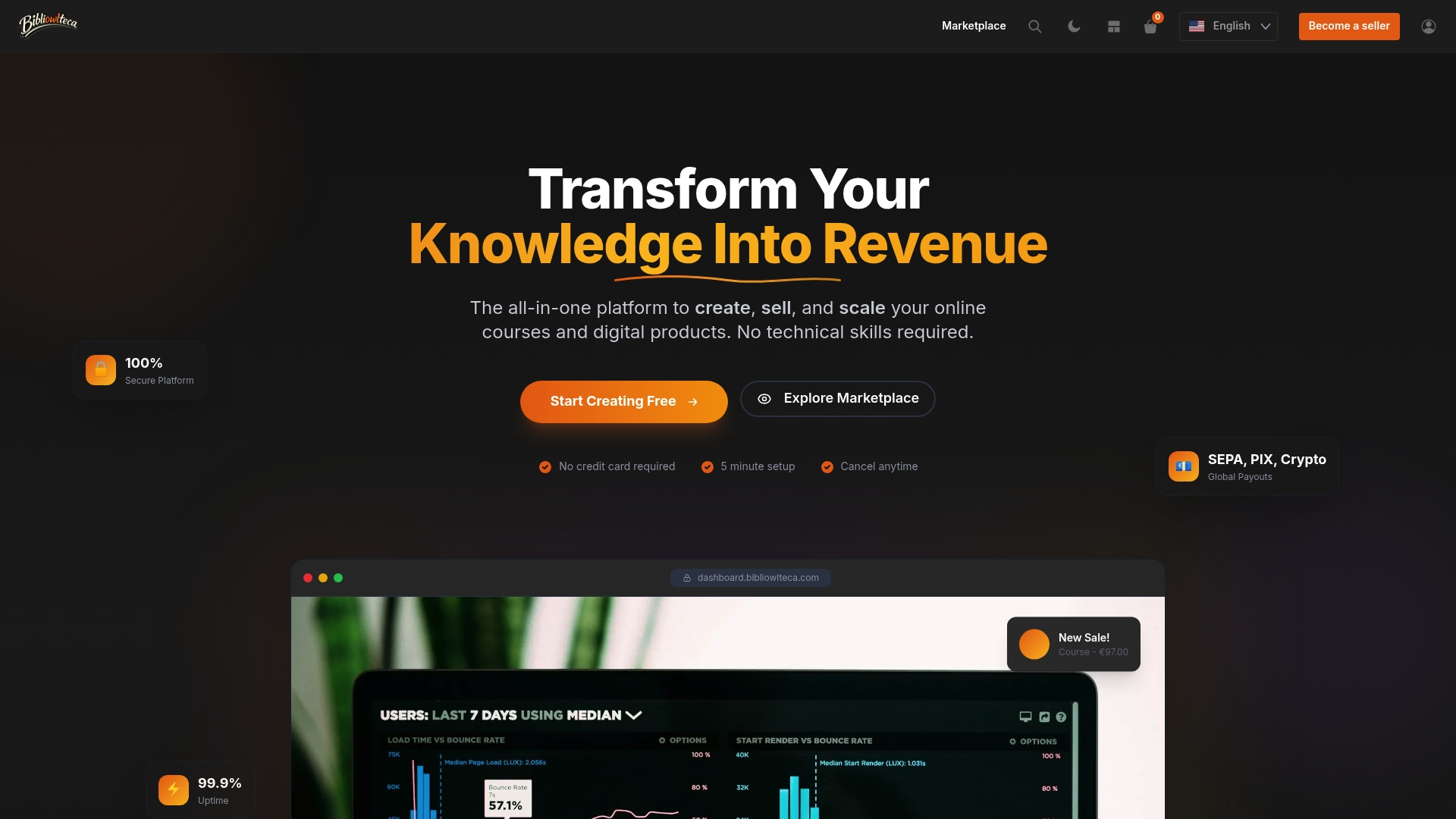
That structure answers most of the checklist covered above: multi-currency payments, secure content delivery and access control all sit inside one plan, without a separate video-CMS or payment processor to manage. Compared with running your own self-hosted video-CMS infrastructure, or juggling a hosted platform's fee alongside a third-party payment gateway, this keeps the moving parts to a minimum for creators still building an audience. If you're selling niche or vertical content, a partner like GreenLearn shows what a focused, subject-specific hosted platform looks like in practice.
Check the pricing page for the current fee structure, or browse the product categories to see what formats you can list before setting up your first course.
Sources
FAQ
What is the best way to start kursuse hostimine for a first course?
Start with a hosted platform rather than self-hosting, since it handles payments and access control without upfront infrastructure work. BibliOWLteca's Creator Plan lets you list one course and test pricing before committing further.
Is self-hosted video hosting worth it for a small course?
Usually not at low volume, since a self-hosted video-CMS adds encoding, storage and content delivery costs that outweigh the control benefits for a handful of students. It becomes worthwhile once you're managing dozens of courses or need full ownership of your video pipeline.
How much does BibliOWLteca charge for course hosting?
BibliOWLteca has no published monthly fee for the Creator Plan, charging instead a transaction fee from €0.99 one-off per completed sale. This ties cost directly to revenue rather than a fixed subscription.
Do I need e-invoicing to sell courses in Estonia?
E-invoicing becomes relevant mainly when selling to organisations or when formal documentation is required for accounting purposes, alongside the curriculum and learning-outcome guidance Estonian authorities expect from structured courses. Individual consumer sales through a hosted checkout typically don't require it.
Should I use YouTube or a dedicated video-CMS for course videos?
YouTube unlisted videos work for low-budget setups, but a dedicated video-CMS or institutional tool like Panopto or UTTV gives better control over access, branding and non-searchable links. Choose based on how sensitive your content is and how much branding consistency matters to your course.