
In the United States, marketplace facilitators generally collect and remit sales tax on facilitated marketplace sales where state law applies, but sellers still may need to register, file or keep records depending on the state and on direct sales. The Streamlined Sales Tax facilitator chart and IRS Form 1099-K instructions are the two reference points worth checking first, alongside your own settlement reports from platforms such as BibliOWLteca. Start by confirming your destination-state rules and separating marketplace sales from direct sales.
TL;DR:
- Most states with marketplace facilitator laws require platforms to collect and remit sales tax once sales meet specific thresholds, which vary widely by state.
- Facilitator collection typically covers only transactions processed through the platform and does not relieve sellers from registration or filing duties for direct sales or physical presence.
- Sellers must still register in states where they meet economic nexus thresholds, reconcile marketplace and direct sales, and keep detailed records to substantiate tax remittances.
- Digital goods such as e-books, courses, and templates are taxed differently by state, requiring classification of each product and review of local rules before assuming exemption.
- Multi-channel sellers should regularly match settlement reports against sales records, watch for double counting, and adjust registration deadlines based on state-specific marketplace thresholds.
Table of Contents
- What marketplace facilitator laws actually do
- Where facilitator rules apply and how to check a state's threshold
- What sellers still need to do when a marketplace collects tax
- Multi-channel sellers: where the gaps appear
- How states tax e-books, courses, templates and downloads
- Practical compliance workflow for marketplace operators
- Publisher perspective: a quick note from BibliOWLteca for creators
- How BibliOWLteca supports your tax reporting
- FAQ
- Sources
What marketplace facilitator laws actually do
A marketplace facilitator is a business that lists products for sellers, processes payment and often helps with fulfilment or customer service. Once a platform meets a state's statutory definition, most states require it to collect and remit sales tax on behalf of every seller using its checkout, rather than leaving each seller to register separately.
This shifts the mechanical burden of collection, not every tax obligation tied to the sale. At checkout, the facilitator calculates tax based on the buyer's location, collects it alongside the price, and files a consolidated return with the state. Seller "relief" usually means the seller will not owe sales tax again on that same transaction, but it rarely means the seller can ignore registration or filing duties tied to other activity in that state.
Common misconceptions follow from treating facilitator collection as blanket protection. California's statute is a useful example of how specific the language gets:
- A marketplace facilitator is defined by the activities it performs (listing, payment processing, fulfilment assistance), not by how it describes itself.
- Entities that only provide advertising or referrals, without touching payment or fulfilment, are typically excluded from the definition.
- Seller relief applies to the facilitated transaction itself, not automatically to a seller's direct-channel sales or physical presence in that state.
Where facilitator rules apply and how to check a state's threshold
Nearly every state that charges sales tax now has a marketplace facilitator law on its books, but the thresholds, sourcing rules and registration triggers differ enough that a one-size answer will mislead you. Some states set a facilitator collection threshold around one hundred thousand dollars in sales or a couple hundred transactions into that state, while others drop the transaction count entirely or set different figures for facilitators versus individual sellers.
States also disagree on whether facilitated sales count toward a seller's own economic nexus threshold. That distinction matters if you sell through a marketplace and directly from your own storefront in the same state.
- Check the Streamlined Sales Tax facilitator chart for state-by-state collection requirements and filing fields.
- Cross-reference the companion seller guidance to see where sellers still register even when a facilitator collects.
- Visit the relevant state Department of Revenue page directly before registering or deregistering anywhere, since thresholds change.
What sellers still need to do when a marketplace collects tax
Marketplace collection does not erase every seller-side task. Depending on the state, you may still need to register, file zero-dollar returns or report facilitated sales separately from direct sales.
- Register in any state where you sell directly, hold inventory or meet an economic nexus threshold through activity the facilitator does not cover.
- Confirm whether that state counts your marketplace sales toward your own economic nexus threshold, since some do and some do not.
- Keep marketplace settlement reports, exemption certificates and your own sales records so you can reconcile what the facilitator actually collected against what was sold.
- Where your state allows it, claim a credit or exclusion on your own return for sales tax the facilitator already remitted, rather than paying twice.
Treat the facilitator's report as evidence, not as your filing. If a state audits your direct sales, you will need your own paper trail to show which transactions the marketplace handled.
Multi-channel sellers: where the gaps appear
Selling through a marketplace and from your own storefront creates two different collection tests running at once. The marketplace's checkout applies its own nexus and sourcing logic; your own storefront checkout applies yours, based on where you have registered and what your own sales volume looks like.
The practical fix is reconciliation. Match every marketplace settlement report to your order records line by line, tag each sale by channel in your accounting system, and set a rule that prevents a single order from being counted toward both the facilitator's threshold and your own.
- Reconcile settlement reports against order-level data monthly, not just at filing time.
- Flag any state where you sell both through a facilitator and directly, since that is where double counting and gaps both start.
- Watch for states that exclude marketplace sales from your own threshold calculation, since that can change your registration deadline.
Mismatched totals between what a 1099-K reports and what your own books show are one of the most common audit triggers for multi-channel sellers.
Pro Tip: Run your reconciliation before filing, not after a notice arrives, since the fix is far cheaper when you catch it yourself.

How states tax e-books, courses, templates and downloads
Digital product taxability varies more by state than most sellers expect. Some states tax specified digital goods while others exempt them: California generally exempts electronically delivered digital data products, Connecticut taxes specified digital goods at its standard rate, and states such as Georgia and Idaho draw a line between permanent access and subscription access.
Classification is the real work here, more than nexus. The same e-book can be taxed differently depending on whether a state treats it as a permanent download, a subscription service or a hosted service.
- Tag each product by tax category (e-book, course, template, download) rather than treating all digital goods as one line item.
- Keep product descriptions that clearly support how you classify permanent access versus subscription or streaming access.
- Check state-specific digital goods rules before assuming an e-book or course is automatically exempt.
Our guide to publishing digital products worldwide covers the practical side of structuring these formats for sale.
Practical compliance workflow for marketplace operators
Running a platform that processes payments for sellers means mapping your own activities against each state's statutory definition before assuming facilitator status applies uniformly.
- Determine whether your platform's listing, payment and fulfilment activities meet a given state's facilitator definition.
- Identify which products are taxable and where the sale is sourced for each transaction.
- Monitor thresholds continuously, since a single state's volume can shift your obligations mid-year.
- Register in states where thresholds are met and facilitator status applies.
- Configure checkout to collect the correct tax by destination and product category.
- Remit, file and retain seller-level reporting, including exemption certificates where sellers qualify.
Advertising-only platforms that never touch payment typically fall outside facilitator definitions, as California's statute illustrates with its exclusion for referral-only sites.
Pro Tip: Build transaction-level audit trails from day one. Reconstructing sourcing data after a state inquiry is far slower than exporting it as you go.
Publisher perspective: a quick note from BibliOWLteca for creators
Platform reports and tax settings cut down the manual work, but they do not replace a creator's own homework. Some platforms provide transaction and settlement exports so that a creator working with a tax adviser can hand over clean, line-level data instead of raw payment totals. Running your own reconciliation and checking destination-state rules is still your responsibility.
— BibliOWLteca
How BibliOWLteca supports your tax reporting
We know chasing settlement reports across payment processors is one of the most tedious parts of running a digital storefront, so we built reporting directly into checkout rather than bolting it on afterwards.
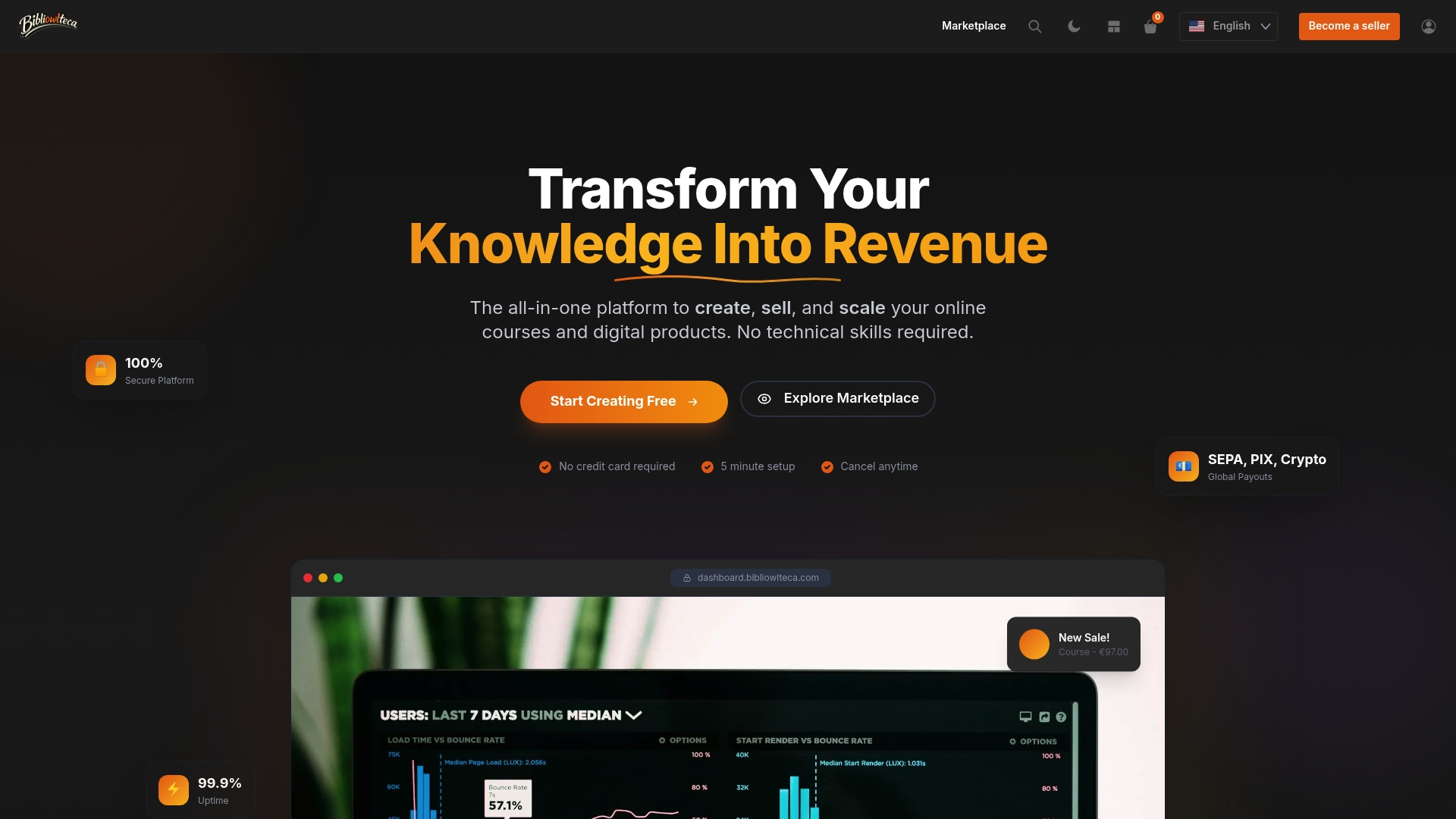
- Transaction-level reports you can export directly for your tax adviser or bookkeeping software.
- Built-in payment processing with settlement data that matches each sale to its buyer location.
- Tax-configuration options you can adjust as you add new product categories.
- Honest caveat: our reporting tools help you stay organised, but they do not replace registering where a state requires it or getting professional tax advice for your specific situation.
If you sell e-books, courses or templates and want reporting built around that workflow, consider the Sell Your Music On Facebook Ads course as an example of how digital courses leverage marketplace tools effectively.
FAQ
Do Texas marketplace facilitators have to pay sales tax?
Texas requires marketplace facilitators that meet the state's economic nexus or physical presence tests to collect and remit sales tax on facilitated sales. Individual sellers using only that marketplace generally do not need a separate Texas sales tax permit for those facilitated transactions, though direct sales outside the marketplace are treated separately.
What is a marketplace facilitator sales tax?
A marketplace facilitator tax is a state requirement that platforms handling listing, payment and often fulfilment for third-party sellers collect and remit sales tax on those sellers' behalf. It shifts the collection step from each individual seller to the platform, based on state-specific facilitator definitions.
What states have marketplace facilitator laws?
Nearly all states that charge sales tax have adopted marketplace facilitator laws, though thresholds and sourcing rules differ by state. The Streamlined Sales Tax facilitator chart lists which states require collection and what their specific thresholds are.
What is Amazon's marketplace facilitator tax?
Large marketplaces such as Amazon collect and remit sales tax on behalf of third-party sellers in states with facilitator laws, based on the buyer's location and the product's taxability in that state. Sellers using any marketplace facilitator should still check whether their direct sales, outside that marketplace, trigger separate registration duties.
Are e-books and online courses taxable?
Taxability depends entirely on the state: some, like California, generally exempt electronically delivered digital products, while others, like Connecticut, tax specified digital goods directly. Creators should check state digital-goods rules for each state where they have customers rather than assuming one state's treatment applies everywhere.
Sources
Verify facilitator thresholds against the Streamlined Sales Tax charts and confirm payment-reporting obligations through the IRS Form 1099-K instructions before filing.
- Streamlined Sales Tax: marketplace sellers guidance
- Streamlined Sales Tax: marketplace facilitator guidance
- Instructions for Form 1099-K (2026)