
TL;DR:
- Choosing between payment platforms impacts creators' revenue, operational complexity, and global compliance efforts.
- Merchant of Record platforms like Paddle simplify international VAT handling and legal compliance for digital sales worldwide.
Most creators spend months building a brilliant e-book or online course, then hand over a surprising slice of every sale to payment platforms they barely understand. If you're earning £5,000 a month from digital products, a poorly chosen processor could quietly cost you £500 or more before you see a penny. That number stings more when you realise the difference often comes down to one decision made at launch. This article breaks down the real costs, compares the leading platforms, tackles global tax compliance, and gives you a clear framework for choosing a payment setup that actually supports your growth.
Table of Contents
- Understanding payment processing: what every creator needs to know
- Comparing top platforms: Gumroad vs. Payhip for educational sales
- Going global: making international sales and taxes simple
- Making the right choice: factors to consider for your business model
- What most guides miss about payment solutions for creators
- Take the next step: sell smarter with BibliOWLteca
- Frequently asked questions
Key Takeaways
| Point | Details |
|---|---|
| Choose scalable platforms | Select a payment provider that matches both your current volume and future sales growth needs. |
| Mind hidden fees | Even small transaction fees stack up and can cost hundreds at moderate revenue levels. |
| Tackle global VAT | Using a Merchant of Record simplifies international sales and VAT compliance dramatically. |
| Growth may mean switching | The best payment platform for you may change as your course or e-book sales scale. |
Understanding payment processing: what every creator needs to know
Before you can choose wisely, you need to understand what you're actually choosing between. The payment landscape for digital creators splits into two broad camps, and mixing them up is one of the most common and costly mistakes you can make.
Payment Service Providers (PSPs) like Stripe and PayPal are the infrastructure layer. They move money from your customer's card to your bank account. They are powerful, flexible, and relatively cheap per transaction, but they hand you a blank canvas. You handle the checkout design, the digital delivery, the invoicing, and every line of VAT compliance yourself. That freedom is brilliant if you have technical skills and a development budget. For most solo creators, it is a significant operational burden.
Merchant platforms like Gumroad, Payhip, and Paddle are built on top of PSPs and package everything into a ready-made storefront. They handle digital delivery, checkout pages, and in many cases, tax collection. The trade-off is higher fees and less flexibility in how your checkout looks and behaves. PSPs like Stripe and PayPal offer more control and lower fees but require manual setup, while Merchant of Record platforms simplify tax at a 2 to 5 per cent premium.
The concept of Merchant of Record (MoR) is worth understanding in detail because it changes the entire compliance picture for selling digital content worldwide. When a platform acts as MoR, it legally becomes the seller of your product. The platform collects VAT, files tax returns, and deals with every regulatory obligation across different countries. You receive a revenue share, clean and simple. Paddle and Lemon Squeezy are the most well-known MoR platforms for digital product creators.
Hidden fees to watch for:
- Currency conversion charges, often 1.5 to 3 per cent on top of the headline rate
- Payout delays, sometimes 7 to 30 days before funds reach your account
- Chargeback fees, which can reach £15 per disputed transaction
- Monthly minimum fees that penalise low-volume months
- Fee increases triggered by certain product categories or high refund rates
Pro Tip: Always calculate your effective fee rate by dividing total fees paid in a month by total revenue. Many creators discover their real rate is 2 to 3 percentage points higher than the advertised headline figure.
Control matters most when you are running subscription courses, bundle deals, or high-volume sales where even small fee differences compound quickly. A creator earning £10,000 per month who reduces their effective fee from 10 per cent to 5 per cent retains an extra £6,000 per year. That is a meaningful figure.
Comparing top platforms: Gumroad vs. Payhip for educational sales
Now that you know the main types, let us see how the leading creator-focused platforms measure up in practice. Both Gumroad and Payhip sit in the merchant platform category, but they serve different stages of a creator's journey in quite distinct ways.
Gumroad
Gumroad has earned its reputation as the friendliest starting point for first-time digital sellers. You upload your e-book or course, set a price, and your product is live within minutes. There are no monthly fees on the free plan, which removes the pressure of paying for a tool before you have proved demand. The platform handles digital delivery automatically and has a built-in audience discovery feature called Gumroad Discover that can surface your product to new buyers.

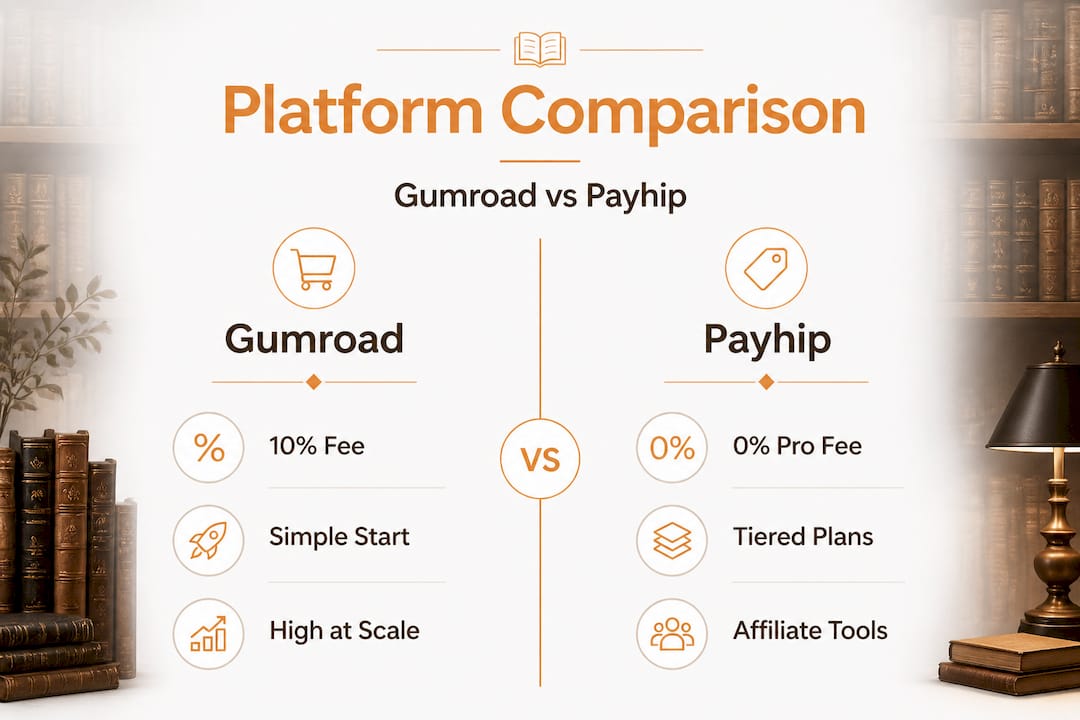
The problem emerges at scale. Gumroad charges high fees at scale, making it substantially less cost-effective for creators who have grown beyond the early testing phase. At £5,000 in monthly revenue, the difference in retained income between platforms becomes very real.
Payhip
Payhip offers a tiered pricing model that rewards growth. On the free plan, you pay a 5 per cent transaction fee. On the Plus plan at £29 per month, that drops to 2 per cent. On the Pro plan at £99 per month, there are no additional transaction fees beyond standard payment processor charges. Payhip offers tiered pricing with significant savings at higher volumes, and its EU/UK VAT compliance is handled automatically, which makes international sales far less complicated.
Payhip also supports affiliate marketing natively, letting you recruit other creators or publishers to promote your courses in exchange for a commission. For educational products with a community element, this can dramatically extend your reach without additional advertising spend. You can explore the best e-book sales tools and see how platform choice connects directly to monetising digital content at every stage of your business.
Side-by-side comparison
| Feature | Gumroad | Payhip (Pro) |
|---|---|---|
| Transaction fee | 10% + $0.50 per sale | 0% (beyond processor fees) |
| Monthly cost | £0 (free plan) | £99 |
| VAT handling | Basic | Full EU/UK VAT compliance |
| Affiliate programme | Yes | Yes |
| Digital delivery | Automatic | Automatic |
| Course hosting | Limited | Full course builder |
| Audience discovery | Gumroad Discover | Limited |
| Best suited for | Beginners and low volume | Growing and established creators |
Cost example at £5,000 monthly revenue
| Platform | Fee rate | Monthly cost | Monthly retained |
|---|---|---|---|
| Gumroad (free) | ~10% + per-transaction | ~£500+ | ~£4,500 |
| Payhip (Pro) | £99 flat + processor | ~£250 | ~£4,750 |
| Payhip (Free) | 5% + processor | ~£250 | ~£4,750 |
These figures are illustrative but directionally accurate. The gap widens further at £10,000 or £20,000 per month, which is why platform choice should always be evaluated against your projected revenue, not just where you are today.
Pro Tip: If you are releasing your first digital product and expect monthly revenue under £1,000, start on Gumroad's free plan and migrate to Payhip Pro once you cross £2,000 consistent monthly revenue. The switch typically pays for itself within the first fortnight.
For creators building more sophisticated product catalogues with courses, workbooks, and community elements, digital publishing guidance can help you map the right tools to your specific product mix.
Going global: making international sales and taxes simple
With the comparison in hand, it is time to tackle what makes or breaks international success: global payments and compliance. This is where many creators either unlock significant new revenue or unknowingly create serious legal and financial risk for themselves.
Why VAT compliance cannot be ignored
If you sell digital products to customers in the European Union or the United Kingdom, you are legally required to collect and remit VAT, regardless of where you are based. This is not a technicality for large businesses. It applies to a solo creator in Australia selling an e-book to someone in Germany. The EU's digital services VAT rules, known as the OSS (One Stop Shop) system, require sellers to either register for VAT in each member state or use a simplified registration scheme. The UK has its own equivalent post-Brexit. Getting this wrong exposes you to back taxes, penalties, and in extreme cases, being blocked from operating in those markets.
"For digital educators selling globally, using a Merchant of Record platform is not just convenient; it is often the only practical way to stay compliant without hiring a tax adviser in every jurisdiction."
MoR is vital for global educators to avoid the complexity of European VAT handling, which can otherwise involve registering in up to 27 different EU member states.
What a Merchant of Record actually does for you
When you use an MoR platform like Paddle or Lemon Squeezy, the platform legally sells your product on your behalf. This means the platform collects VAT at the correct local rate, files returns in each relevant jurisdiction, issues compliant invoices to customers, and absorbs the liability for any tax errors. You receive your revenue share without touching any of that complexity. For a creator focused on writing and teaching, this is an enormous operational relief.
Checklist for choosing a global-ready platform:
- Does the platform handle VAT and GST automatically in your target markets?
- Does it support multiple currencies with real-time conversion?
- Are payouts available in your local currency without heavy conversion fees?
- Does it provide localised checkout experiences (local payment methods, translated pages)?
- Does it act as Merchant of Record, or do you retain that liability?
- What is the dispute and chargeback resolution process for international sales?
- Does it have a track record in the markets you want to enter?
The difference between handling global digital products manually versus using purpose-built infrastructure can mean the difference between a sustainable global business and a compliance headache that consumes your creative energy. For practical frameworks, global sales strategies offer structured approaches for reaching international buyers without drowning in administrative complexity.
The real pitfall of DIY billing for international sales
Many creators assume they can simply add Stripe to their site and sell globally without further thought. Stripe is a PSP, not an MoR. It processes your payment but does not collect VAT on your behalf, does not file returns, and does not accept legal responsibility for tax compliance. If you use Stripe directly and sell to EU customers without registering for VAT, you are technically non-compliant. The risk is manageable at very low volumes, but it grows quickly as your audience scales internationally.
Making the right choice: factors to consider for your business model
Understanding compliance and your options, here is how to pinpoint the right choice for your specific creator journey. The best payment setup is not universal. It depends on five key variables: your current revenue, the complexity of your product catalogue, your target markets, your technical confidence, and your growth timeline.
A step-by-step decision framework
-
Assess your current monthly revenue. Below £1,000 per month, platform fees matter less than speed to market. Choose the simplest tool and focus on selling. Above £3,000 per month, fee optimisation becomes genuinely impactful and worth the switching cost of migrating platforms.
-
Map your product complexity. A single e-book is fundamentally different from a multi-module course with video, quizzes, community access, and ongoing updates. Simple products suit simpler platforms. Complex products need platforms with course builders, membership tools, and robust delivery infrastructure.
-
Identify your primary markets. If you are selling predominantly to the US market at low to medium volume, Stripe and PayPal allow the most control for technical users and lower fees. If you are targeting EU or UK buyers or expect significant international growth, an MoR platform or a VAT-compliant merchant platform becomes essential rather than optional.
-
Evaluate your technical confidence. Integrating Stripe requires understanding APIs, webhooks, hosted checkout pages, and potentially a developer. If that sentence felt familiar and comfortable, direct PSP integration might suit you. If it felt intimidating, choose a platform that abstracts that complexity entirely.
-
Plan for your next stage of growth. Choose a platform you can grow with, not just one that fits today. Consider what happens when you reach £10,000 per month, launch your first affiliate programme, or expand into a new continent. Migration is possible but disruptive, so anticipate scale when you make your initial choice.
Pro Tip: Map out your fee costs at three revenue milestones: your current level, double your current level, and ten times your current level. The platform that looks cheapest today may become the most expensive at scale, and vice versa.
When you are building a sustainable creator business, the payment infrastructure sits at the heart of your growth engine. Solid strategies for course monetisation depend on a payment setup that converts well, pays out reliably, and does not introduce compliance risk. Equally, growing course and e-book sales requires tools that support upsells, bundles, and affiliate partnerships, not just basic checkout functionality.
When to switch platforms
Switching is not a failure. It is a normal part of building a digital business. The most common trigger points are: fees consuming more than 8 per cent of revenue consistently, VAT compliance becoming unmanageable, poor checkout conversion rates on mobile, or the need for features (like subscriptions or memberships) that your current platform does not support. Plan your migration carefully, notify existing customers of any changes to their access, and test your new checkout thoroughly before switching off the old one.
What most guides miss about payment solutions for creators
Having explored the practicalities, let us step back for a more nuanced perspective on what really matters in long-term payment processing choice.
Most guides reduce payment platform decisions to a fee comparison table. Lowest percentage wins. Move on. That framing misses something fundamental about what payment infrastructure actually does in a creator business.
Your checkout is part of your brand. A clunky, confusing, or untrustworthy checkout page loses sales regardless of how good your course is. We have seen creators achieve technically lower fees with a self-hosted Stripe integration, only to watch their conversion rate drop by 20 per cent because the checkout looked amateur on mobile. The net result was worse, not better. A slightly higher platform fee on a checkout that converts brilliantly will nearly always outperform a cheaper but friction-heavy alternative.
Compliance failures are not just financial risks; they are reputational ones. If a customer in Germany receives an invoice without valid VAT information and reports it to their accountant, you may find yourself dealing with a formal dispute or even a tax authority inquiry. One creator we know spent three months working with an accountant to clean up two years of EU sales because they had not realised their Stripe setup did not collect VAT. The accounting fees alone exceeded what an MoR platform would have cost.
Switching platforms is a business decision, not a defeat. The creator community has an odd attachment to the first tool they ever used. Staying on Gumroad out of familiarity when Payhip Pro would save you £400 per month is not loyalty; it is inertia. Treat your payment infrastructure the way you treat any other business tool: review it annually, check whether it still fits your revenue level and market mix, and migrate when the numbers and operational reality support it.
The creators who build truly successful digital publishing businesses are not the ones who found a perfect platform on day one. They are the ones who made informed decisions at each stage, adapted as they grew, and never let familiarity substitute for strategic thinking.
Fee obsession is understandable. Fees are visible, quantifiable, and feel within your control. But the most expensive payment decision you can make is choosing a platform that loses you customers at checkout, exposes you to tax liability, or fails to scale with your ambition.
Take the next step: sell smarter with BibliOWLteca
If you're ready to put all this guidance to work and grow your teaching business, here is your next step.
BibliOWLteca is built specifically for creators who want to sell e-books, courses, and digital educational content to a global audience without wrestling with compliance, delivery infrastructure, or payment complexity.
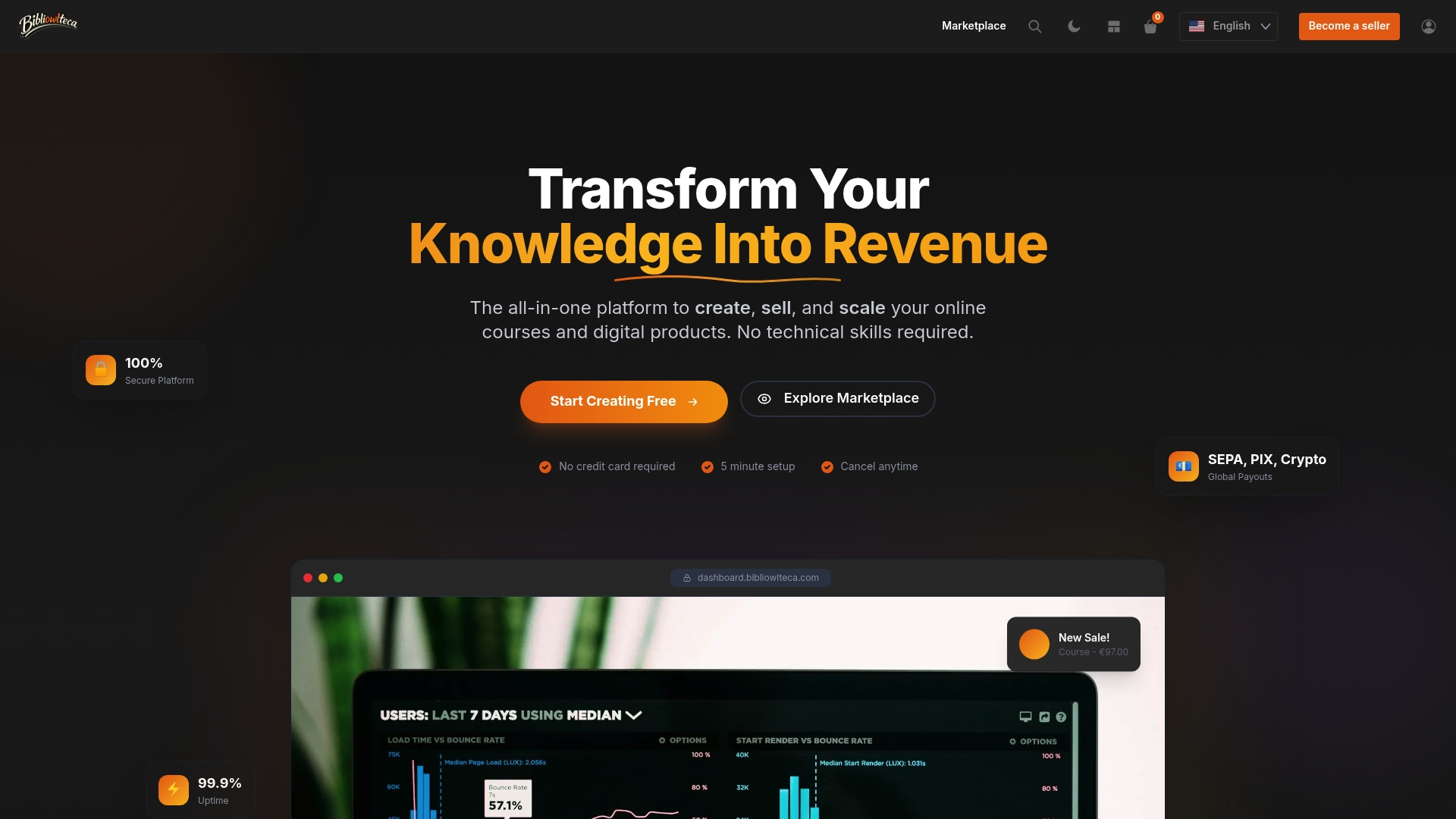
With BibliOWLteca, you get a ready-to-use storefront, built-in digital delivery, multi-currency payment processing, and tax compliance tools that handle the complexity you should not have to think about. Whether you are launching your first e-book or scaling a full course catalogue to international buyers, the platform gives you the infrastructure to focus on what you do best: creating content that genuinely teaches people something valuable. Visit BibliOWLteca to explore how the platform can support your next stage of growth.
Frequently asked questions
What is a Merchant of Record, and why does it matter for creators?
A Merchant of Record (MoR) is a platform that legally processes your sales, collects VAT, and handles tax compliance on your behalf. This is vital for global educators who want to sell internationally without managing VAT registration across multiple countries.
Do platforms like Gumroad or Payhip help with EU/UK VAT?
Yes, both platforms offer VAT support, with Payhip handling VAT automatically for courses and e-books sold to EU and UK customers, making international sales significantly simpler to manage.
Which payment setup is best for beginners selling digital products?
Gumroad is the simplest entry point for new creators, but Gumroad is costly at scale while Payhip's tiered pricing becomes far more cost-effective as your monthly revenue grows beyond the early testing phase.
Can I use Stripe or PayPal directly instead of a platform?
Yes, both give you more control and potentially lower per-transaction costs, but Stripe and PayPal require manual setup for tax, VAT collection, digital delivery, and checkout design, which adds significant operational complexity for most solo creators.