
TL;DR:
- Choosing the right platform is crucial for maximizing revenue, control, and audience ownership.
- Marketplaces are good for discovery but often have high fees and limited customer data access.
- Combining marketplaces for initial growth and self-hosted sites for long-term control is the most effective strategy.
Picking a platform to sell your e-books, courses, or digital materials can feel straightforward until you realise that the wrong choice can quietly drain your revenue, cap your audience, and leave you without ownership of your own customer list. Not all online product marketplaces are built the same, and the gap between the best and worst options for digital creators is enormous. Fees, content restrictions, VAT handling, and discovery potential all shape your long-term results. This guide breaks down exactly what separates a good marketplace from a great one, compares the leading platforms side by side, and gives you a clear framework for choosing the right fit.
Table of Contents
- Understanding online product marketplaces for digital creators
- Comparing top platforms: Features and costs side by side
- Key pitfalls and hidden costs every creator should watch for
- Maximising reach and revenue: Proven strategies for global success
- Why most creators outgrow major marketplaces and what really works
- Start your global digital marketplace journey today
- Frequently asked questions
Key Takeaways
| Point | Details |
|---|---|
| Platform choice matters | Fees, restrictions, and audience reach differ greatly between marketplaces—choose based on your growth stage and revenue model. |
| Watch for hidden costs | Starter plans, transaction fees, and global tax compliance can all impact your actual earnings more than you expect. |
| Blend strategies to scale | Combining course, e-book, and community sales across multiple platforms increases reach and revenue potential. |
| Outgrow basic marketplaces | Most successful educators move from major listing sites to self-owned platforms for better branding, ownership, and income. |
Understanding online product marketplaces for digital creators
An online product marketplace is a platform where creators can list, sell, and deliver digital products to buyers around the world. Some marketplaces host multiple sellers and bring their own built-in audience, much like a digital shopping centre. Others function more like infrastructure, giving you a storefront to run entirely on your own terms. Understanding the difference is the first step to making a smart decision.
There are three broad models to know. Marketplaces (like Udemy or Amazon) aggregate sellers and buyers, offering discovery but taking a significant revenue cut. Self-hosted platforms (like Thinkific or Teachable) give you full control over branding, pricing, and your customer list, but you bring your own traffic. Hybrid models blend both approaches, letting you sell through your own store while optionally tapping into a wider network.
For educators and content creators specifically, the features that matter most go beyond a simple checkout button:
- Digital delivery: Automated, secure file delivery after purchase
- Payment integration: Support for Stripe, PayPal, and multiple currencies
- Tax compliance: Automatic VAT and sales tax calculation for global buyers
- Audience tools: Email capture, student management, and analytics
- Content limits: Caps on products, students, or storage can restrict growth
Platforms built specifically for digital goods handle these requirements far better than general e-commerce tools. Top platforms for digital creators include Thinkific, Teachable, Podia, Sellfy, Payhip, and Gumroad, all supporting global sales with features like unlimited products, digital delivery, and payment integrations. The right ecommerce platform features can mean the difference between a hobby and a scalable business.
Building global digital sales strategies from the start saves you from painful migrations later. A digital marketplace empowers educators to reach students in dozens of countries without needing a separate payment processor for each region.
"The best platform is not the most popular one. It is the one that fits your current revenue, your growth plan, and your audience's expectations."
Pro Tip: Before committing to any platform, test the checkout experience yourself as a buyer. A clunky purchase flow loses sales before you even see them.
Comparing top platforms: Features and costs side by side
Once you know what to look for, the next step is comparing how leading platforms actually perform on cost and features. The pricing structures vary significantly, and choosing the wrong model at the wrong revenue level can cost you hundreds of pounds per year.
Here is a practical comparison of the most popular options for digital creators in 2026:
| Platform | Monthly fee | Transaction fee | Key strength |
|---|---|---|---|
| Thinkific | Free to £149 | 0% | Course builder, no transaction fees |
| Teachable | £0 to £299 | 0% to 7.5% | Strong marketing tools |
| Podia | £33 to £166 | 0% | Communities and digital downloads |
| Gumroad | Free | 10% | Instant setup, large creator base |
| Payhip | Free to £99 | 0% to 5% | E-books and simple digital files |
| Sellfy | £22 to £159 | 0% | Print-on-demand plus digital |
The most important trade-off is between transaction fees and flat monthly fees. Transaction-based models feel low-risk when you are starting out because you only pay when you earn. But they scale badly. Flat-fee plans outperform transaction models above roughly £800 per month in revenue. For example, Teachable's Starter plan charges a 7.5% transaction fee. At £2,000 per month in sales, that fee alone costs £150. The Builder plan at £69 per month saves you £81 every single month at that revenue level.

Gumroad's 10% fee structure is worth examining closely. On a £20 e-book, you net roughly 86% after fees, which sounds reasonable. But once you add Stripe's processing fee on top, your actual take-home drops further. At volume, this adds up fast.
Key considerations when comparing platforms:
- Freemium tiers are useful for testing but often include product or student caps
- Subscription models range from £9 to £399 per month depending on features
- Stripe processing fees of roughly 2.9% apply on top of platform fees on most tools
- Migration costs are real: moving your student list and content mid-business is disruptive
If you are exploring hotmart alternatives or BookTrader alternatives, the same framework applies. Match the platform's fee model to your current monthly revenue and your projected growth trajectory.
Pro Tip: Start on a transaction-fee plan to validate your product. Once you consistently exceed £800 per month, switch to a flat-fee plan immediately. The maths always favours the switch at that threshold.
Key pitfalls and hidden costs every creator should watch for
Feature lists are only half the story. The real test of a platform comes when you hit a growth ceiling, face a tax audit, or try to migrate your audience. These are the moments when hidden costs and structural limitations become painfully visible.
One of the most overlooked traps is starter plan restrictions. Many platforms advertise a free or low-cost entry tier, but starter plans cap products and students in ways that force an upgrade far sooner than you expect. Teachable's Starter plan, for instance, limits you to one product and 100 students. If your first course takes off, you will hit that ceiling quickly.
Marketplaces like Udemy offer a different kind of trade-off. They provide genuine discovery, which is valuable when you have no audience of your own. But they take a 50% to 75% revenue cut on most sales, and you do not own the customer relationship. Your buyers belong to the marketplace, not to you.
Here is a summary of the most common hidden costs:
| Hidden cost | Where it appears | Impact |
|---|---|---|
| Transaction fees | Starter/free plans | Compounds as revenue grows |
| Student or product caps | Entry-tier plans | Forces early upgrade |
| VAT/tax handling | Global sales | Manual compliance risk |
| Chargeback fees | Low-ticket items | Higher rate on sub-£10 products |
| Migration fees | Switching platforms | Time, data loss, re-engagement cost |
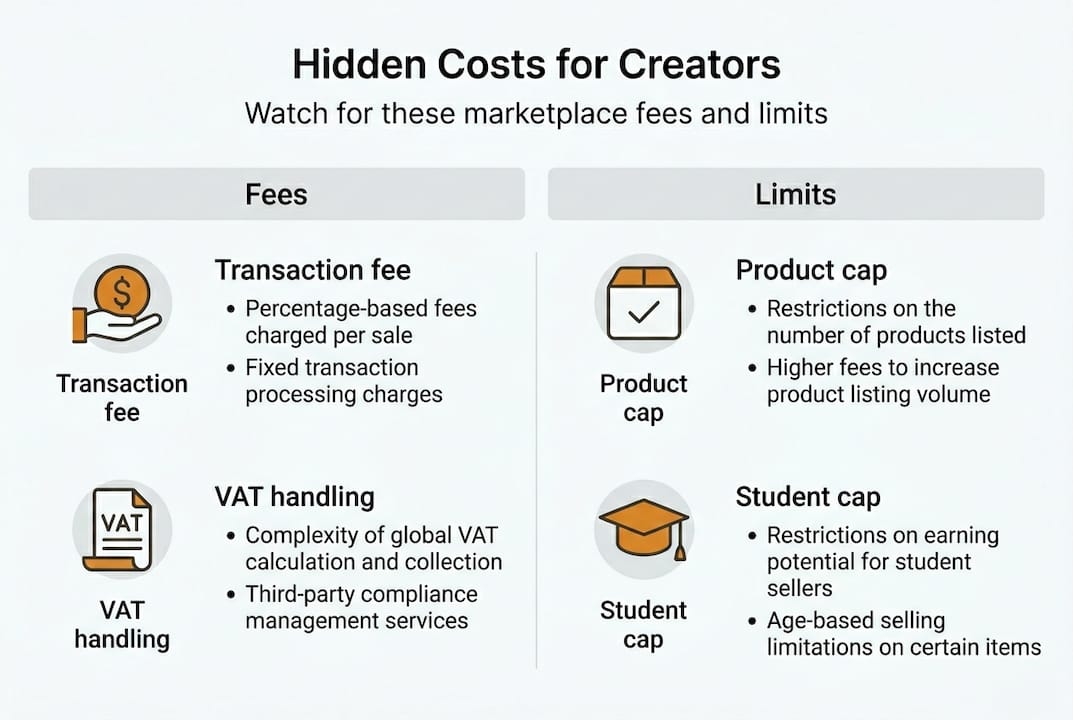
VAT automation is non-negotiable for anyone selling to buyers in the EU, UK, or other regulated markets. Without it, you are legally responsible for calculating and remitting VAT on every international sale. Most established platforms handle this automatically, but some budget tools do not. Always verify before you sign up.
Chargebacks are another underestimated risk. Low-priced digital products, particularly those under £10, attract a disproportionately higher chargeback rate. Some payment processors flag accounts with high chargeback ratios, which can result in account suspension. Platforms with built-in buyer verification and clear refund policies reduce this risk significantly.
For creators building ebooks in education or working through a developing educational books checklist, understanding these platform constraints early prevents costly rework. Review platform pros and cons carefully before committing to any long-term plan.
Ownership is the final consideration. On a marketplace, the platform owns the relationship with your buyer. On a self-hosted or hybrid platform, you own the email list, the purchase history, and the ability to re-market. That ownership compounds in value over time and is worth protecting from day one.
Maximising reach and revenue: Proven strategies for global success
Understanding the pitfalls gives you a clearer path forward. The creators who build sustainable digital businesses do not rely on a single platform or a single product type. They use a deliberate combination of tools, pricing strategies, and content formats to grow across multiple markets.
Here are five proven strategies for maximising your reach and revenue:
- Use a marketplace for discovery, then migrate your audience. Platforms like Udemy or Amazon can introduce your work to thousands of new buyers. Once someone purchases, direct them to your own platform for future products. This way you get the visibility without permanently surrendering the relationship.
- Prioritise zero or low transaction fees as you scale. 85% of top creators sell multiple products and prioritise low-fee or flat-fee platforms as they grow. The fee savings at scale are significant enough to fund your marketing budget.
- Blend product types for stronger retention. Selling only courses limits your revenue ceiling. Combine courses with e-books, templates, and community memberships. Buyers who purchase one product are far more likely to buy a second from the same creator.
- Test platforms with free trials before committing. Most major platforms offer 14 to 30-day trials. Use them to test the checkout flow, the student experience, and the analytics dashboard before you invest time in content migration.
- Match your pricing model to your revenue stage. The breakeven point between a 7.5% transaction fee and a flat monthly plan sits at roughly £667 per month. Below that, transaction fees may be acceptable. Above it, a flat fee is almost always the better choice.
For creators focused on maximising author income, the combination of a self-hosted platform and a marketplace for initial discovery is consistently the highest-performing model. Staying informed about digital education trends also helps you anticipate where buyer demand is heading before the market gets crowded.
Pro Tip: Build your email list from your very first sale. It is the only asset that no platform can take away from you, regardless of algorithm changes or policy updates.
"Global reach is not about being on every platform. It is about being on the right platform for your audience, with the infrastructure to serve them reliably."
Scaling strategies for digital products consistently point to one truth: the creators who grow fastest are those who treat their platform choice as a business decision, not a technical one.
Why most creators outgrow major marketplaces and what really works
Here is the uncomfortable truth that most platform comparison articles avoid: discovery marketplaces are a starting point, not a destination. Udemy, Amazon, and similar platforms are genuinely useful for new creators who have no audience and need visibility. But they are structurally designed to benefit the platform, not the creator. Revenue cuts of 50% to 75%, no access to buyer data, and constant price wars with competing sellers make long-term growth extremely difficult.
The most successful educators we observe follow a predictable pattern. They use a major marketplace to build initial credibility and gather reviews. Then, once they have a proven product and a small but engaged audience, they migrate to a platform where they own the relationship. That migration is rarely comfortable, but it is almost always worth it.
The real skill is knowing when to move, not just where to move. Moving too early means losing discovery traffic before you have built your own. Moving too late means years of lost revenue and no owned audience to show for it. A digital marketplace empowerment approach means treating each platform as a tool with a specific job, rather than a permanent home.
Stay adaptable. The digital product landscape in 2026 is shifting quickly, and the platform that suits you today may not be the right fit in two years.
Start your global digital marketplace journey today
You now have a clear picture of how online product marketplaces work, where the hidden costs lie, and which strategies consistently deliver results for digital creators. The next step is putting that knowledge into action with a platform built specifically for educators and creators who want to sell globally.
BibliOWLteca gives you everything you need to launch and grow a digital product business: seamless payment processing, multi-currency support, automated tax compliance, and tools designed for educators selling e-books, courses, and more. There are no complicated setups or technical barriers. You can publish your first product, reach international buyers, and manage your entire store from one place. Join a growing community of creators who are turning their knowledge into a global business. Visit BibliOWLteca and start building today.
Frequently asked questions
What is the best online marketplace to sell e-books and courses?
Top platforms for digital creators include Thinkific, Teachable, Podia, Sellfy, Payhip, and Gumroad. The ideal choice depends on your budget, product type, and how quickly you plan to scale.
Should I use a marketplace or self-host my courses for more revenue?
Marketplaces such as Udemy offer more exposure but take a larger revenue share. Self-hosted platforms provide better branding control and higher revenue retention, especially once your audience is established.
How do transaction fees and flat monthly fees compare for digital product sales?
Transaction fees are manageable at low volumes, but a flat monthly fee becomes the better option once your revenue consistently exceeds around £800 per month.
What are the main hidden costs of digital marketplaces?
Many platforms cap products and students on entry tiers, take significant revenue cuts, and require VAT handling for global sales. Chargebacks on low-ticket items can also add up unexpectedly.
How can I maximise income from selling digital products online?
Sell multiple product types, use platforms with low or zero transaction fees as you grow, and 85% of top creators combine courses with communities for higher retention and long-term revenue.