

TL;DR:
- Most self-published authors struggle with sales despite easy book writing.
- Diversifying distribution channels and effective marketing are essential for long-term success.
- Building a catalogue, patience, and platform diversification help sustain steady e-book income.
Most self-published authors share a common frustration: writing the book is the easy part. Selling it is where things fall apart. 90% of self-published e-books sell fewer than 100 copies in their first year, not because the content is poor, but because most authors skip the strategic groundwork. The good news is that with the right preparation, platform choices, pricing, and marketing, you can reach a global audience and genuinely monetise your expertise. This guide walks you through each of those steps in practical, actionable terms.
Table of Contents
- Understanding your options: Where can you sell e-books online?
- Preparing your e-book for online sales: Formats, covers and metadata
- Setting pricing and royalties: What should you charge?
- Launching and growing sales: Marketing strategies that work
- A fresh perspective: What most guides miss about selling e-books online
- Start your e-book sales journey with BibliOWLteca
- Frequently asked questions
Key Takeaways
| Point | Details |
|---|---|
| Choose your platforms wisely | Balancing Amazon, aggregators, and direct sales maximises both reach and royalties. |
| Perfect your formatting and metadata | Correct file formats and strong keywords make your e-book attractive and visible to buyers. |
| Price to optimise royalties | Most authors see better sales and earnings with prices between $2.99 and $4.99. |
| Market and build a backlist | Consistent marketing and publishing more titles significantly improve long-term success. |
Understanding your options: Where can you sell e-books online?
There are three main routes for selling your e-book online, and each comes with its own trade-offs in royalties, reach, and effort. Understanding these channels before you publish saves you from costly mistakes later.
Major marketplaces are platforms like Amazon Kindle Direct Publishing (KDP), Apple Books, and Barnes and Noble Press. They bring built-in audiences of millions of readers, which means discoverability is higher from day one. The trade-off is that you share revenue and, in some cases, accept exclusivity terms.

Aggregators are distribution services that send your e-book to multiple stores and libraries simultaneously. Services like Draft2Digital, PublishDrive, and Kobo Writing Life act as middlemen, simplifying wide distribution. Alternative e-book platforms often offer royalties between 60% and 85%, making them a solid choice for authors who want breadth without managing each store individually.
Direct sales mean selling from your own website or a dedicated creator platform. You keep 90 to 100% in royalties but must generate your own traffic. This channel rewards authors who already have an audience or are willing to build one.
Here is a quick comparison to help you decide:
| Channel | Royalty range | Reach | Effort required |
|---|---|---|---|
| Amazon KDP | 35% or 70% | Very high | Low to medium |
| Aggregators | 60 to 85% | High | Low |
| Direct sales | 90 to 100% | Depends on you | High |
Amazon KDP dominates the market and offers up to 70% royalties for books priced between $2.99 and $9.99. It also offers KDP Select, an optional exclusivity programme that unlocks Kindle Unlimited page reads and promotional tools. For more platform comparisons, it is worth reviewing how each service handles payouts, territories, and format requirements before committing.
The most effective strategy for many authors is a hybrid approach: publishing on Amazon KDP while also distributing widely through an aggregator. This balances the visibility of the world's largest e-book store with the resilience of having income from multiple sources.
Pro Tip: Start with KDP Select for your first 90 days to build early velocity through Kindle Unlimited, then go wide once you have reviews and sales data to support broader distribution.
Preparing your e-book for online sales: Formats, covers and metadata
Once you have selected your preferred sales channels, it is crucial to prepare your e-book for each platform's standards. Skipping this step leads to rejected uploads, poor reader experiences, and lost sales.
The two most widely accepted file formats are EPUB and DOCX. EPUB is the industry standard and works across nearly every platform. DOCX is accepted by Amazon KDP, which converts it internally. If you want full control over formatting, convert your manuscript to EPUB using a tool like Calibre or Vellum before uploading. You can find a full walkthrough on digitising your manuscript to avoid common formatting errors.
Your cover is arguably your most important marketing asset. Platforms require a minimum of 2,560 x 1,600 pixels, and the image must be high resolution. A poorly designed cover signals low quality before a reader even opens the preview. Invest in a professional designer or use a template tool if your budget is tight, but never compromise on this.
Metadata is where many authors lose visibility without realising it. Your keywords and categories determine where your book appears in search results on every platform. Choose two categories that are specific enough to be competitive but not so niche that no one searches them. Use all available keyword slots and think like a reader, not a writer.
Here is a checklist of essential metadata fields to complete before publishing:
- Title and subtitle (include your primary keyword naturally)
- Author name and pen name if applicable
- Book description (400 to 600 words, written to sell)
- Two categories, as specific as possible
- Seven keywords or keyword phrases
- Publication date and ISBN if required
- Price and territory rights
Metadata for visibility is not a one-time task. Revisit your keywords every few months as search trends shift, especially if sales slow down.
Pro Tip: Set up a pre-order at least two weeks before your launch date. Pre-orders count as day-one sales on most platforms, which boosts your ranking in the first 24 hours and dramatically improves discoverability.
Setting pricing and royalties: What should you charge?
With your e-book ready for sale, you need to set a price that balances royalties with real-world demand. Price too high and readers scroll past. Price too low and you signal low value, or worse, earn almost nothing per sale.

For new authors, the sweet spot is $2.99 to $4.99. This range sits within the 70% royalty bracket on Amazon KDP and is low enough to encourage impulse purchases from readers who do not yet know your work. For established authors with a backlist and loyal readership, pricing between $5.99 and $9.99 is entirely reasonable.
Here is how royalties break down practically:
- Amazon KDP at $2.99: 70% royalty = approximately $2.09 per sale
- Amazon KDP at $0.99: 35% royalty = approximately $0.35 per sale
- Amazon KDP at $12.99: 35% royalty = approximately $4.55 per sale
- Aggregator at $4.99 (80% royalty): approximately $3.99 per sale
KDP offers 70% royalties only within the $2.99 to $9.99 range. Books priced outside that window drop to 35%, which can significantly reduce your earnings per sale even if the book costs more.
Promo pricing is a powerful lever. Setting the first book in a series to free or $0.99 for a limited period drives readers into your catalogue. If they enjoy it, they will pay full price for the rest. Review pricing strategies and data to understand how promotional windows affect long-term sales rank and reader acquisition.
Pro Tip: Never set your price and forget it. Test different price points every quarter, especially after gathering reviews. A book with 50 positive reviews can often sustain a higher price than one with none.
Launching and growing sales: Marketing strategies that work
Having priced and published your e-book, launching and ongoing marketing make all the difference between a book that sells steadily and one that disappears after week one.
A strong launch follows a clear sequence. Here is a practical checklist:
- Build an email list of at least 100 subscribers before launch day
- Recruit 10 to 20 advance reader copy (ARC) reviewers four weeks before publication
- Set up a pre-order two weeks before launch
- Send a launch-day email to your list with a direct purchase link
- Post across your social channels with a clear call to action
- Follow up with reviewers and encourage honest ratings
Launching with pre-orders and ARC reviews creates the early sales velocity that algorithms reward. Platforms like Amazon interpret a cluster of early sales as a signal of quality and push the book higher in search results.
The single most overlooked growth strategy is building a series or backlist. Top-earning indie authors focus on multiple titles and consistent marketing rather than pinning everything on one book. Each new title you release cross-promotes the ones before it, compounding your visibility over time.
"Your first book is not your business. Your catalogue is your business."
For sustained sales, combine a regular email newsletter with periodic paid advertising on Amazon or Facebook. Even a modest ad budget of $5 to $10 per day can generate a positive return once your book has reviews and a proven conversion rate. Explore free e-book promotions and marketing in education to find additional channels suited to your genre and audience.
A fresh perspective: What most guides miss about selling e-books online
Most guides tell you to publish on Amazon and run a launch promotion. That advice is not wrong, but it is incomplete in a way that quietly damages most authors' long-term results.
The real problem is concentration risk. Authors who rely on a single platform and a single title are one algorithm change away from losing most of their income. We have seen this happen repeatedly as KDP adjusts its Kindle Unlimited payout rates or changes category rules. Diversification is not just a nice idea; it is the foundation of a resilient author business.
The second thing most guides miss is patience as a strategy. Publishing two or three books and expecting consistent income within six months is unrealistic. Understanding realistic author expectations means accepting that the compound effect of a growing catalogue, improving metadata, and iterative marketing takes 12 to 24 months to show meaningful results. Authors who quit before that window closes leave the most money on the table.
Going wide, building a series, and treating each release as a long-term asset rather than a short-term event is the approach that separates authors who earn steadily from those who do not.
Start your e-book sales journey with BibliOWLteca
Armed with these strategies, the next step is choosing a platform that supports your goals from day one rather than limiting them.
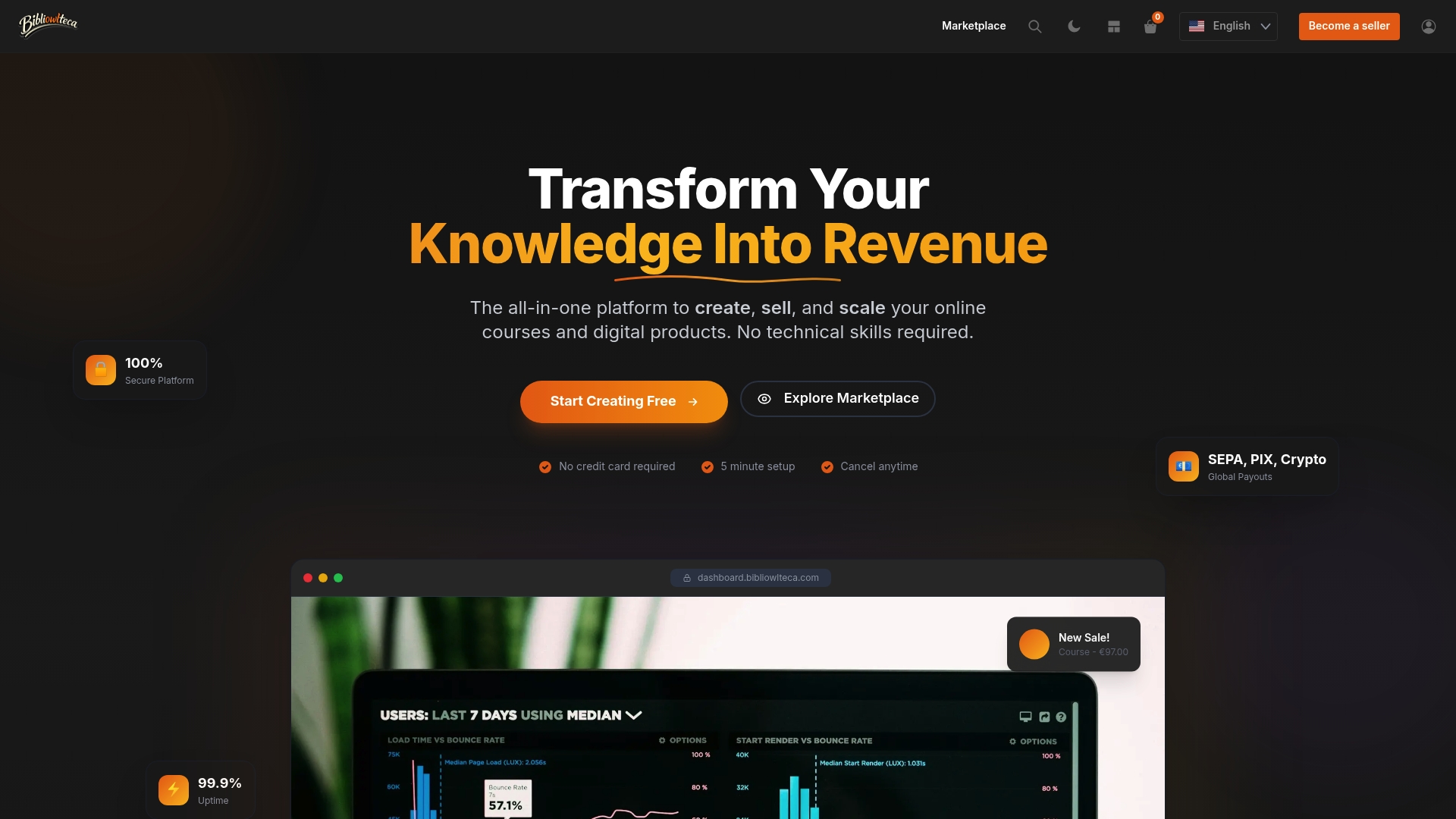
BibliOWLteca is built for exactly this moment. Whether you are publishing your first e-book or scaling an existing catalogue, the platform gives you the tools to sell directly to your audience, handle payments in multiple currencies, and manage digital delivery without technical headaches. You keep more of what you earn, and you own the relationship with your readers. For authors who want a straightforward, scalable route to direct e-book sales, BibliOWLteca is worth exploring as your next distribution channel.
Frequently asked questions
Which platform pays the highest royalties for e-books?
Direct sales from your own site offer the highest royalties, often up to 100%, but major services like Amazon KDP provide 70% for eligible books priced within the qualifying range.
How much do most self-published authors earn per year?
The median full-time indie author earns around $12,000 to $13,500 per year, though the majority of self-published e-books sell fewer than 100 copies in their first year.
Is Amazon KDP exclusive, or can I sell my e-book elsewhere?
Amazon KDP is not exclusive by default, but enrolling in KDP Select requires 90-day exclusivity in exchange for Kindle Unlimited access and promotional benefits.
What is the best price for a new self-published e-book?
A price of $2.99 to $4.99 is considered the sweet spot for new authors, balancing the highest royalty rate with strong sales volume on major platforms.
How important is metadata for selling e-books?
Optimising keywords and categories greatly boosts your e-book's visibility across all major platforms and is one of the highest-return tasks any author can invest time in.