
Most academics view publishing as a bureaucratic hoop to jump through, yet it fundamentally shapes how knowledge moves through our intellectual ecosystem. The pressure to publish creates real tensions between quality scholarship and career survival. Beyond the metrics and mandates lies a complex system that validates research, builds reputations, and increasingly determines who can access scholarly knowledge. Understanding these dynamics helps you navigate the publishing landscape more strategically and recognise where reform efforts might reshape academic communication in meaningful ways.
Table of Contents
- Key Takeaways
- Why publishing is crucial in academia
- The academic publishing process and its challenges
- Market dominance and access: the influence of big publishers
- Open access and proposed reforms in academic publishing
- Explore more with Bibliowlteca
- Frequently asked questions
Key Takeaways
| Point | Details |
|---|---|
| Publishing significance | Publishing remains the primary mechanism for disseminating validated knowledge and supporting career progression in academia. |
| Peer review role | Peer review provides rigorous expert assessment that validates research and helps ensure quality, while attracting criticism. |
| Publisher dominance | Large commercial publishers dominate the market, influencing costs and access to scholarly content. |
| Open access tradeoffs | Open access improves accessibility and potential citations but raises equity and funding sustainability concerns. |
| Scholarly reform aims | Reforms are proposed to address publishing challenges and reform scholarly communication for broader participation. |
Why publishing is crucial in academia
Publishing serves as the primary mechanism for knowledge dissemination, validation, and career advancement in academic life. When you complete research, publication transforms private findings into public knowledge that colleagues worldwide can scrutinise, build upon, and apply. This process extends far beyond simply sharing results.
Peer review validates your work through expert assessment. Before publication, typically two to three specialists in your field examine methodology, analyse evidence, and evaluate claims. This scrutiny catches errors, identifies gaps, and ensures research meets disciplinary standards. The validation stamp from respected journals signals quality to funding bodies, tenure committees, and fellow researchers.
The phrase 'publish or perish' captures real career pressures facing academics. Early-career researchers particularly feel this weight as publication records directly influence:
- Tenure decisions and contract renewals
- Grant applications and funding success rates
- Invitations to conferences and collaborative projects
- Academic reputation within specialised fields
Research shows publication rates often decline after tenure in certain disciplines, suggesting the pressure operates most intensely during probationary periods. This creates incentives that sometimes prioritise quantity over depth, though reference sources matter for maintaining credibility regardless of publication volume.
Your publication portfolio becomes a proxy for scholarly productivity. Whilst this metric-driven approach has limitations, it remains deeply embedded in academic evaluation systems. Understanding these dynamics helps you balance genuine intellectual contribution with professional survival, recognising that publishing functions simultaneously as knowledge infrastructure and career currency.
"The academic publishing system shapes not just what we know, but who gets to participate in knowledge creation and whose voices reach scholarly audiences."
This dual role creates tensions between scholarly ideals and market realities that affect every researcher's career trajectory.
The academic publishing process and its challenges
Submitting a manuscript initiates a structured workflow that can span months or years. After initial editorial screening, your work enters peer review where experts assess validity, methodology, and originality. The manuscript submission and peer review process typically involves single-blind review, though practices vary by discipline and journal.
The standard peer review sequence follows these steps:
- Editorial assessment determines whether the manuscript fits journal scope and meets basic quality thresholds
- Assignment to two or three reviewers with relevant expertise who evaluate the research independently
- Reviewers submit detailed reports highlighting strengths, weaknesses, and recommendations for acceptance, revision, or rejection
- Editorial decision synthesises reviewer feedback and communicates the outcome to authors
- Authors revise and resubmit, often triggering additional review rounds before final acceptance
Decisions generally arrive within 45 days, though timelines vary considerably. Some journals respond within weeks whilst others take six months or longer. This variability creates planning challenges for researchers facing tenure clocks or grant deadlines.
Peer review faces substantial criticism despite its central role. Symbolic scarcity leads to epistemic waste as journals prioritise novelty over methodological soundness. Reviewers spend countless hours writing detailed reports that only one journal ever sees. If editors reject the manuscript, authors must start fresh elsewhere with entirely new reviewers who duplicate much of the previous assessment.
This redundancy wastes expertise and slows knowledge dissemination. More troubling, the pressure to publish novel findings encourages selective reporting and questionable research practices. The reproducibility crisis partly stems from incentive structures that reward surprising results over careful replication studies.
Single-blind review, where reviewers know author identities but authors cannot identify reviewers, remains common but enables bias. Reviewer anonymity sometimes emboldens harsh or unconstructive criticism. Double-blind processes attempt to reduce bias by concealing author identities, though disciplinary conventions and self-citation patterns often make authors identifiable.
Pro Tip: Before submission, apply critical reading techniques to your own manuscript. Anticipate reviewer concerns by identifying methodological limitations, alternative interpretations, and gaps in your argument. Addressing these proactively strengthens your submission and demonstrates scholarly rigour.
Review quality varies enormously. Some reviewers provide thoughtful, constructive feedback that genuinely improves research. Others offer superficial comments or reject work that challenges established perspectives. You cannot control reviewer assignment, but understanding these dynamics helps you interpret feedback strategically and persist through inevitable rejections.
Market dominance and access: the influence of big publishers
Academic publishing concentrates power in remarkably few hands. Five major publishers control over half the global scholarly publishing market, generating substantial profits from a system built largely on unpaid academic labour. Elsevier, Springer Nature, Wiley, Taylor & Francis, and Sage dominate journal publishing across disciplines.
This concentration creates significant implications for knowledge access:
- Universities pay escalating subscription fees for journal bundles, often negotiating contracts worth millions annually
- Individual researchers cannot afford access without institutional support
- Institutions in the Global South face particular barriers due to currency exchange rates and limited budgets
- Publishers extract value from research funded by public grants and conducted by salaried academics
The economics reveal how publishers profit from freely provided academic work. Researchers write articles without payment, peer reviewers assess submissions without compensation, and academic editors manage journals for modest stipends or prestige alone. Publishers then charge universities substantial fees to access this content, effectively selling academic labour back to the institutions that funded it.
| Publisher | Approximate market share | Key journal portfolio |
|---|---|---|
| Elsevier | 16% | Lancet, Cell, over 2,500 journals |
| Springer Nature | 13% | Nature, Scientific Reports, BMC journals |
| Wiley | 7% | Advanced Materials, Cochrane Library |
| Taylor & Francis | 5% | Over 2,700 journals across disciplines |
| Sage | 4% | Social science and humanities focus |
Profit margins in academic publishing exceed those in many industries, sometimes reaching 30-40%. These returns stem from the unusual market structure where content creators and quality assessors work without direct payment. Universities cannot easily boycott publishers because faculty need access to specific journals for research and teaching.
This system creates a double-payment problem. Universities fund research through salaries and grants, then pay again to access published results. Article processing charges in open access models add a third payment layer without necessarily reducing subscription costs. Some institutions now face combined expenditures for subscriptions and APCs that strain library budgets.
"The current publishing model extracts resources from universities whilst concentrating control over scholarly communication in commercial entities whose interests may not align with academic values."
Access barriers extend beyond financial costs. Researchers at under-resourced institutions cannot read cutting-edge work in their fields, creating knowledge inequities that reinforce global academic hierarchies. Graduate students and independent scholars face similar exclusion when they lack institutional affiliations.
These dynamics drive interest in library trends shaping education as institutions seek alternatives to traditional subscription models. Consortial negotiations, interlibrary loan systems, and preprint archives provide partial solutions, but fundamental reform requires rethinking how we fund and organise scholarly communication.
Open access and proposed reforms in academic publishing
Open access publishing promises to democratise research by making articles freely available online. Yet evidence suggests complex effects on citation impact and equity. Research on gold open access publications in computer science reveals that new OA venues often show lower field-weighted citation impact compared to established subscription journals.
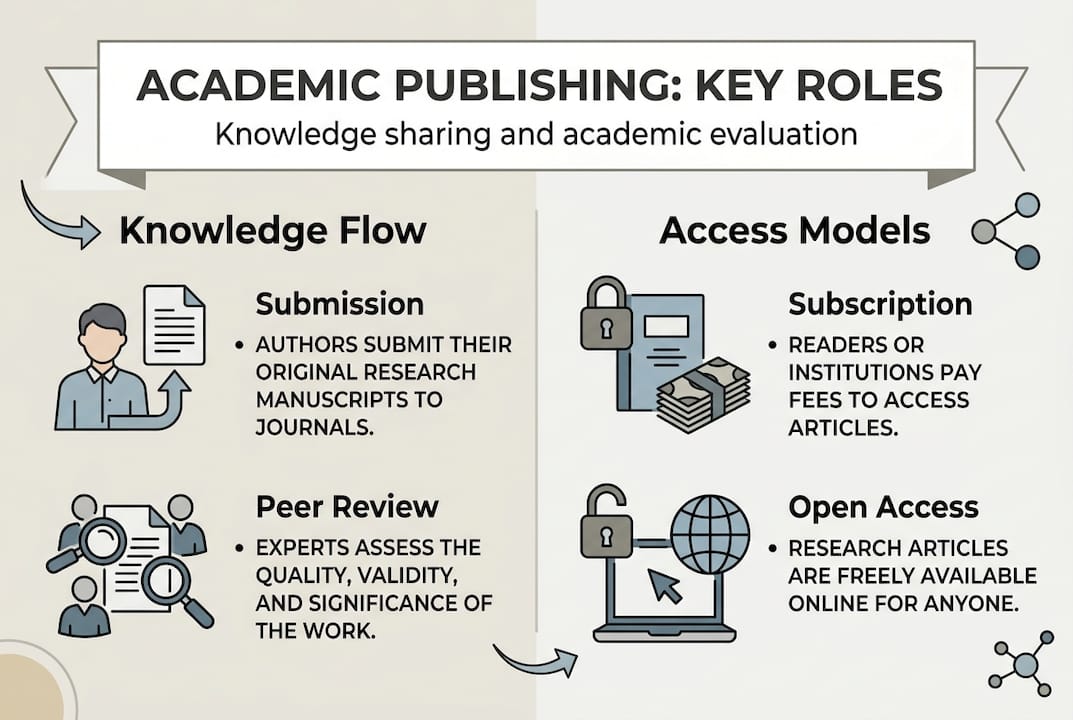
This citation gap stems partly from venue prestige rather than access model per se. Established journals benefit from decades of reputation-building that new OA alternatives cannot quickly replicate. Researchers still prioritise publishing in high-impact subscription journals when career advancement depends on citation metrics and journal prestige.
Article processing charges present another complication. Gold OA typically requires authors or their institutions to pay fees ranging from hundreds to several thousand pounds per article. These costs can exclude researchers without grant funding or institutional support, potentially creating new access barriers that replace old ones.
| Open access model | Costs | Access | Challenges |
|---|---|---|---|
| Gold OA | Authors pay APCs | Immediate public access | High fees exclude unfunded researchers |
| Green OA | Free via repositories | Delayed access after embargo | Publisher restrictions vary |
| Diamond OA | No fees for authors or readers | Immediate access | Requires alternative funding sources |
| Hybrid | APCs for OA in subscription journals | Mixed access | Double-dipping concerns |
Emerging reforms in peer review and publishing aim to address systemic problems. Portable review systems would let authors transfer peer review reports between journals, reducing redundant assessment. If one journal rejects your manuscript, you could submit it elsewhere with existing reviews attached, allowing new editors to make informed decisions without starting from scratch.
Open peer review increases transparency by publishing reviewer identities and reports alongside articles. This accountability may improve review quality and reduce bias, though some worry it could discourage honest criticism of powerful researchers. Trials with open review show mixed results across disciplines.
Artificial intelligence tools offer potential efficiency gains. AI can screen manuscripts for basic quality issues, identify suitable reviewers, and flag methodological concerns. However, algorithmic assessment cannot replace expert judgement on theoretical contributions or disciplinary significance. The technology works best as a supplement rather than replacement for human review.
Pro Tip: Engage with institutional publishing initiatives and preprint servers in your field. These platforms often provide free books online and articles whilst experimenting with alternative review models. Supporting pluralistic publishing ecosystems reduces dependence on commercial publishers and creates space for innovation.
Reform proposals emphasise pluralism over mandates. Rather than requiring all research follow a single model, advocates suggest supporting diverse publishing approaches that serve different disciplinary needs and career stages. Some fields thrive with rapid preprint sharing whilst others require more deliberate peer review before public release.
These changes face resistance from established interests. Publishers defend current systems as maintaining quality standards. Senior researchers worry that open review could discourage frank assessment. Early-career academics fear that alternative venues might not count toward tenure. Meaningful reform requires coordinating changes across journals, institutions, and funding agencies.
The transition period creates uncertainty. You must navigate existing prestige hierarchies whilst supporting experiments that might eventually transform scholarly communication. Balancing these competing demands requires understanding both current incentive structures and emerging alternatives that could reshape academic publishing in coming years.
Explore more with Bibliowlteca
Navigating academic publishing requires understanding both traditional systems and emerging alternatives that might better serve scholarly communication. Bibliowlteca supports educators and researchers by providing tools for creating, distributing, and accessing educational content on your own terms.

Our platform helps you reach global audiences whilst maintaining control over your intellectual work. Whether you are exploring library trends shaping education or seeking ways to access free books online, Bibliowlteca provides infrastructure that simplifies digital publishing without sacrificing quality or accessibility. Discover how independent publishing models can complement traditional academic channels whilst expanding your reach beyond institutional paywalls. Visit Bibliowlteca to explore resources that support your scholarly work.
Frequently asked questions
What is the peer review process in academic publishing?
Peer review involves expert evaluation of research manuscripts before publication. Typically, two to three specialists in your field assess methodology, validity, and contribution to knowledge. Editors use these confidential reports to decide whether to accept, request revisions, or reject submissions.
How long does peer review typically take?
Most journals aim for initial decisions within 45 to 90 days, though actual timelines vary considerably by discipline and journal. Some fast-track processes deliver decisions in weeks, whilst others extend to six months or longer. Revision rounds add additional time before final acceptance.
What is the difference between single-blind and double-blind review?
Single-blind review conceals reviewer identities from authors but lets reviewers see author names and affiliations. Double-blind review hides both parties' identities to reduce bias, though disciplinary conventions and citation patterns often reveal authorship. Each approach has trade-offs between accountability and anonymity.
Why do article processing charges remain high in open access publishing?
Publishers cite editorial costs, infrastructure maintenance, and quality assurance as justifications for APCs. However, profit margins suggest fees exceed actual costs in many cases. The lack of price competition and prestige-based journal selection reduce pressure for publishers to lower charges.
How can researchers support publishing reform?
Engage with preprint servers, publish in diamond OA venues when appropriate, and participate in open review experiments. Support institutional repositories and advocate for policies that value diverse publication types beyond traditional journal articles. These actions gradually shift incentives whilst protecting your career interests.