TL;DR:
- Peer review involves independent expert evaluation of educational content before publication to ensure accuracy and credibility. It enhances content quality, trustworthiness, relevance, and marketability, especially in UK digital publishing.
- Effective reviews adopt a mentorship approach, focus on substance, and follow strict confidentiality and ethical guidelines to support content creators and maintain integrity.
What is peer review and why does it matter for your content?
Peer review is the independent evaluation of educational content by subject-matter experts before publication. Its purpose is to catch errors, validate methodology, and confirm that material meets recognised academic standards. For UK digital content creators in 2026, that credibility signal is the difference between content learners trust and content they scroll past.
The core benefits for educators and creators:
- Quality assurance: Reviewers identify factual errors, gaps in reasoning, and weak methodology before learners encounter them.
- Credibility: Peer-reviewed work signals trustworthiness, not guaranteed truth, but the best available standard of independent scrutiny.
- Relevance: Expert reviewers confirm content aligns with current UK educational standards and learner needs.
- Marketability: Creators who publish through peer-reviewed processes on platforms like Bibliowlteca can demonstrate professional rigour to buyers.
Peer review models explained briefly. Blinded and open review are the two main categories. In single-blind review, the reviewer knows the creator's identity but remains anonymous. Double-blind review keeps both parties anonymous, reducing bias further. Open review names both parties, promoting accountability and transparency. Each model suits different contexts; double-blind is common in formal academic publishing, while open review suits collaborative educational communities.
Table of Contents
How to conduct and respond to peer reviews effectively
Writing a constructive review
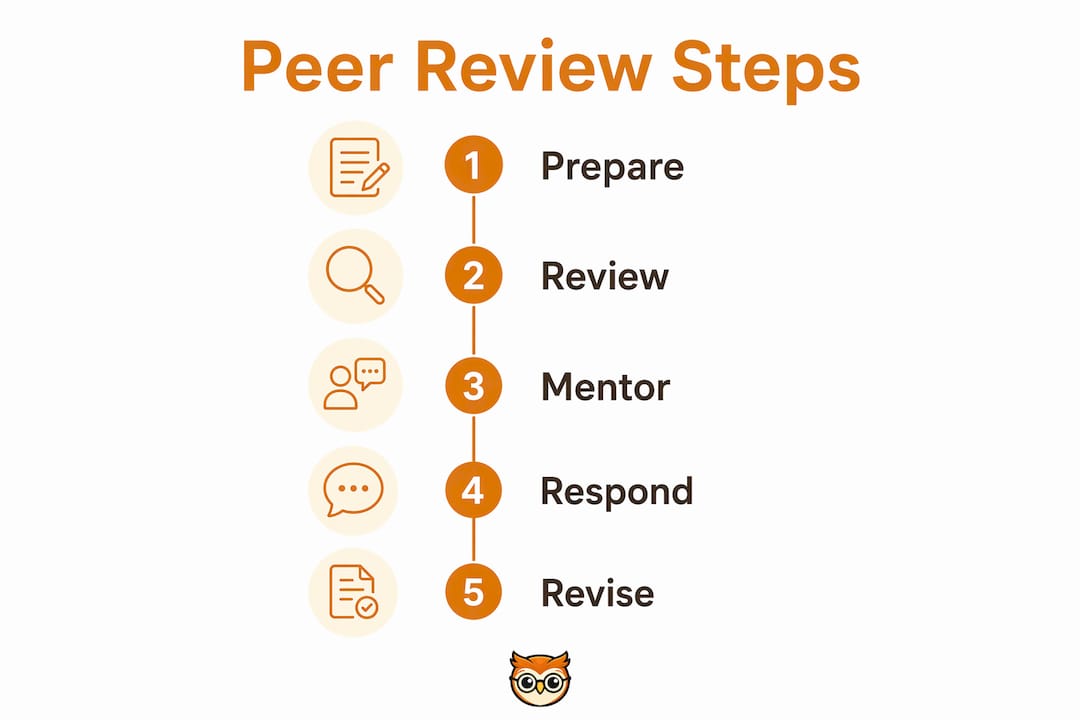
High-quality peer reviews adopt a mentorship attitude rather than a judgemental one. Think of your role as helping the creator produce the best version of their work, not gatekeeping it. A well-structured report covers a brief summary, major issues such as methodology or accuracy problems, and minor issues such as unclear phrasing or missing references. Reviewers should avoid line-by-line editing; their role is critical evaluation, not copyediting.

Pro Tip: Start your review with a phrase like "My comments are offered in the spirit of supporting the best version of this material." It sets a collaborative tone from the first line and makes creators far more receptive to substantive critique.
Ethical standards every reviewer must follow
Reviewers must maintain strict confidentiality and disclose conflicts of interest to the handling editor promptly. Do not review content from a close colleague, a recent collaborator, or anyone whose work you have a financial interest in. The COPE Ethical Guidelines for Peer Reviewers are the recognised standard in UK educational publishing and cover competing interests, timeliness, and impartiality in full.
Do's and don'ts for reviewers and creators
Reviewers:
- Do focus on substance: methodology, accuracy, and relevance to the stated learning outcomes.
- Do complete reviews within the agreed timeframe; delays affect creators' publishing schedules.
- Do flag serious concerns such as plagiarism directly to the editor, not in the public report.
- Don't use access to unpublished content for personal advantage.
- Don't write vague criticism; "unclear" is useful only when paired with a specific suggestion.
Creators receiving feedback:
- Do address every reviewer point individually in your response, even points you disagree with.
- Do revise substantively rather than making surface-level changes to satisfy comments technically.
- Don't treat critical feedback as an attack; the mentorship approach to peer review is collaborative by design.
Platforms used in digital educational publishing typically integrate version tracking, digital annotation, and confidentiality settings aligned with UK standards. Bibliowlteca's infrastructure supports creators in managing these workflows within a professional publishing environment. For a deeper look at peer-reviewed literature and its role in scholarly publishing, that context is worth reading before you submit your first piece for review.
Quick-reference summary
- Peer review defined: Independent expert evaluation before publication to verify accuracy, relevance, and quality.
- Main models: Single-blind, double-blind, and open review; choose based on your publishing context and community norms.
- Ethical non-negotiables: Confidentiality, conflict-of-interest disclosure, and impartiality on every review.
- Writing feedback well: Mentorship mindset, structured report, specific and constructive language, no copyediting.
- Receiving feedback well: Address every point, revise substantively, and respond professionally even to criticism you dispute.
- Workflow integration: Embed peer review into your content creation process from draft stage, not as a final hurdle.
Key takeaways
Peer review is the most reliable quality assurance mechanism available for digital educational content, and integrating it into your workflow builds the credibility that converts browsers into buyers.
| Point | Details |
|---|---|
| Peer review builds trust | Independent expert scrutiny signals quality to learners, institutions, and buyers. |
| Choose the right model | Double-blind suits formal publishing; open review suits collaborative educational communities. |
| Ethics come first | Disclose conflicts of interest and maintain confidentiality on every review, without exception. |
| Mentorship beats judgement | Constructive, specific feedback improves content and keeps the creator relationship productive. |
| Respond to every point | Addressing all reviewer comments substantively, not superficially, is what gets content accepted. |
Ready to publish educational content that meets professional standards? Bibliowlteca's digital publishing platform gives creators the infrastructure to distribute peer-reviewed e-books and courses to a global audience, with built-in tools for quality control, payments, and delivery.