
TL;DR:
- Skill development for digital educators requires a structured, ongoing process of assessment, targeted learning, and impact measurement.
- Applying principles like spaced repetition, inclusive design, and real-world practice leads to durable mastery and better learner outcomes.
Skill development is not a one-time event for content creators and educators. It is a structured, ongoing process that shapes whether your digital educational products actually change learners' lives or simply fill a market slot. With so many options available, from online skill courses and live workshops to mentoring and self-directed practice, choosing the right path is genuinely difficult. This article breaks down seven proven strategies, grounded in learning science and real educational design, to help you build the skills that translate directly into better courses, stronger marketing, and a more sustainable digital education business.
Table of Contents
- Seven essential strategies to develop your skills as a digital educator
- Leveraging Kirkpatrick evaluation to prove and improve your training impact
- Applying spaced repetition and retrieval practice for durable skill mastery
- Designing inclusively with the Universal Design for Learning framework
- Responsive strategies to identify skill gaps and target learning effectively
- Building your skill development output loop: practice, publish, measure, refine
- Our perspective: stop optimising for comfort in your skill-building
- Turn your skills into a digital education business with BibliOWLteca
- Frequently asked questions
Key Takeaways
| Point | Details |
|---|---|
| Structured skill development | Effective skill building follows a cycle of assessing gaps, targeted learning, applying skills, and measuring impact. |
| Measure for impact | Use Kirkpatrick’s four levels to prove skill development changes behaviours and drives real-world results. |
| Use spaced repetition | Scheduled, spaced reviews with retrieval practice create stronger, longer-lasting learning retention. |
| Design inclusively | Implement Universal Design for Learning to reduce learner barriers and increase engagement globally. |
| Iterate and refine | Treat skill growth as an output loop by producing, measuring, and improving your digital education products. |
Seven essential strategies to develop your skills as a digital educator
Skill development is a structured process involving gap identification, targeted learning, practical application, and ongoing impact measurement. For digital educators, that structure is not optional. It is what separates creators who iterate and grow from those who publish one course and plateau.
Here are the seven strategies worth building into your practice:
- Assess your current skills honestly. Most educators skip this because it is uncomfortable. A brutally honest audit of where you are strong and where you fall short is the foundation of all effective skill improvement techniques. Without it, you are guessing.
- Engage in targeted learning. Generic professional development rarely moves the needle. Targeted eLearning, topic-specific workshops, or mentoring from someone already doing what you want to do produces far faster growth. Professional development strategies built around specific skill gaps outperform broad programmes every time.
- Apply new skills immediately. Learning without application fades within days. Every new technique, framework, or tool you study should go directly into your next piece of content, marketing campaign, or product design. The application is the learning.
- Evaluate your impact with a structured framework. Kirkpatrick's four-level model (covered in the next section) helps you move beyond surface feedback toward real behavioural and business outcomes.
- Use spaced repetition and retrieval practice. These evidence-based methods dramatically improve how long skills stick, which matters enormously when you are learning complex content design, instructional writing, or marketing strategy.
- Design inclusively from the start. CAST's Universal Design for Learning (UDL) framework is not just an accessibility checklist. It is a product quality lever that improves completion rates and learner satisfaction globally.
- Align your efforts with measurable goals. Skill-building that is not tied to a business or learning outcome is a hobby, not a strategy. Knowing your essential digital skills targets makes every learning decision faster and more purposeful.
Pro Tip: Write down three specific skills you want to develop this quarter before choosing any learning programme. Specificity is the single biggest predictor of follow-through.
Leveraging Kirkpatrick evaluation to prove and improve your training impact
Many digital educators invest heavily in creating content, then measure success purely by star ratings and enrolment numbers. That approach tells you almost nothing about whether your training actually works.
The Kirkpatrick model offers four levels of evaluation that progressively reveal true training effectiveness:
- Level 1: Reaction. How did learners feel about the experience? Satisfaction surveys belong here. Useful, but nowhere near enough on its own.
- Level 2: Learning. Did learners actually acquire the knowledge or skill you intended to teach? Pre and post assessments, practical assignments, and knowledge checks measure this level.
- Level 3: Behaviour. Are learners applying what they learned in their real work? This is the level most digital educators never reach, and it is where the important answers live.
- Level 4: Results. What measurable business or learning outcomes changed? Revenue, client retention, task performance, or project quality are examples of meaningful Level 4 metrics.
"Many organisations measure only early Kirkpatrick levels, missing real proof at behaviour and results levels. Planning measurement upfront yields greater impact." — Rcademy
The practical implication here is important. Design your training evaluation strategies before you create your content, not after. Decide upfront what behaviour change you expect, how you will observe it, and what business result it should produce. That decision reshapes the content itself, making it far more focused.
Pro Tip: In your next course, add a thirty-day post-completion check-in email asking learners one specific question: "Have you applied [skill X] since finishing the course?" Their answer is your Level 3 data.
Applying spaced repetition and retrieval practice for durable skill mastery
Learning science has given educators two of the most powerful tools for long-term retention, yet they remain underused in digital course design. Spaced repetition integrates retrieval practice with scheduled review at expanding intervals, producing superior long-term retention across ages and subjects.
Here is what is actually happening in the brain. When you review material just before you would naturally forget it, the act of retrieving it strengthens the memory trace significantly. Each subsequent review requires less effort and embeds the knowledge more deeply. Over time, skills shift from fragile, short-term recall into durable, applicable expertise.
Retrieval practice takes this further by replacing passive re-reading with active recall. Instead of reviewing notes, learners answer questions, solve problems, or explain concepts from memory. The difficulty itself is the mechanism. Struggling to retrieve information is what creates retention, not the smooth experience of reading familiar material again.
For digital educators, the implications are practical:
- Build review prompts into your course structure at day 3, day 7, and day 21 after initial content delivery
- Replace summary slides with short retrieval quizzes at the start of each new module
- Use your LMS (learning management system) automation features to schedule spaced email reminders with quick-recall challenges
- Frame retrieval exercises as low-stakes, curiosity-driven activities rather than formal assessments to reduce learner anxiety
How to set up a spaced review cycle for your course:
- Identify the five to eight core skills or concepts your course teaches
- Map a review schedule: immediate, three days, one week, two weeks, one month
- Create a short retrieval prompt for each concept at each interval (a question, a scenario, a mini-task)
- Load these into your LMS or email automation sequence
- Track completion rates and use incorrect answers to flag concepts that need additional explanation
The connection to your own digital learning frameworks matters here. If you are learning instructional design, marketing, or video production to improve your own practice, apply these same methods to your personal skill-building. Review your own notes with active recall instead of passive re-reading.
Pro Tip: Record a sixty-second voice note summarising what you learned from any workshop or course, then play it back three days and one week later without looking at any notes first. The gaps in your recall are your real learning priorities.
Designing inclusively with the Universal Design for Learning framework
Inclusive design is often framed as an accommodation, something you add for specific learners after the fact. UDL inverts that entirely. CAST UDL's principles of Engagement, Representation, and Action and Expression proactively reduce barriers to learning for diverse students and improve retention globally.
For creators selling digital educational products across different countries, languages, and learning contexts, UDL is also a commercial strategy. Courses that accommodate diverse learners from the start require fewer revisions, generate fewer complaints, and achieve higher completion rates.
The three core principles work like this:
- Engagement: Offer multiple ways to motivate and sustain learner interest. This means varied formats, real-world relevance, learner choice where possible, and challenge calibrated to different skill levels.
- Representation: Present the same information in more than one format. Text plus audio plus visual diagrams is not redundancy. It is recognition that learners process information differently, and that your global audience includes non-native speakers, visual learners, and people with different cognitive profiles.
- Action and Expression: Give learners more than one way to demonstrate their understanding. Written assignments, video responses, practical projects, and peer discussions all serve different learner strengths.
Here is how UDL principles map to practical digital course design decisions:
| UDL principle | Example in a digital course | Measurable benefit |
|---|---|---|
| Engagement | Offering topic choice within a module | Higher intrinsic motivation and course completion |
| Representation | Providing transcripts and captions alongside video | Accessibility compliance and wider global reach |
| Action and Expression | Accepting written or audio assignment submissions | Lower dropout rates among diverse learners |
| Engagement | Showing real-world application in every lesson | Stronger relevance and learner satisfaction scores |
| Representation | Using visual summaries alongside text explanations | Better comprehension for non-native speakers |
Applying universal design for learning from the planning stage of a course is far less expensive than retrofitting it later. It also positions your product as genuinely professional when entering international markets, where learner variability is the rule rather than the exception.
Incorporating inclusive learning design into your skill-building practice means you are not just a creator who knows your subject. You are an educator who understands how diverse people actually learn.
Responsive strategies to identify skill gaps and target learning effectively
Knowing you need to grow is not the same as knowing exactly where to focus. Structured skills development starts with assessing current skills, identifying gaps, and targeting learning experiences that align with roles and market needs.
Follow this sequence to make your skill-building precise rather than scattered:
- Conduct an honest skill inventory. List every skill your role requires, from instructional design and video production to copywriting, SEO, and payment processing. Rate your current level in each area on a simple scale. Be specific rather than general. "Video editing" is too broad. "Colour grading for educational screen recordings" is useful.
- Identify your gaps relative to desired outcomes. What does your next product, revenue target, or learner outcome require of you? The gap between where you are and what that target demands is your priority list.
- Choose learning modalities that match each gap. Not every gap needs a course. Some are best addressed through mentoring, others through practice projects, and others through targeted assessing learner needs research. Match the learning method to the nature of the gap.
- Align skill objectives with business or market goals. A skill that makes your course better but does not contribute to growth, retention, or revenue is lower priority. Use a skill gap assessment to keep your development tied to outcomes that matter commercially.
- Design deliberate application opportunities. Plan how you will use each skill before you start learning it. A concrete application slot, whether a new module, a landing page rewrite, or a marketing campaign, transforms learning from passive to productive.
| Gap type | Best learning approach | Time to application |
|---|---|---|
| Technical tool knowledge (e.g. LMS setup) | Structured online skill courses or tutorials | Immediate practice project |
| Instructional design principles | Mentoring plus applied project work | First new course module |
| Marketing and audience growth | Workshop plus peer community | Current product launch |
| Learner psychology and engagement | Self-directed reading plus research | Next course redesign |
| Business and pricing strategy | Coaching or cohort-based programme | Immediate implementation |
Personal development skills improve fastest when learning is anchored to a specific deliverable rather than studied in the abstract. The table above shows that the most effective path is rarely the most expensive or time-intensive one. It is the one most directly connected to a real task you are already working on.
Building your skill development output loop: practice, publish, measure, refine
The most underrated skill-building strategy for digital educators is also the simplest. Treat skill development as an output loop: practise, deliver a tangible product, measure feedback, then refine to build market-ready educational skills dynamically.

This approach works because it turns abstract skill-building into a feedback engine. Each product you publish, whether it is a new e-book chapter, a revised course module, or a new marketing email sequence, generates real data about how well your skills are translating into results.
The loop operates in four stages:
- Practice: Apply your newly developed skill inside an actual product or content piece. Not in a simulation. In something you will publish or share. The pressure of a real audience sharpens your execution in ways practice exercises never do.
- Publish: Release it. Imperfect and real beats polished and theoretical. The act of publishing converts your learning into something measurable.
- Measure: Track learner engagement, sales conversion, completion rates, or direct feedback. These are not just business metrics. They are data about your skill effectiveness. A high drop-off point in a module is information about your instructional design. A low conversion rate on a course landing page is information about your copywriting.
- Refine: Use the data to identify one or two specific skill areas to improve in the next cycle. This is where personal development skills compound. Each loop leaves you measurably better at the craft.
This connects directly to digital entrepreneurship skills. The most successful digital educators treat their catalogue of products as a living portfolio of skill evidence rather than a static library. Every new release is both a revenue opportunity and a professional development exercise.
Pro Tip: After every product launch, spend thirty minutes writing a brief retrospective. What did you intend to achieve with your instructional design? What did the data show? What one skill would you develop differently before the next release? Three months of this practice produces more growth than three months of unanchored online skill courses.
Our perspective: stop optimising for comfort in your skill-building
Here is an uncomfortable truth worth sitting with. Most skill development plans fail not because of poor strategy but because they are designed around what feels manageable rather than what actually produces growth.
Educators in particular are prone to this. You study learning science deeply, you understand cognitive load and retrieval practice intellectually, and then you design a personal development plan that is entirely passive. You sign up for another online course. You attend another webinar. You read another book.
None of that is wrong. But it is incomplete if it never results in something published, sold, and measured. The importance of skill development for digital educators is not about accumulating knowledge. It is about building the capacity to produce better outcomes for learners and better commercial results for your own business, simultaneously.
The output loop described above is uncomfortable because it exposes your gaps publicly. A course that performs poorly in the first week tells you something real. A marketing email with a 0.8% click rate is feedback, not failure. The creators and educators who grow fastest are the ones who stop protecting themselves from that feedback and start actively seeking it.
Effective skill-building methods are not always sophisticated. Sometimes the most valuable thing you can do is publish something you are not quite sure about, watch what happens, and let the market teach you what a year of studying frameworks never could.
Skills training programmes and structured learning absolutely have their place. But they work best as preparation for action, not as a substitute for it. The gap between educators who build genuinely impactful digital products and those who stay perpetually in learning mode is almost never knowledge. It is the willingness to act on incomplete preparation.
Turn your skills into a digital education business with BibliOWLteca
Building your skills as a digital educator is only half the equation. The other half is having the right infrastructure to publish, sell, and distribute your educational products to a global audience.
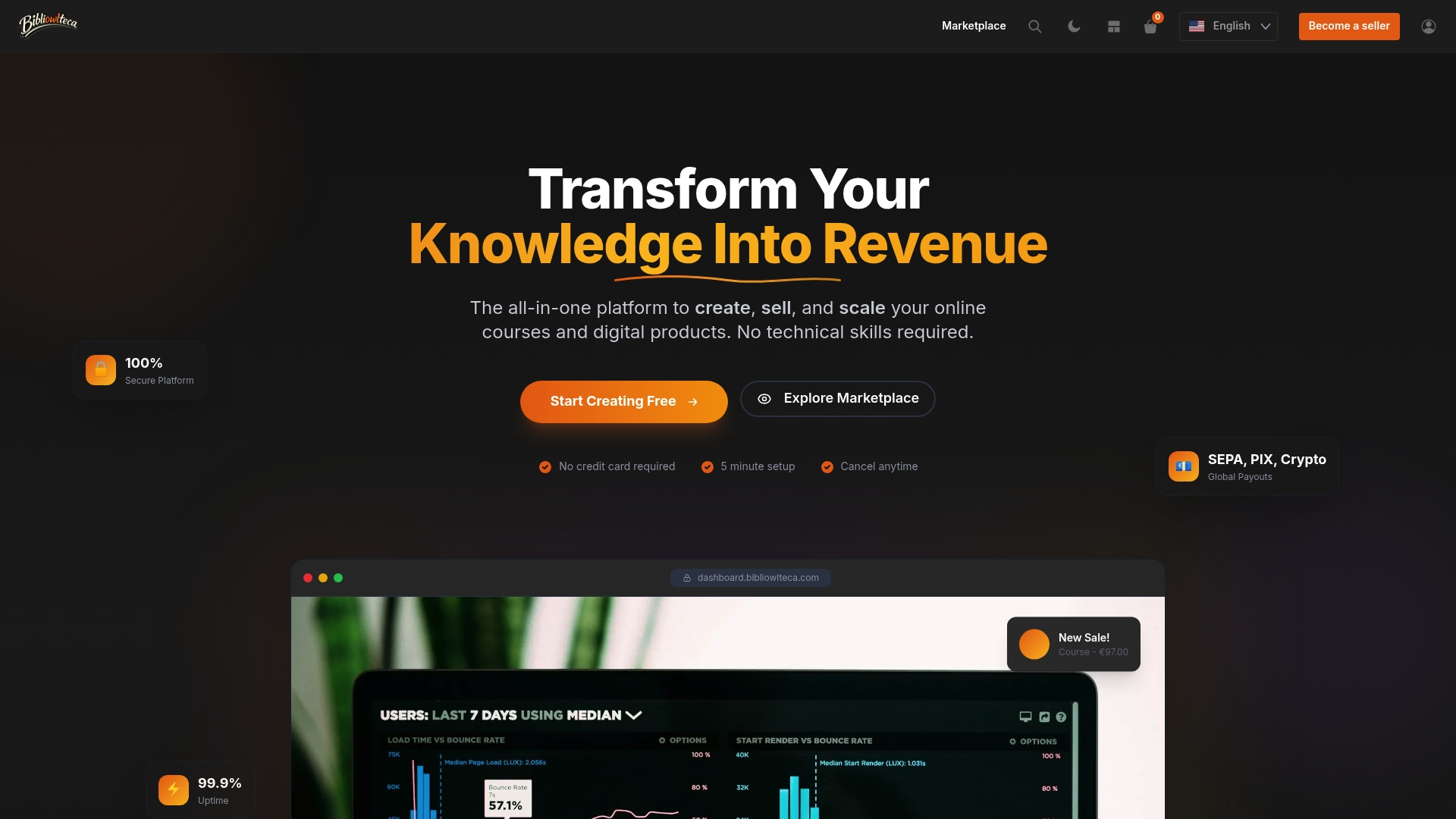
BibliOWLteca is built for exactly that transition. Whether you are ready to publish your first e-book, launch a structured course, or expand your existing catalogue into new international markets, BibliOWLteca provides the tools for digital delivery, payment processing in multiple currencies, and tax compliance built in from the start. You focus on the quality of your content and the depth of your skills. The platform handles the business infrastructure that makes global distribution possible. Explore BibliOWLteca and see how straightforward it is to turn your expertise into a product that reaches learners worldwide.
Frequently asked questions
What are the main phases of effective skill development?
Effective skill development involves assessing current skills, engaging in targeted learning, applying new skills in real contexts, and regularly measuring progress and impact against defined outcomes.
Why is it important to use Kirkpatrick's evaluation beyond Level 1?
Measuring only initial reactions misses the deeper behaviour changes and business results that indicate whether training created genuine value. Level 4 impact measurement is where true training effectiveness is confirmed.
How does spaced repetition improve long-term learning?
Spaced repetition schedules reviews just before forgetting occurs, strengthening the memory trace each time and producing superior long-term retention compared to massed or passive review.
What are the benefits of Universal Design for Learning for digital courses?
UDL proactively reduces barriers through varied engagement, representation, and expression options, improving learner access, satisfaction, and completion rates across diverse global audiences.
How can digital educators measure if their skill development efforts are successful?
By tracking learner behaviour changes, product quality improvements, and business outcomes such as sales and completion rates, using planned evaluation frameworks rather than satisfaction scores alone.