
TL;DR:
- Choosing the right self development course requires clear goals, credible content, and realistic scheduling aligned with your needs. Self-awareness is a foundational skill that enhances the effectiveness of subsequent personal growth efforts, making early focus on self-knowledge essential. Evaluating course effectiveness through measurable outcomes and instructor credentials ensures sustained progress toward meaningful change.
Picking the right self development course from the hundreds available is harder than it sounds. The wrong choice wastes months of your time and money on material that doesn't move the needle on what you actually want to change. The right one, by contrast, can reshape how you think, communicate, and perform at work. 75% of professionals who completed self improvement courses earn 15 to 20% higher salaries, with 60% securing promotions within two years. That kind of return only happens when the course genuinely matches your goals. This article gives you the framework to choose wisely.
Table of Contents
- Key criteria for choosing self development courses
- Top self development courses to consider
- Comparing popular self development courses side by side
- How to decide which self development course suits you best
- The overlooked power of self-awareness in self development courses
- Explore a curated marketplace of self development courses and digital content
- Frequently asked questions
Key Takeaways
| Point | Details |
|---|---|
| Choose based on goals | Identify your personal development goal to select the right course focus and format. |
| Evidence matters | Prioritise courses with proven positive impact on career and wellbeing outcomes. |
| Start with self-awareness | Foundation courses in self-knowledge boost long-term personal and professional growth. |
| Consider time commitment | Balance course duration and weekly hours with your availability for better completion. |
| Use curated marketplaces | Explore vetted digital platforms to find credible self development courses matching your needs. |
Key criteria for choosing self development courses
Before you browse any catalogue of online self improvement classes, you need a clear filter. Without one, you end up choosing based on price or star ratings, neither of which tells you much about whether a course will actually work for you.
Start with your primary development goal. The most common self-development goals are improving self-awareness, building confidence, and enhancing relationships. These three sit at different levels. Self-awareness is foundational. Confidence and relationships are downstream of it. If you try to build confidence without understanding what's driving your self-doubt, you'll spend ten weeks practising techniques that don't stick. Knowing your real goal prevents this.
Match format to your actual schedule, not your ideal one. Self-paced courses sound flexible, but without structure, most people stall around week three. If you know you need external accountability, look for courses with weekly live sessions or peer cohorts. Time commitment matters too: a course demanding five hours per week when you realistically have two is setting you up to quit.

Look for evidence of effectiveness, not just popularity. Completion rates, career impact data, and graduate testimonials grounded in specific outcomes are more useful signals than generic five-star reviews. Courses built on psychology and neuroscience research, rather than motivational theory, tend to produce more transferable, practical tools. Ask whether the course teaches why something works, not just what to do.
Verify the credentials behind the content. This doesn't mean you need a course from a university to learn something worthwhile, but the instructor's background should align with what they're teaching. A leadership course run by someone with no management experience, however charismatic, is a red flag. Check their track record against the specific skill area they're covering, and cross-reference it with the professional development strategies that practitioners in your field actually use.
- Identify whether your goal is foundational (self-awareness) or applied (communication, leadership)
- Choose a format you will realistically sustain for the full duration
- Prioritise courses that cite research or show measurable outcomes
- Check instructor credentials against the specific topic, not just their general reputation
- Look for community features or peer interaction to support accountability
Pro Tip: Before committing to a full course, read the reviews that mention what learners did differently after finishing. "Great content" tells you nothing. "I restructured how I handle conflict with my manager" tells you everything.
With these criteria in mind, let's look at some of the leading self development courses available today.
Top self development courses to consider
Not every well-known course deserves its reputation. Here are three that hold up under scrutiny, each targeting a distinct learning priority.
Managing Happiness (Harvard University)
This is one of the most rigorous offerings in the personal growth space. Harvard's Managing Happiness course requires 2 to 3 hours weekly and applies positive psychology and neuroscience to help learners build sustainable wellbeing. What makes it stand out is the evidence base: the material draws on decades of happiness research and translates it into practical exercises you can test in your own life. It suits people who want their self help training grounded in science rather than aspiration.
- Best for: Professionals experiencing burnout or emotional flatness who want a research-led approach to wellbeing
- Format: Self-paced with structured weekly modules
- Caveat: Less focus on career skills; better suited to life quality and emotional resilience
Personality Development: Analyse, Apply and Transform (Coursera)
This course takes a different angle. Coursera's Personality Development course focuses on decoding behavioural patterns and applying transformation strategies for personal excellence. It's practically oriented, asking you to examine your own behavioural tendencies before suggesting how to shift them. This is particularly useful if you're finding that your default reactions are holding you back professionally or in relationships.
- Best for: Individuals who feel stuck in repeating patterns and want a structured method for change
- Format: Flexible, self-paced
- Caveat: Requires honest self-reflection; people who resist introspection won't get much from it
Achieving Personal and Professional Success Specialisation (University of Pennsylvania)
This is a broader programme for people who want to work on multiple fronts simultaneously. The University of Pennsylvania's specialisation spans 16 weeks and covers success frameworks, communication, and leadership. It functions more like development skills seminars rolled into a single track, making it ideal if you're preparing for a promotion or leadership role and need to address several gaps at once.
- Best for: Mid-career professionals aiming at leadership transitions
- Format: Structured 16-week specialisation with multiple sub-courses
- Caveat: Higher time commitment; requires consistent weekly engagement to maintain progress
Pro Tip: If you're torn between two courses, look at how each one is structured for the first two weeks. A well-designed course front-loads engagement: it gives you a quick win early to build momentum. A poorly designed one starts with lengthy theory and delays the practical work until later.
Thinking about how to build and distribute your own course content? Explore how digital learning frameworks shape the learner experience from both sides of the equation.
After examining these courses individually, let's compare them directly to make your choice clearer.
Comparing popular self development courses side by side
Online personal development courses recorded 120 million enrolments on major platforms in 2023, which means the market is crowded and not all offerings are equal. A direct comparison helps cut through the noise.
| Course | Duration | Weekly time | Focus area | Instructor background | Cost |
|---|---|---|---|---|---|
| Managing Happiness (Harvard) | Self-paced | 2 to 3 hours | Wellbeing, positive psychology | Harvard faculty | Free to audit / paid certificate |
| Personality Development (Coursera) | Self-paced | 2 to 4 hours | Behaviour, emotional patterns | Industry practitioner | Free to audit / subscription |
| Achieving Personal and Professional Success (UPenn) | 16 weeks | 3 to 5 hours | Leadership, communication, success | Wharton faculty | Free to audit / paid certificate |
Key strengths and ideal audiences at a glance:
- Managing Happiness suits anyone whose primary concern is mental wellbeing and emotional resilience rather than professional advancement
- Personality Development suits people who feel their habits or reactions are the main obstacle, and who want to understand the "why" behind their behaviour
- Achieving Personal and Professional Success suits professionals specifically preparing for leadership roles or career transitions
Course structure has a measurable impact on whether learners actually finish. Shorter, modular courses with clear weekly milestones outperform long courses with loose timelines. If your schedule is unpredictable, a self-paced course with short video segments (under 10 minutes per lesson) will serve you better than one built around hour-long lectures.
When evaluating where to access these courses, it helps to understand what different course platforms offer in terms of community features, certificate value, and content quality.
Pro Tip: Audit a paid course for free before purchasing the certificate track. You'll access almost all the content, which gives you a genuine sense of quality and relevance before you spend money.
Now that you have the comparison laid out, let's work through how to match these options to your specific situation.
How to decide which self development course suits you best
The best course in the world is useless if you don't finish it. This five-step process is designed to get you to a decision that sticks.
-
Clarify your primary development priority. Write down the one area where improvement would have the biggest knock-on effect in your life or career right now. Self-awareness? Communication? Emotional regulation? That single answer should steer your first course choice. Starting with self-awareness courses is strongly recommended by experts, as they surface core values and biases early and prevent you from chasing goals that don't actually belong to you.
-
Match format and duration to your real schedule. Look at your average week honestly. If you have two clear hours, plan for two. A course that fits your life as it actually is will always outperform one designed for a life you wish you had.
-
Assess instructor credibility and course feedback. Look specifically for reviews that describe behavioural change, not just satisfaction. An instructor with published research or a credible professional track record in the topic area is a stronger signal than celebrity status.
-
Consider cost and free access. Many of the best self growth courses are available to audit for free. If budget is a constraint, start there. Paid certificates add credential value but rarely change the quality of the learning content itself.
-
Trial a short module before committing. Most platforms allow preview access to the first lesson. Use it. Ten minutes of actual course material will tell you more about fit than any description or promotional video.
Personal development strategies work best when they're sustained over time, which means your ability to continue the course matters as much as the course's quality. If your interest flags by week two, that's a signal the topic isn't resonant enough yet, not necessarily that the course is poor. Understanding this distinction is part of building the mindset that makes digital entrepreneurship insights actionable rather than theoretical.
Pro Tip: Set a non-negotiable two-week rule. Commit to finishing only the first two weeks before deciding whether to continue. This removes the psychological weight of committing to a full course and dramatically increases the chance you'll actually start.
With these steps, you can confidently select a self development course that aligns with your goals and your lifestyle.
The overlooked power of self-awareness in self development courses
Here's something most course recommendation lists won't tell you: picking a course about productivity or leadership before doing any work on self-awareness is like renovating the roof of a house with a cracked foundation. The improvements are real, but they won't hold.
The dominant narrative around personal growth focuses on skills, habits, and output. Productivity systems, morning routines, communication frameworks. These are all legitimate tools. But they're rendered far less effective when the person using them doesn't understand their own emotional drivers, default reactions, or deeply held assumptions about what success is supposed to look like. You can learn every negotiation technique available and still consistently undercut yourself because an unexamined belief about conflict tells you that assertiveness is aggression.
Instructors teaching leading oneself with self-knowledge emphasise that habitual self-awareness is essential before leading others effectively. This isn't just philosophical. It's structural. Leaders who lack self-awareness create environments shaped by their blind spots. The research is consistent: self-knowledge is the precursor to effective interpersonal behaviour, not a soft supplement to it.
The practical implication is this: if you're starting your personal growth journey, or restarting it after a course that didn't produce lasting change, begin with a self-awareness-focused programme. Even four to six weeks spent mapping your values, emotional triggers, and cognitive biases will make every subsequent course more effective. You'll know why a leadership model resonates, not just that it does. You'll be able to distinguish between advice that genuinely fits your situation and advice that fits the author's situation.
This also changes how you evaluate life coaching programmes and motivation courses online. Rather than asking "is this course good?", you start asking "is this course relevant to what I now know about myself?" That's a much more precise filter. And it produces far better outcomes than optimistic enrolment followed by quiet abandonment.
The long-term benefit of mastering self-awareness as a foundational skill is that it compounds. Every subsequent learning experience, course, mentoring relationship, or difficult conversation, becomes more productive when you have a reliable read on your own reactions. It is, in every meaningful sense, the highest-leverage place to start, and the one that gets the least attention in a market built on selling quick skills. For further reading on how professional development strategies connect to self-knowledge, this resource on professional development strategies is worth your time.
Explore a curated marketplace of self development courses and digital content
You've now got a clear decision framework, a shortlist of top courses, and a sharper sense of where to start. The next step is finding credible content that's easy to access and actually aligned with what you're looking for.
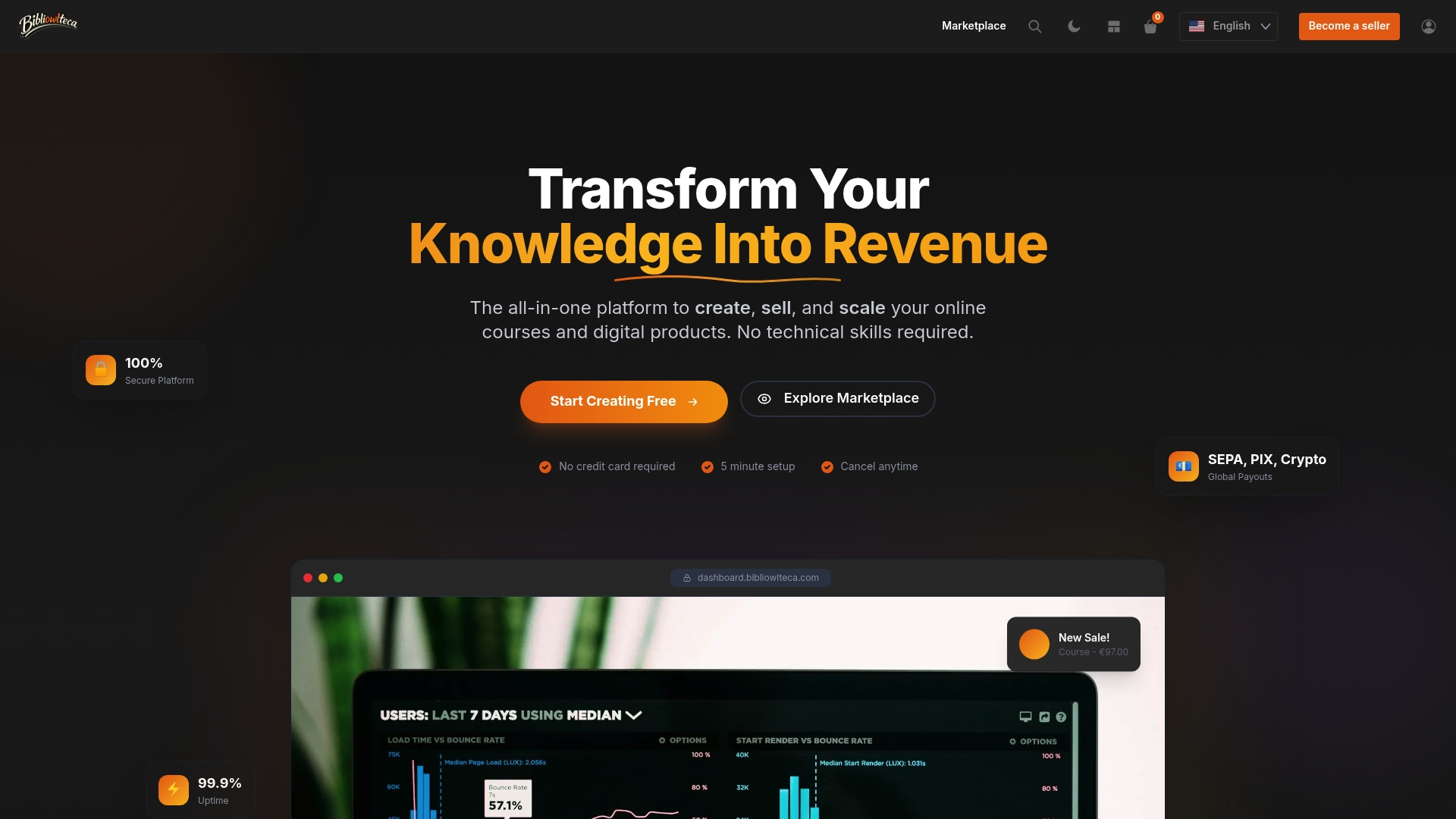
BibliOWLteca's self development courses marketplace brings together vetted educational content across personal growth, professional skills, and wellbeing, all in one place. Whether you're after a structured course, an in-depth eBook, or supplementary material to deepen what a course covers, the marketplace is built to help you find content matched to your goals and learning style. Creators on BibliOWLteca are independent educators and practitioners who publish directly to a global audience, which means the content reflects real expertise rather than generic platform filler.
Pro Tip: Use the marketplace filters to sort by topic, format, and duration. Pairing a structured course with a focused eBook on the same subject accelerates understanding considerably.
Frequently asked questions
What are the benefits of completing self development courses?
Completing self development courses sharpens both personal and professional skills, with research showing that professionals earn 15 to 20% more and are 60% more likely to earn a promotion within two years of completion.
Which self development course is best for beginners?
Self-awareness focused courses are the strongest starting point for beginners, as experts confirm they surface core values and prevent learners from chasing misaligned goals from the outset.
How much time should I dedicate to self development courses weekly?
Two to three hours per week is the sweet spot for most learners. Harvard's Managing Happiness and comparable courses are designed around this window to balance depth with practical application.
Are online self development courses effective compared to in-person seminars?
Online self development courses are highly effective for most learners, offering structured content, flexible access, and neuroscience-backed tools. The 120 million enrolments recorded on major platforms in 2023 reflect both their accessibility and their demonstrated value.
Can self development courses improve my mental wellbeing?
Yes. Courses that integrate positive psychology and neuroscience, such as Harvard's Managing Happiness, are specifically designed to build emotional resilience and improve wellbeing through evidence-based methods rather than motivational theory.