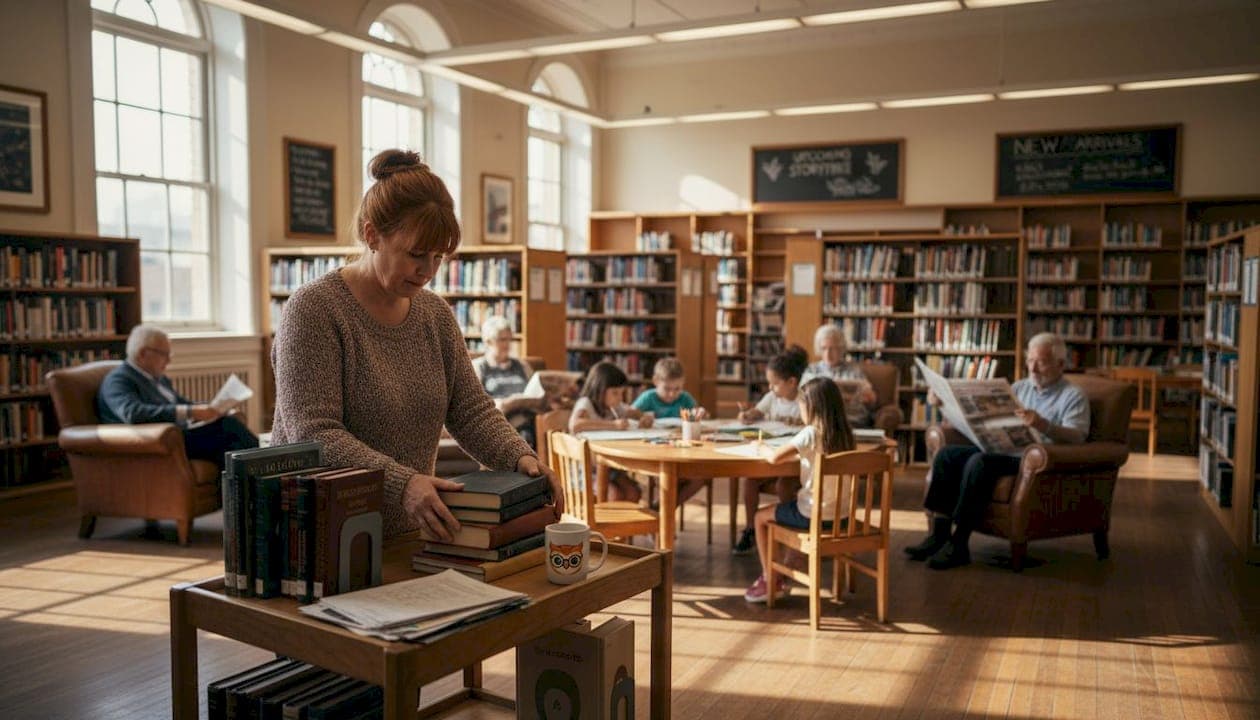
Libraries are not relics. Students who regularly use library services achieve higher GPA, better retention rates, and stronger grades than those who do not. Yet many schools and families still treat the library as optional, a quiet room for rainy days rather than a core learning engine. This article challenges that view head-on. We will explore how libraries support students, educators, and parents; why information literacy is a life skill; how modern libraries have transformed their spaces; and what the evidence says about equity and achievement. By the end, you will see libraries differently.
Table of Contents
- How libraries support learning for students, educators, and parents
- Information literacy, critical thinking, and library instruction
- Modern libraries: More than books — spaces for technology, collaboration, and equity
- Equity, achievement gaps, and the power of strong library programmes
- Why the impact of libraries is more than statistics — and what most people miss
- Explore further resources to enhance learning
- Frequently asked questions
Key Takeaways
| Point | Details |
|---|---|
| Libraries boost results | Access to library resources is strongly linked to student success and engagement. |
| Support for all ages | Libraries benefit students, educators, and parents by addressing diverse educational needs. |
| Modern roles are vital | Today's libraries offer technology, equity support, collaborative spaces, and wellbeing programmes. |
| Inequity challenges remain | Unequal funding and access continue to create achievement gaps in disadvantaged areas. |
How libraries support learning for students, educators, and parents
Today's libraries fulfil a far broader role than most people realise. They are not simply collections of books waiting to be borrowed. They are active, responsive environments built to meet the varied needs of every learner in the community.
For students, the library offers structured access to resources that go well beyond the classroom. Whether a pupil needs a quiet space to revise, access to specialist texts, or support navigating digital databases, the library delivers. Diverse resources for curriculum and independent learning consistently raise achievement across year groups.
For educators, libraries function as professional partners. A skilled librarian can co-plan lessons, curate subject-specific materials, and introduce students to research methods that reinforce classroom teaching. This collaboration saves time and deepens learning simultaneously.
For parents, libraries provide access to family literacy programmes, homework support clubs, and out-of-school reading activities. These resources help bridge the gap between home and school, particularly for families where academic support at home is limited.
Here is a quick overview of what libraries offer each group:
- Students: Curriculum-aligned texts, digital databases, independent study zones, and reading lists for engagement
- Educators: Co-planning support, professional development resources, and curated teaching materials
- Parents: Family literacy sessions, homework clubs, and out-of-school borrowing schemes
- All groups: Safe, inclusive spaces that encourage curiosity and lifelong learning
The key insight here is that libraries do not serve one audience. They serve everyone in the learning ecosystem at once, and that breadth is precisely what makes them so valuable.
Information literacy, critical thinking, and library instruction
Information literacy is the ability to find, evaluate, and use information effectively. In an age of misinformation and content overload, it is arguably the most important skill a student can develop. Libraries are the primary place where this skill is taught.
Library instruction typically follows a structured sequence:
- Identifying a question: Students learn to frame a research problem clearly before searching
- Locating sources: Librarians teach students to use catalogues, databases, and credible websites
- Evaluating credibility: Students practise assessing author expertise, publication date, and bias
- Synthesising information: Learners combine multiple sources into coherent arguments
- Citing correctly: Proper attribution is taught as an ethical standard, not just a formatting rule
The results of this instruction are measurable. Freshmen with library instruction outperform their peers across broader learning outcomes, including writing, critical thinking, and general academic performance.
"The library is not just a place to find answers. It is a place to learn how to ask better questions."
This distinction matters enormously. Students who learn how to research become independent thinkers. Those who simply Google answers remain dependent on whatever surfaces first.
Pro Tip: Encourage students to spend at least one session per term with their school librarian specifically focused on evaluating online sources. This single habit builds critical thinking faster than almost any other intervention.
A well-organised library also supports these goals structurally. Understanding the cataloguing process helps students navigate collections independently, and a solid library management checklist ensures that resources remain current, accessible, and relevant.
Modern libraries: More than books — spaces for technology, collaboration, and equity
The image of a silent room lined with shelves is outdated. Modern libraries have reinvented themselves as dynamic learning environments that serve the full spectrum of student needs.
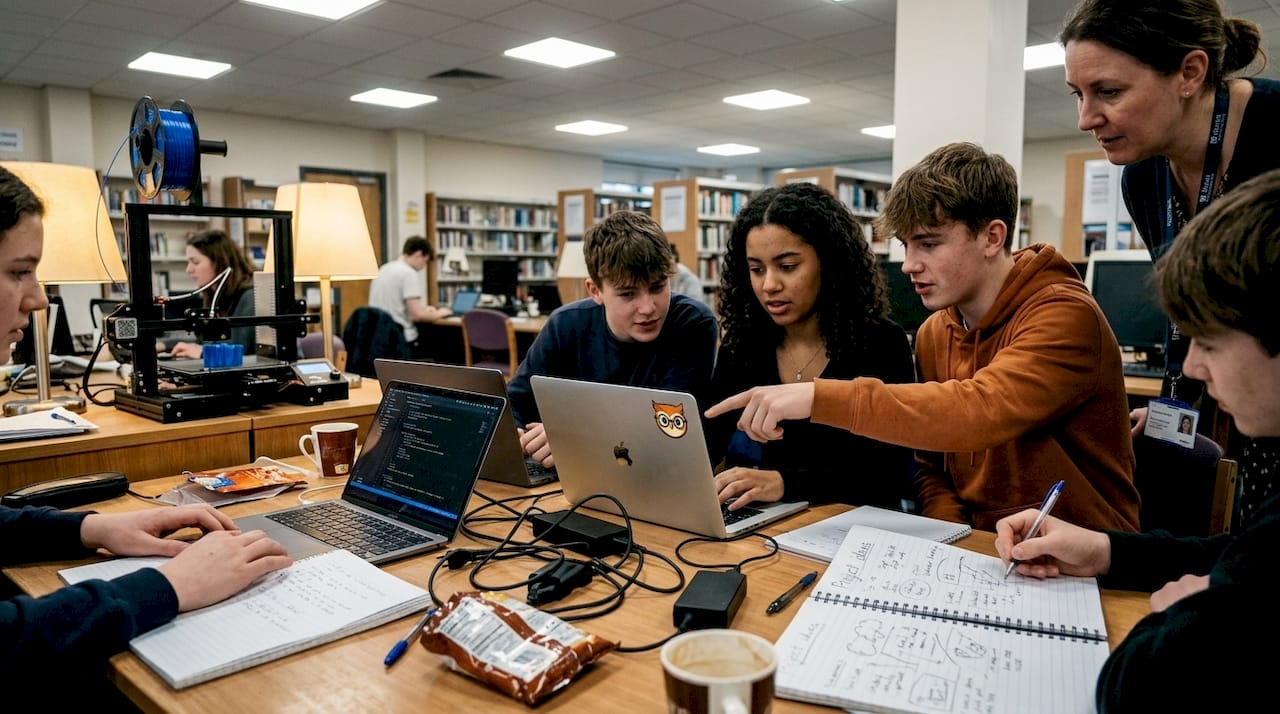
Modern libraries serve as learning commons for collaboration, STEM support, and digital equity. This shift reflects a deliberate response to how students actually learn today.
Here is a comparison of traditional versus modern library functions:
| Feature | Traditional library | Modern library |
|---|---|---|
| Primary resource | Print books | Print, digital, and multimedia |
| Learning style | Individual, silent study | Collaborative and project-based |
| Technology access | Limited | Computers, tablets, 3D printers |
| Community role | Passive resource | Active learning hub |
| Equity function | Basic access | Targeted digital inclusion |
Makerspaces are one of the most exciting developments. These are designated zones where students can build, create, and experiment, often using tools like laser cutters, coding kits, or recording equipment. They transform the library into a place of production, not just consumption.
Digital lending has also expanded access dramatically. Students who cannot afford to buy books can borrow e-books instantly. Understanding the role of ebooks in modern education helps parents and educators appreciate why digital collections matter as much as physical ones.
Pro Tip: If your school library does not yet offer digital lending, advocate for it. Many platforms allow libraries to access free books online and build collections at low cost. Staying informed about 2026 library trends can help you make a compelling case to school leadership.
Equity, achievement gaps, and the power of strong library programmes
Not all libraries are equal, and that inequality has real consequences for students. The quality of a school library, measured by staffing, funding, and resources, directly correlates with student outcomes.
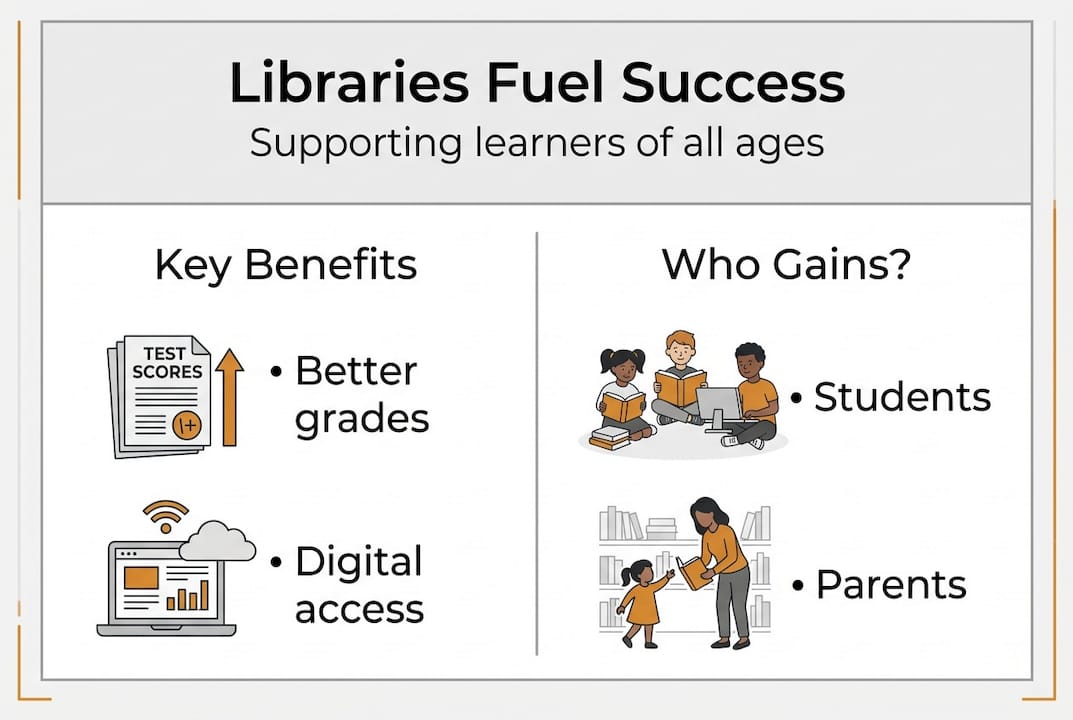
The evidence is striking. Certified librarians double graduation odds in high-poverty schools. That is not a marginal effect. It is a transformative one.
| School context | With certified librarian | Without certified librarian |
|---|---|---|
| Graduation rate | Significantly higher | Lower, especially in poverty areas |
| Reading scores | Above average | Often below national benchmarks |
| Research skills | Systematically taught | Inconsistent or absent |
| Digital access | Structured and supported | Limited or unsupported |
The contrast is stark. Well-resourced libraries provide structured support, qualified guidance, and consistent access to materials. Under-resourced libraries, often found in rural or high-poverty areas, struggle to offer even basic services.
Key factors that determine library quality include:
- Staffing: A qualified, full-time librarian versus a part-time volunteer or no librarian at all
- Funding: Regular budgets for new acquisitions versus years-old collections with no updates
- Technology: Up-to-date devices and software versus outdated or absent equipment
- Opening hours: Full school-day access versus restricted or irregular availability
Advocacy matters here. Parents, educators, and community members who understand libraries and research success are better placed to push for adequate funding. Effective library resource management can also help under-resourced libraries stretch limited budgets further.
Why the impact of libraries is more than statistics — and what most people miss
Statistics capture outcomes, but they rarely capture causes. When we read that certified librarians double graduation rates, we understand the what but not the why. The why lives in the invisible work that libraries do every single day.
Libraries are safe spaces. For many students, particularly those from chaotic or difficult home environments, the library is the one place in school where they feel genuinely calm and welcome. That psychological safety is a precondition for learning, yet it never appears in a budget spreadsheet.
Libraries also build cultural capital. Access to a wide range of books, ideas, and perspectives broadens a student's understanding of the world in ways that are hard to quantify but easy to observe over time. Students who read widely think more flexibly. They write more persuasively. They engage more confidently.
The danger of cutting library funding is that the damage is slow and invisible at first. Schools notice the effects years later, in declining literacy scores and weaker critical thinking, by which point the connection to library cuts is rarely made. ALA advocates that certified staffing is essential for equity and student success, and this position reflects a deep understanding of what gets lost when libraries are treated as expendable.
Developing critical reading in education is one of those invisible library gifts that only becomes visible when it is absent.
Explore further resources to enhance learning
If this article has sparked a desire to do more with libraries, whether you are an educator building a stronger reading culture, a parent looking for out-of-school support, or a student wanting to sharpen your research skills, there are excellent resources available to help you move forward.

BibliOWLteca brings together curated educational content, digital tools, and expert-created resources designed specifically for learners and educators. From e-books and structured reading programmes to practical guides for library integration, BibliOWLteca resources give you a reliable starting point. Explore the platform to find materials that complement everything libraries already offer, and take your learning environment to the next level.
Frequently asked questions
What specific skills do children develop in libraries?
Library instruction in information literacy improves critical thinking, reading enjoyment, technology competence, and general academic performance. These skills compound over time and support learning across every subject.
How do libraries help address the digital divide?
Modern libraries serve as learning commons offering computers, tablets, digital lending, and internet access, providing essential technology support for students who lack devices or connectivity at home.
Do all schools have the same quality of library access?
No. Underfunding, staffing shortages, and resource limitations in rural and underserved areas mean many students receive far less library support than their peers in better-funded schools.
How can parents make the most of libraries for their child's learning?
Family literacy programmes, homework help, and out-of-school borrowing schemes are all available through most public and school libraries, offering parents practical tools to extend learning beyond the classroom.