
TL;DR:
- Getting your content in front of paying customers is more challenging than creating it.
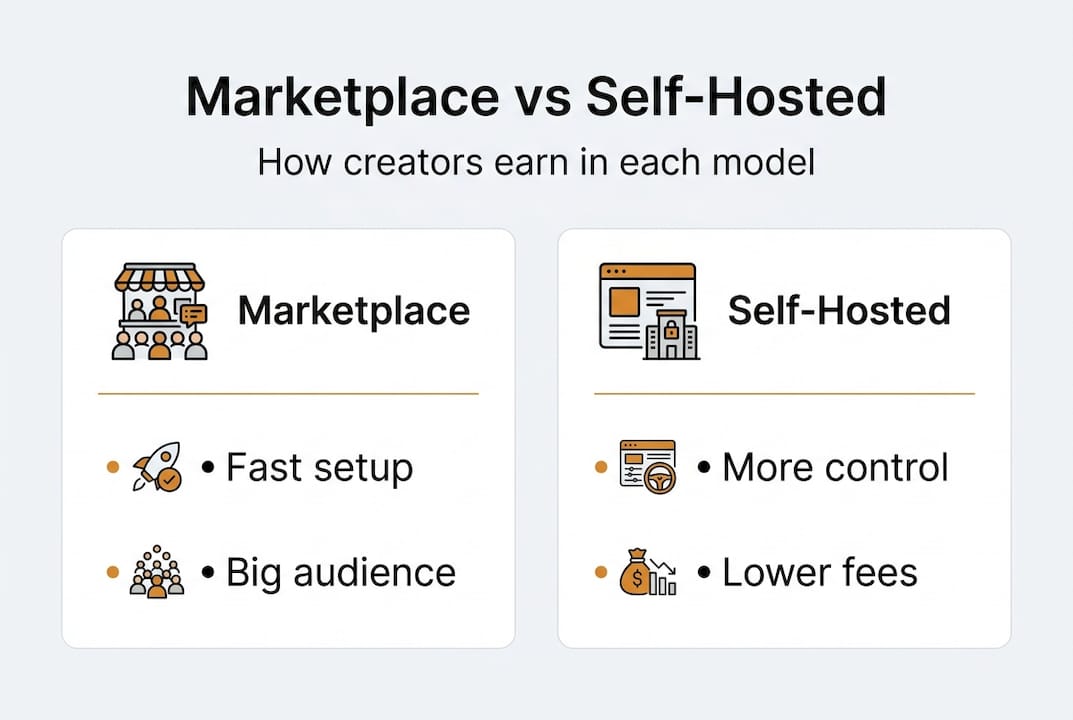
- Using marketplaces offers immediate reach but often involves high platform fees and limited control.
- Building an owned audience and transitioning to self-hosted platforms enhances control and long-term income.
Most creators assume the hardest part of selling educational content is building the course itself. It isn't. Once your e-book or programme is ready, the real challenge begins: getting it in front of people who will actually pay for it. Knowledge marketplaces promise to solve this by connecting you to a global audience overnight, but the trade-offs are significant and often misunderstood. This guide breaks down exactly how these platforms work, what you realistically stand to earn, and how to build a strategy that keeps you in control of your income long-term.
Table of Contents
- What is a knowledge marketplace?
- Marketplaces vs self-hosted: Comparing costs, control and reach
- Revenue in practice: What creators really earn in 2026
- How to maximise your chances: Strategy, community, and engagement
- The real secret: Power in the pivot and platform independence
- Ready to scale your expertise?
- Frequently asked questions
Key Takeaways
| Point | Details |
|---|---|
| Marketplace vs self-hosted | Marketplaces offer fast reach but high fees, while self-hosting gives you control and more profit. |
| Earnings are variable | Most creators earn modestly; only a few break through—community and email audience make the difference. |
| Start, then pivot | Begin on a marketplace, then move to your own brand for growth and ownership. |
| Engagement is key | Building your email list and community doubles your launch revenue and growth potential. |
What is a knowledge marketplace?
A knowledge marketplace is a platform where educators and creators list their digital content, such as courses, e-books, and training programmes, for a broad, pre-existing audience to discover and purchase. Think of it as a digital shopping centre for learning. You set up your stall, and the platform handles foot traffic.
The most widely recognised examples are Udemy, Skillshare, and Coursera, which allow creators to upload courses and e-books for global audiences. On the other end of the spectrum, self-hosted platforms like Kajabi and Teachable let you build your own branded storefront. The distinction matters enormously for your business model.
Here is what a knowledge marketplace typically offers:
- Built-in audience: Millions of learners already browse these platforms daily
- Simplified setup: No need to build a website or manage hosting
- Platform-driven promotions: Discounts, email campaigns, and search visibility handled for you
- Revenue sharing: The platform takes a cut, sometimes a large one, in exchange for access
Self-hosted solutions flip this model. You own your brand, your pricing, and crucially, your audience data. A digital marketplace for educators offers a middle path, combining global reach with greater creator control.
"The right platform isn't the one with the most users. It's the one that aligns with where you are in your creator journey and where you want to go."
For a thorough breakdown of when each model makes sense, the marketplace vs self-hosting guide is worth reading before you commit. Understanding the mechanics early saves you from costly platform migrations later. Choosing the best online marketplaces for your niche is a strategic decision, not just a technical one.
Marketplaces vs self-hosted: Comparing costs, control and reach
With the basics covered, it is important to see how these platforms truly stack up, especially when money, autonomy, and visibility are on the line.
| Feature | Knowledge marketplace | Self-hosted platform |
|---|---|---|
| Setup time | Hours | Days to weeks |
| Audience access | Immediate (millions) | Built over time |
| Platform fees | 50 to 75% (Udemy) | 0 to 5% |
| Branding control | Limited | Full |
| Audience data | Platform owns it | You own it |
| Pricing flexibility | Often restricted | Complete freedom |
Udemy takes 50 to 75% in fees, Skillshare operates on a royalty model, and self-hosted tools typically charge 0 to 5%. That fee gap is the single biggest financial factor most new creators underestimate.
The case for starting on a marketplace is strong: zero marketing budget required, built-in credibility, and instant discoverability. But as your audience grows, those commissions compound into a serious revenue leak. A course generating £10,000 per month on Udemy could net you as little as £2,500 after fees.
Pro Tip: Use a marketplace to validate your content and attract your first 200 to 500 students. Then migrate your most engaged learners to a self-hosted solution where you keep the majority of revenue.
The hybrid model is increasingly popular among experienced creators. You maintain a marketplace presence for discovery while directing loyal students to your own platform for premium content. This approach, explored in depth in guides on Hotmart alternatives, gives you the best of both worlds without betting everything on one channel.
Key advantages of going self-hosted once you have traction:
- Full control over pricing, bundles, and upsells
- Direct access to student email addresses
- No risk of platform policy changes eroding your income
- Stronger brand identity and long-term loyalty
For a detailed side-by-side analysis, the self-hosted comparison from NorthMac Services is particularly useful. Understanding digital platform benefits at each stage of growth helps you make the switch at the right moment, not too early and not too late. When selecting a platform, match your current stage to the platform's strengths.
Revenue in practice: What creators really earn in 2026
Understanding the business model matters, but what does success actually look like for real creators?
The global e-learning market is projected at $365 to 400 billion in 2026, which sounds extraordinary. The reality for individual creators is more nuanced. Earnings vary wildly depending on niche, platform, audience size, and launch strategy.
| Creator segment | Estimated annual earnings |
|---|---|
| Beginner (marketplace only) | £0 to £2,500 |
| Intermediate (mixed strategy) | £2,500 to £20,000 |
| Advanced (own platform + list) | £20,000 to £100,000+ |
The average Udemy instructor earns £3,306 per year, with 22% of course launches generating between £0 and £500. Only 10% of creators reach £50,000 or more in launch income. Kajabi creators have collectively earned over £6 billion, suggesting that self-hosted creators with strong audiences significantly outperform marketplace-only sellers.
Here is what separates top earners from the rest:
- Niche specificity: Broad topics face fierce competition; focused niches command premium prices
- Email list size: Creators with 2,000 to 5,000 subscribers consistently outperform those without one
- Community engagement: Active student communities correlate directly with higher completion rates and repeat purchases
- Launch strategy: A structured pre-launch sequence generates significantly more revenue than a passive listing
- Pricing confidence: Underpricing is the most common mistake; it signals low value and attracts students less committed to completing the work
The risks are real too. Competition on major marketplaces has intensified sharply. Low completion rates, which average around 15% on many platforms, affect your ranking and visibility. Understanding education market trends and aligning your content with what learners actually need in 2026 is essential for staying relevant. Applying strong digital sales strategies from the outset dramatically improves your odds.
How to maximise your chances: Strategy, community, and engagement
Knowing the numbers, the next step is ensuring your strategy maximises your share of that opportunity and minimises common pitfalls.
The data is clear: a 2,000 to 5,000-person email list combined with a £497 price point yields approximately £24,000 per launch. Email lists convert at around 1.8%, and creators with active communities report roughly double the revenue of those without one.
Here is what the most successful creators do differently:
- Build your email list before launch: Offer a free resource, mini-course, or checklist in exchange for sign-ups. Your list is the one asset no platform can take from you.
- Price for value, not competition: Research what outcomes your course delivers and price accordingly. A course that saves someone ten hours per week is worth far more than £29.
- Use video strategically: Short preview videos on YouTube or social media drive course discovery without relying entirely on marketplace algorithms.
- Host a community: Whether it is a private forum, a WhatsApp group, or a Discord server, community members complete more content and buy more products.
- Diversify your channels: Relying solely on one marketplace is a fragile strategy. Spread your presence across platforms and always direct students back to your own list.
Pro Tip: Record a short "results in advance" video showing students exactly what they will achieve. Post it on social media before launch. This single step consistently improves conversion rates for new creators.
Avoid these common pitfalls: ignoring student feedback after launch, underpricing to compete with free content, and failing to update your material as the market evolves. Resources on building audience and selling e-books online offer practical frameworks for each of these areas. For deeper creator engagement data, the statistics consistently reinforce one truth: engaged creators with owned audiences win. Additional guidance on educator engagement tips rounds out your approach.
The real secret: Power in the pivot and platform independence
Most guides tell you to pick a platform and commit. We think that is the wrong frame entirely.
The creators who build sustainable, growing income are those who treat marketplaces as a launchpad, not a destination. Experts consistently recommend starting on marketplaces to validate content, then migrating to self-hosted solutions for higher control and margins once you have audience traction. This is not hedging. It is a deliberate growth strategy.
Marketplaces are brilliant for one thing: feedback at scale. Within weeks, you know whether your topic resonates, which modules students love, and where they drop off. That data is invaluable. But the moment you start building a real business, you need to own your audience. Your email list, your community, your brand. These are the assets that compound over time.
The uncomfortable truth is that platform dependency is a business risk. Algorithms change. Fee structures shift. Platforms get acquired. Creators who invested years building exclusively on one marketplace have lost significant income overnight when the rules changed. Choosing the best platform choice means thinking beyond today's reach and planning for tomorrow's resilience. Invest in your name and your list, not just your course.
Ready to scale your expertise?
After covering the practical strategies, you are likely ready to put your expertise into action.
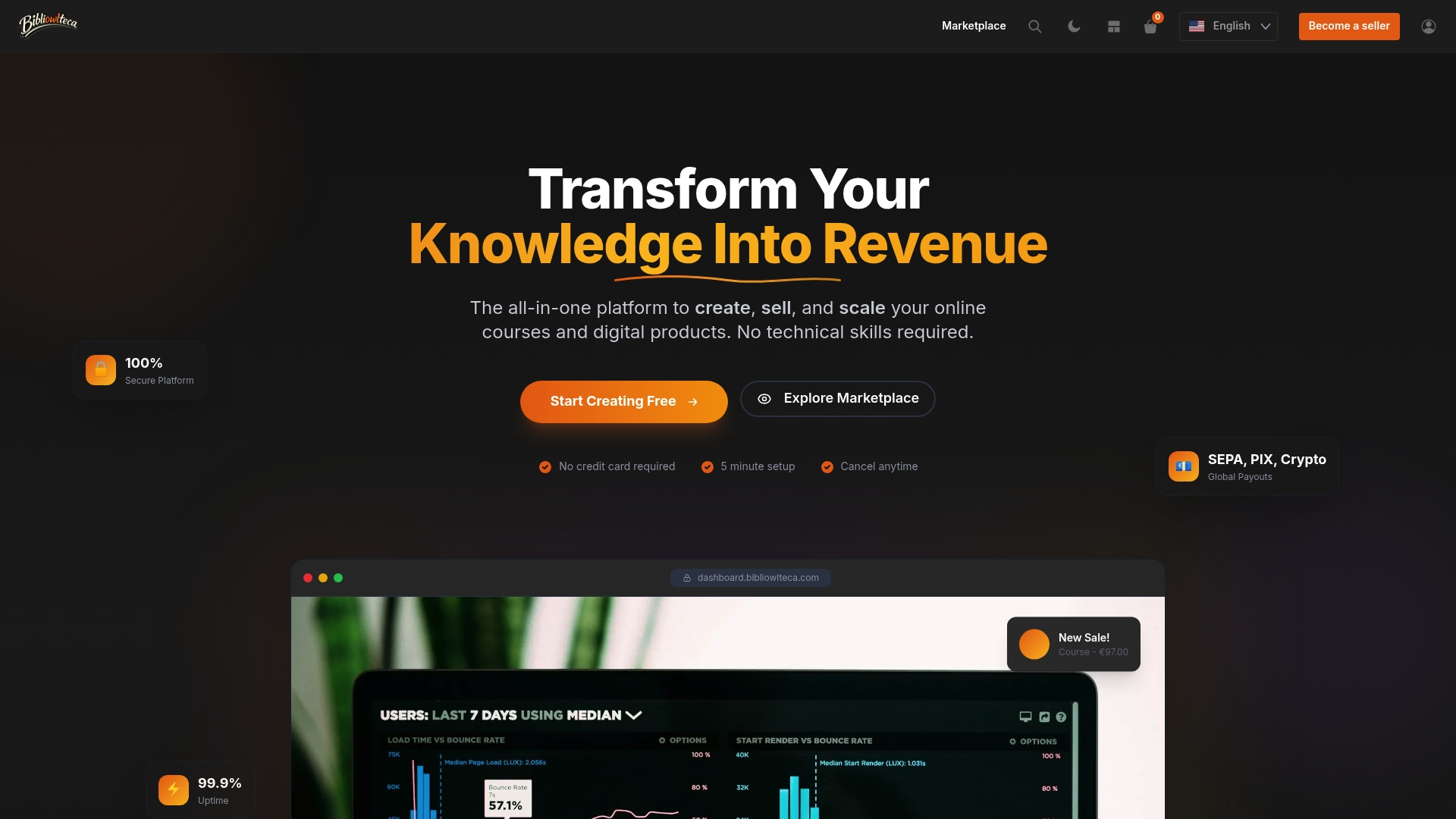
BibliOWLteca is built for exactly this moment. Whether you are launching your first e-book, scaling a course catalogue, or building a global student community, the BibliOWLteca platform gives you the infrastructure to do it properly. With built-in tools for digital delivery, multi-currency payments, and tax compliance, you can focus on creating while the platform handles the complexity. BibliOWLteca supports creators at every stage, from first launch to full-scale knowledge business, with the control and global reach you need to grow on your own terms.
Frequently asked questions
How do knowledge marketplaces differ from selling on my own website?
Marketplaces provide audience and discovery but take significant commissions, while your own site gives you complete control over pricing, branding, and revenue.
What are typical earnings for first-time online course creators?
Average instructors earn around £3,306 per year, though many earn considerably less; only around 10% achieve £50,000 or more per launch.
How do I build an audience outside of a marketplace?
Grow your email list and host an active community. Email lists convert at 1.8% and communities have been shown to roughly double creator revenue compared to those without one.
Is there a best time or strategy to move to a self-hosted platform?
Experts recommend starting on a marketplace to validate your content, then transitioning to self-hosted once you have built meaningful audience traction and a growing email list.