
TL;DR:
- Research databases are curated repositories of peer-reviewed academic content that support credible and comprehensive research. Using multiple databases like PubMed, Embase, and Web of Science ensures exhaustive literature coverage and enhances research accuracy. They also provide tools to measure research impact through citations, policy references, and media mentions, directly supporting evaluation and funding decisions.
Research databases are specialised, organised repositories that give researchers, students, and educators access to verified, peer-reviewed academic content essential for thorough and credible inquiry. Unlike a general web search, these curated collections index sources by scholarly criteria, covering journal articles, primary sources, datasets, e-books, and historical documents. Platforms such as PubMed, JSTOR, and PsycINFO represent the standard in academic resource discovery. The role of research databases extends far beyond simple retrieval. They underpin academic integrity, support reproducible findings, and increasingly drive the productivity gains that make modern scholarship possible at scale.
What is the role of research databases in literature searches?
Research databases are the primary infrastructure for systematic literature searching. They index content that general search engines cannot reliably surface, including early-stage studies, regional publications, and grey literature. Without them, any literature review risks being structurally incomplete before it begins.
The most significant limitation researchers face is assuming one database covers everything. Only about 60% of biomedical literature is consistently indexed across the top three databases. That means roughly 40% of relevant work sits in databases a single-source search will never reach.
Databases such as PubMed, Embase, Scopus, and Web of Science each carry distinct coverage strengths. PubMed specialises in life sciences and biomedical research. Embase covers pharmacological and clinical literature with particular depth in European publications. Scopus and Web of Science both offer broad multidisciplinary indexing but differ in their journal lists and citation tracking tools. Using them in combination is not optional for rigorous work. Multi-database searching is mandatory for systematic reviews and meta-analyses to achieve exhaustive, reproducible literature coverage.
Semantic search adds another layer of value. A system that understands thematic intent rather than exact keyword matches finds relevant literature even when authors use different terminology. NousLab's system searches across 12 databases using natural language queries, capturing overlooked papers and preprints that keyword-only searches miss entirely. This matters most in fast-moving fields where terminology shifts before indexing catches up.
- Use PubMed for biomedical and clinical topics
- Use Embase for pharmacology and European clinical trials
- Use Scopus or Web of Science for citation tracking and impact metrics
- Add ClinicalTrials.gov or similar registries for systematic reviews
- Apply semantic search tools to capture thematic variants of your search terms
Pro Tip: Set up database-specific alert systems for your key search strings. PubMed's MyNCBI alerts and Scopus's saved search notifications deliver new results automatically, keeping your literature review current without repeated manual searches.
How do research databases differ from general search engines?
The core distinction is curation versus popularity. General search engines rank results by engagement signals, backlinks, and commercial relevance. Research databases rank and filter by scholarly qualifications, peer-review status, publication type, and subject classification. The difference in output quality is not marginal. It is structural.
Research databases provide verified, peer-reviewed content indexed and filterable by scholarly criteria essential for academic integrity and reproducibility. A general search engine may surface a preprint, a retracted article, and a peer-reviewed study on the same results page with no indication of their relative credibility. A research database separates these categories by design.
The table below illustrates the key functional differences:
| Feature | Research databases | General search engines |
|---|---|---|
| Content verification | Peer-reviewed and curated | Unverified, popularity-ranked |
| Filter options | Subject, date, publication type, author | Limited keyword filters |
| Content types | Journal articles, datasets, e-books, primary sources | Websites, blogs, news, mixed |
| Academic integrity support | High | Low |
| Citation tracking | Built-in (Scopus, Web of Science) | Absent or basic |
| Deduplication tools | Available (e.g. Google Scholar's 'All Versions') | Absent |
Google Scholar occupies a middle position. It is free and broad, but algorithmic bias in Google Scholar prioritises highly cited papers, potentially obscuring newer or less cited but important research. Researchers relying on it alone risk missing groundbreaking findings that have not yet accumulated citations. Google Scholar's 'All Versions' feature does offer genuine utility. This deduplication tool helps researchers distinguish preprints, datasets, and published articles as versions of the same work, supporting accurate citation tracking and resource consolidation. That said, Google Scholar functions best as a supplement to dedicated databases, not a replacement for them.
The importance of research databases also shows up in content breadth. Databases include formats such as primary sources, historical documents, and datasets that general search engines do not reliably index. For a researcher working in history, law, or public health, this breadth is not a convenience. It is a requirement.
How do research databases measure research impact?
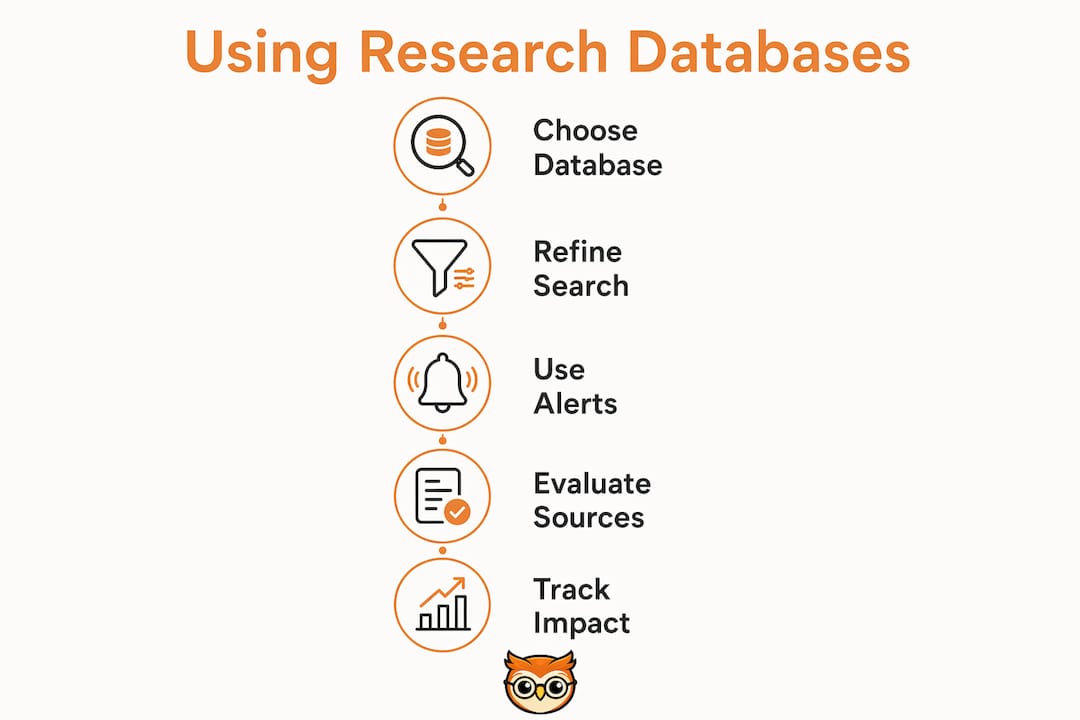
Research databases are the primary tool for tracking how scholarship influences the world beyond the academic paper. They record citation counts, policy document references, patent citations, and media mentions. These outputs form the evidence base for bibliometric analysis, which institutions use to evaluate research quality and allocate funding.
Institutional staff consider policy citations and media mentions the most important proxy measures for research societal impact. Policy citations are expected to become even more significant over the next five years. This reflects a broader shift: funders and governments increasingly want evidence that research changes decisions, not just that it is published.
Databases such as Scopus and Web of Science provide built-in bibliometric tools. Researchers can track the h-index, citation counts by year, and journal impact factors directly within the platform. These metrics feed into institutional research assessments such as the UK's Research Excellence Framework. Understanding how to read and use these metrics is now a core research skill, not an optional extra.
| Impact type | Database tool | Example output |
|---|---|---|
| Academic citations | Scopus, Web of Science | h-index, citation counts |
| Policy citations | Overton, Altmetric | Policy document references |
| Media mentions | Altmetric, Dimensions | News and social media coverage |
| Patent citations | Derwent Innovation, Lens.org | Patent reference counts |
| Dataset citations | DataCite, Figshare | Dataset download and citation metrics |
Open data infrastructure amplifies this further. EMBL-EBI's open biodata infrastructure saves researchers an average of 11 hours per week and generates £11.8bn annually in productivity gains. Those figures demonstrate that the benefits of using research databases are not abstract. They translate directly into time recovered and economic value created. Open databases also reduce duplication of effort, freeing researchers to generate new knowledge rather than recreate existing data. This infrastructure has directly enabled AI-driven advances such as AlphaFold, DeepMind's protein structure prediction tool.
How to use research databases effectively
Choosing the right database for your discipline is the first decision. A researcher in psychology needs PsycINFO. A public health researcher needs PubMed and Embase. A social scientist needs Scopus or the Social Sciences Citation Index within Web of Science. Starting with a database misaligned to your field wastes time and produces incomplete results.

Search strategy matters as much as database choice. Most researchers default to keyword searches, but single-database manual searches are prone to errors and reduce the theoretical and empirical robustness of any review. Advanced search syntax, including Boolean operators (AND, OR, NOT), truncation symbols, and field-specific tags, dramatically improves precision. A search for "climate change" AND "mental health" in the title field returns far more targeted results than the same terms entered as a plain query.
Citation chaining is an underused technique. Start with one highly relevant paper, then trace its references backward and its citing papers forward. This method surfaces literature that keyword searches miss, particularly older foundational studies and very recent work that has not yet been widely cited. Databases such as Scopus and Web of Science make citation chaining straightforward with built-in "cited by" and "references" navigation. For a detailed walkthrough of the full process, the literature review step-by-step guide from Bibliowlteca covers database selection through to synthesis.
- Identify two or three databases aligned with your discipline and research question
- Build a structured search string using Boolean operators and controlled vocabulary (MeSH terms for PubMed, Emtree for Embase)
- Run the search across all selected databases and export results to a reference manager such as Zotero or Mendeley
- Deduplicate results before screening, using your reference manager's built-in tools
- Apply inclusion and exclusion criteria systematically, documenting every decision
- Use citation chaining to catch papers your keyword search missed
Pro Tip: Use database-specific controlled vocabulary rather than free-text terms alone. MeSH headings in PubMed and Emtree in Embase map your concept to the exact terms indexers use, capturing papers that use different wording for the same idea.
The open library search guide from Bibliowlteca offers practical guidance on executing thorough searches across multiple databases, including how to handle overlapping results and manage large result sets efficiently.
Key takeaways
Research databases are the foundation of credible academic inquiry, and multi-database searching is the only method that guarantees comprehensive literature coverage.
| Point | Details |
|---|---|
| Multi-database searching is non-negotiable | Around 40% of relevant literature appears in some databases but not others, making single-source searches structurally incomplete. |
| Databases outperform search engines for scholarly work | Peer-reviewed curation, subject filters, and citation tracking give databases a structural advantage over general search tools. |
| Impact tracking requires database tools | Bibliometric tools in Scopus and Web of Science measure citations, policy references, and media mentions essential for research evaluation. |
| Open databases generate measurable productivity gains | EMBL-EBI's infrastructure saves researchers 11 hours per week and contributes £11.8bn annually in productivity value. |
| Search strategy determines result quality | Boolean operators, controlled vocabulary, and citation chaining improve precision far beyond basic keyword searches. |
Why research databases are reshaping how we think about knowledge
At Bibliowlteca, we work closely with educators and researchers who are building and sharing knowledge digitally. One pattern stands out clearly: the researchers who produce the most credible, well-cited work are not necessarily the ones with the most time. They are the ones who know which databases to use and how to use them properly.
The conventional wisdom is that Google Scholar is "good enough" for most purposes. I disagree with that framing entirely. Google Scholar is a discovery tool. It is not a verification tool, and it is not a systematic search tool. Treating it as either leads to gaps that undermine the credibility of the whole project. The algorithmic bias challenges in popular databases are real, and researchers who are unaware of them are not making informed choices. They are simply accepting the defaults.
What I find genuinely exciting is the shift towards open, curated data infrastructure. The expansion of medical open databases is already reshaping AI-driven research, enabling predictive analytics and new scientific tools that would have been impossible without high-quality, accessible data. That is not a future trend. It is happening now, and researchers who understand how to navigate these resources are positioned to contribute to it.
The challenge I see most often is not a lack of access. Most universities provide access to Scopus, Web of Science, and discipline-specific databases. The challenge is that researchers do not know how to use them beyond a basic keyword search. Semantic search, citation chaining, and controlled vocabulary are not advanced techniques. They are standard practice that most researchers have never been formally taught. Closing that gap is one of the most practical things any researcher or educator can do to improve the quality of their work.
— Bibliowlteca
Academic content and research tools on Bibliowlteca
Bibliowlteca is a digital platform where educators and researchers can access and distribute high-quality academic content, including e-books, courses, and mentorships, across a global audience.
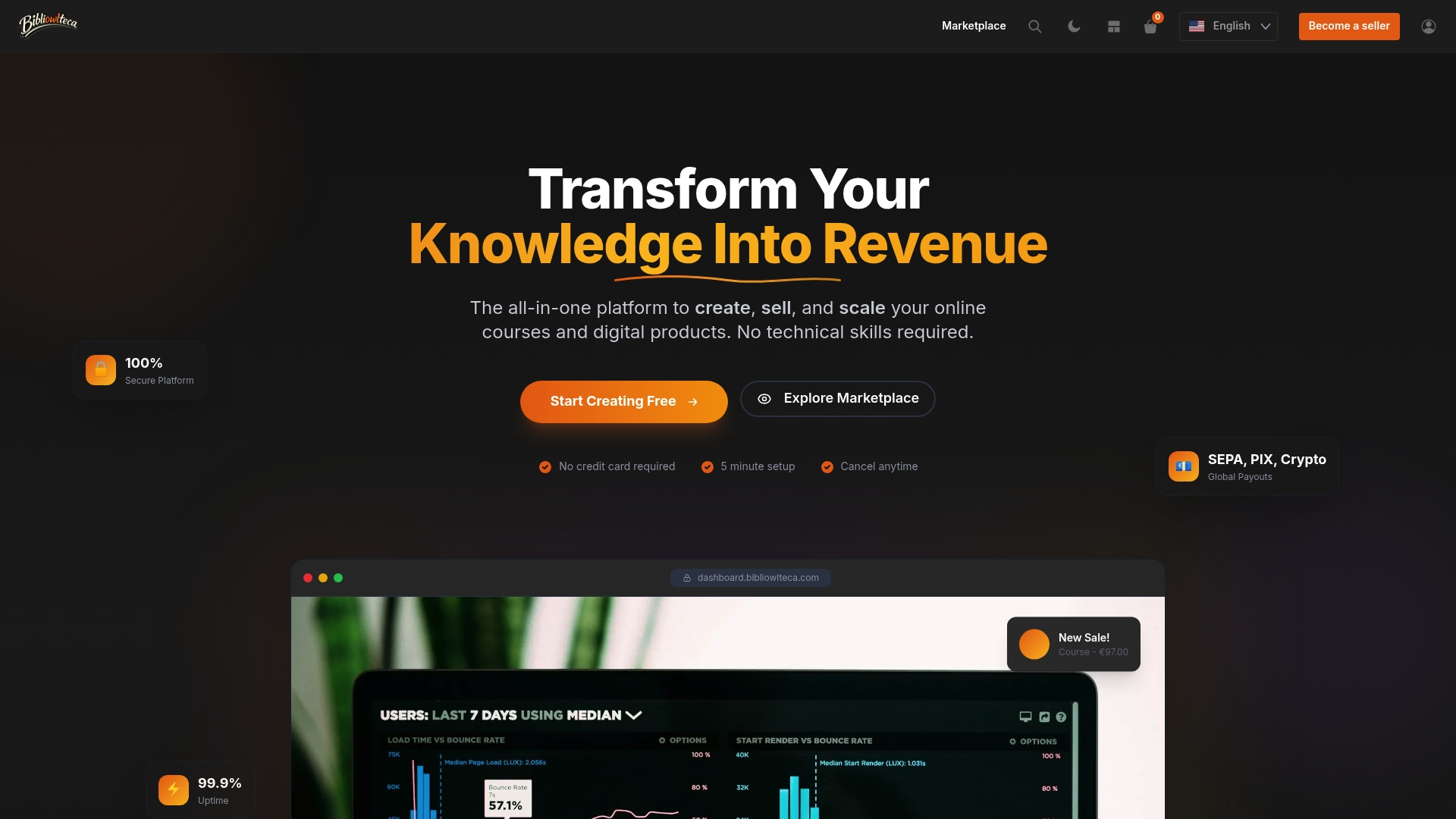
For researchers building their knowledge base or educators creating structured learning resources, Bibliowlteca offers a practical infrastructure for both discovery and distribution. The platform supports multiple currencies and international payments, making it straightforward to access digital academic content from creators worldwide. Whether you are looking to deepen your understanding of research methods or share your own expertise, Bibliowlteca connects you with the tools and content to do it effectively. Explore the full range of platform features to see how it supports research-driven learning.
FAQ
What are research databases used for?
Research databases are used to search, retrieve, and evaluate peer-reviewed academic literature, datasets, and primary sources. They support literature reviews, systematic reviews, citation tracking, and bibliometric analysis across all academic disciplines.
Why is multi-database searching necessary?
Only about 60% of biomedical literature is consistently indexed across the top three databases, meaning a single-database search misses a significant portion of relevant work. Systematic reviews require coverage across multiple databases plus trial registries to achieve reproducible results.
How do research databases support academic integrity?
Research databases index verified, peer-reviewed content filterable by publication type, date, and subject area. This curation prevents researchers from inadvertently citing retracted, unverified, or non-scholarly sources.
What is the difference between PubMed and Scopus?
PubMed specialises in biomedical and life sciences literature and is freely accessible. Scopus covers a broader range of disciplines and provides advanced citation tracking and bibliometric tools, but requires institutional or subscription access.
How do databases measure research impact?
Databases such as Scopus, Web of Science, and Altmetric track citation counts, policy document references, patent citations, and media mentions. These metrics form the basis of bibliometric analysis used in institutional research evaluations and funding decisions.