
TL;DR:
- The academic publishing process involves multiple stages, from journal selection to post-publication promotion, and requires careful planning and understanding. Choosing the right journal, early decision on open access or subscription models, and managing copyright are crucial to control and monetize your work effectively. Platforms like Bibliowlteca enable creators to sell digital resources and maintain full control over their content beyond traditional publishing.
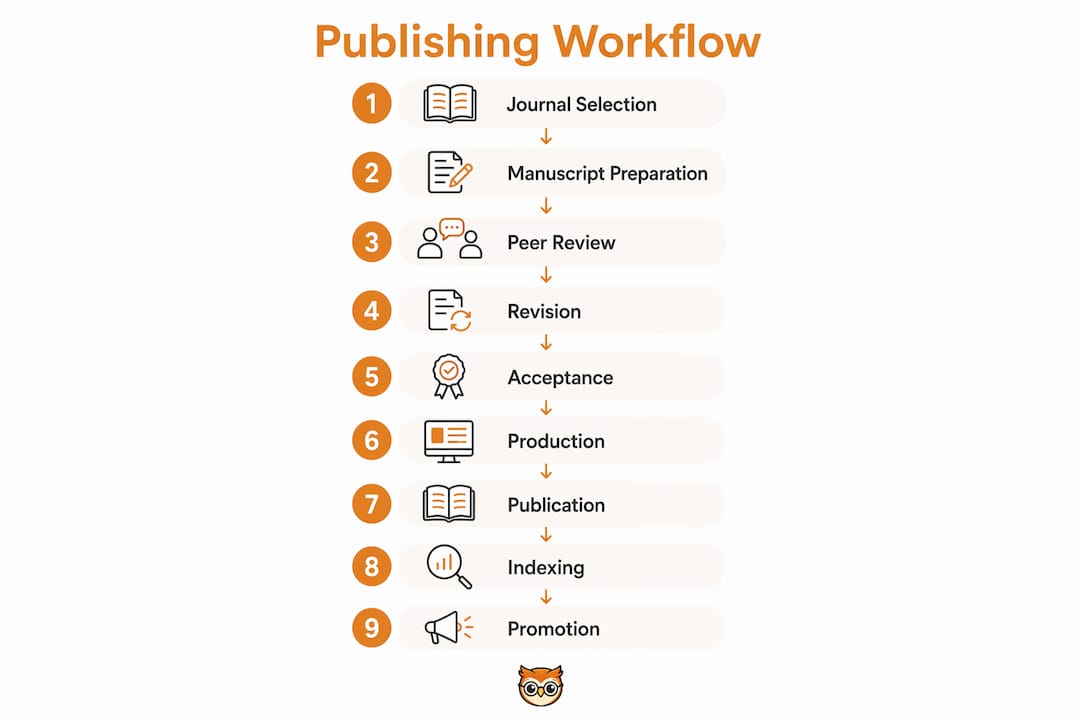
The academic publishing workflow is the sequence of stages that takes a manuscript from first draft to published, indexed, and discoverable work. For UK creators and educators producing digital educational content, that sequence runs through journal selection, manuscript preparation, submission, peer review, revision, production, and post-publication promotion. It is rarely linear: rejections and resubmissions mean most researchers cycle through several stages more than once before a paper lands. Understanding the full process upfront saves considerable time and frustration.
The main stages at a glance:
- Journal selection — matching scope, audience, and publishing model to your work
- Manuscript preparation — formatting, structure, and adherence to journal submission guidelines
- Submission — uploading via online systems such as Editorial Manager or ScholarOne
- Peer review — single-blind, double-blind, or open, depending on the journal
- Revision — responding to reviewer feedback and resubmitting
- Production — copyediting, typesetting, metadata, and proofing
- Post-publication promotion — indexing, distribution, and monetisation
Copyright and licensing sit across the entire process. In the UK, the moment you sign a standard publishing agreement, you typically transfer copyright to the publisher, which can restrict how you reuse your own work in teaching materials or derivative digital products. Knowing this before you submit, not after, is what separates a strategic creator from one who loses control of their content.
Table of Contents
- What the academic publishing workflow actually involves, stage by stage
- How to choose the right journal for your work
- Open Access versus subscription: what each model means for your content
- How Bibliowlteca supports your publishing and monetisation goals
- What happens after your paper is accepted
- Bibliowlteca: publish, distribute, and earn from your expertise
- Key takeaways
What the academic publishing workflow actually involves, stage by stage
Academic publishing involves twelve key stages from journal selection through to promotion, each requiring careful attention. The detail within each stage varies considerably across journals, and that variation catches many first-time submitters off guard.
Manuscript preparation is where most time is spent. Journals differ sharply on word count, section order, referencing style, and mandatory disclosures. Some accept format-neutral first submissions, meaning you can submit without strict adherence to house style; others require full compliance from the outset, and incomplete disclosure statements will get your paper excluded before anyone reads it. The American Economic Review, for instance, requires a separate disclosure statement from every co-author, and submissions without one are considered incomplete.
Submission systems used by UK academic publishers are predominantly Editorial Manager and ScholarOne. Both platforms manage the full review cycle, from initial upload through to final decision. Familiarise yourself with whichever system your target journal uses before submission day.
Peer review comes in three main forms:
- Single-blind — reviewers know who you are; you do not know them
- Double-blind — neither party knows the other's identity
- Open peer review — both identities are disclosed, increasingly common in UK journals
Handling reviewer feedback professionally is what moves a manuscript toward acceptance. A detailed, point-by-point response letter that addresses every comment, even those you disagree with, signals to editors that you take the process seriously.
Production follows acceptance. This phase covers copyediting, typesetting, assignment of a DOI and metadata, proofreading, and indexing. It is largely out of your hands, but you will receive proofs to check, and errors caught here are far cheaper to fix than errors caught after publication.
How to choose the right journal for your work
Strategic journal selection is one of the highest-leverage decisions in the entire research paper workflow, yet many creators treat it as an afterthought. The journal you choose determines your audience, your visibility, and, critically, what you can do with your work after publication.

Scholarly publishing is rooted in Anglo-European traditions that create systemic barriers for researchers outside established networks. Understanding those traditions helps you identify where your work genuinely fits versus where it will face structural resistance. A journal that publishes predominantly quantitative social science research is unlikely to give a warm reception to a qualitative practitioner study, regardless of its quality.
Key criteria for journal selection:
- Scope alignment — does the journal's stated remit match your research question?
- Audience — will the readership include the educators and practitioners you want to reach?
- Impact factor and indexing — relevant if institutional recognition matters to you
- Open Access options — does the journal offer a route to open publication, and at what cost?
- Copyright and self-archiving policy — can you retain rights to reuse your work in courses or digital products?
- Publication timeline — some journals take 12–18 months from submission to publication
Academic librarians at UK universities are an underused resource here. They hold detailed knowledge of journal reputations, predatory publisher red flags, and the role journals play in academia that goes well beyond what any database search will surface.
Pro Tip: Keep a format-neutral master copy of your manuscript. When a journal rejects your paper, you can reformat for the next target journal in hours rather than days. Most authors learn this the hard way after their third resubmission.
Efficiently organising your research findings before you begin the submission cycle also reduces the friction of adapting your manuscript to different journal requirements.
Open Access versus subscription: what each model means for your content
Choosing between Open Access and subscription publishing at the start of your workflow is a strategic decision with long-term consequences for content control and revenue.
Open Access makes your work freely available online immediately upon publication. The trade-off is an Article Processing Charge (APC), which in the UK can range from a few hundred pounds to well over £3,000 for high-profile journals. Many UK universities have read-and-publish agreements with major publishers that cover APCs for affiliated researchers, so check your institution's library before paying out of pocket. Open Access typically comes with a Creative Commons licence, which means readers, including your own students, can reuse the work within the licence terms.
Subscription publishing costs you nothing to publish, but the publisher holds the copyright and controls distribution. For educators who want to incorporate their published work into paid courses or digital products, this is a significant constraint. Copyright transfer in traditional publishing often means authors lose rights to reuse their work unless they negotiate specific carve-outs or check the journal's self-archiving policy before signing.
A quick comparison:
| Factor | Open Access | Subscription |
|---|---|---|
| Publication cost | APC required | Usually free |
| Reader access | Immediate, free | Restricted to subscribers |
| Copyright | Often retained by author | Usually transferred to publisher |
| Content reuse rights | Broad (Creative Commons) | Limited; check self-archiving policy |
| Monetisation flexibility | Higher | Lower |
For educators building digital products around their research, Open Access with a permissive Creative Commons licence gives the most flexibility. The open access model is worth understanding in depth before you commit to any journal.
How Bibliowlteca supports your publishing and monetisation goals
Conventional journal publishing and digital self-publishing are not mutually exclusive. Many UK creators use academic journals to build credibility and then distribute their knowledge commercially through platforms built for digital products.
Bibliowlteca is a digital publishing platform designed for exactly this. It lets creators publish e-books, courses, and mentorship programmes, manage their own storefronts, and sell to a global audience with built-in payment processing, tax compliance, and multi-currency support. For an educator who has spent months navigating peer review and production, having a platform that handles the commercial infrastructure without requiring a technical background is a practical advantage.
Key benefits for academic creators:
- Sell e-books, courses, and digital resources directly to your audience
- Accept payments in multiple currencies with tax compliance handled automatically
- Retain full control over pricing, distribution, and audience data
- Complement your journal publications with monetised digital products
- No long-term contracts or per-transaction gatekeeping
The platform's digital publishing guide covers the practical steps for creators moving from manuscript to market.
What happens after your paper is accepted
Post-acceptance is not the end of the workflow; it is the start of a different kind of work. Once a journal accepts your manuscript, the production team takes over, but your involvement does not stop.
You will receive author proofs, typically a PDF of the typeset article, to check for errors introduced during copyediting or typesetting. This is your last opportunity to correct mistakes before the paper goes live. Journals usually allow only minor corrections at proof stage, so read carefully and respond within the deadline, which is often 48–72 hours.
Metadata assigned at this stage, including your title, abstract, keywords, author affiliations, and ORCID identifier, determines how discoverable your work is in databases such as Scopus, Web of Science, and Google Scholar. Poorly chosen keywords reduce discoverability significantly, so treat the metadata fields with the same care as the manuscript itself.
Indexing follows publication. UK publishers typically submit new articles to major abstracting and indexing services automatically, but it can take weeks or months for a new article to appear in all relevant databases. If your institution requires evidence of publication for promotion or grant purposes, keep a copy of the acceptance letter and the DOI confirmation.
Finally, post-publication promotion is where many creators leave value on the table. Sharing your work through institutional repositories, academic social networks, and your own digital channels extends its reach well beyond the journal's subscriber base.
Bibliowlteca: publish, distribute, and earn from your expertise
Academic publishing builds your credibility. Bibliowlteca turns that credibility into a sustainable digital business.
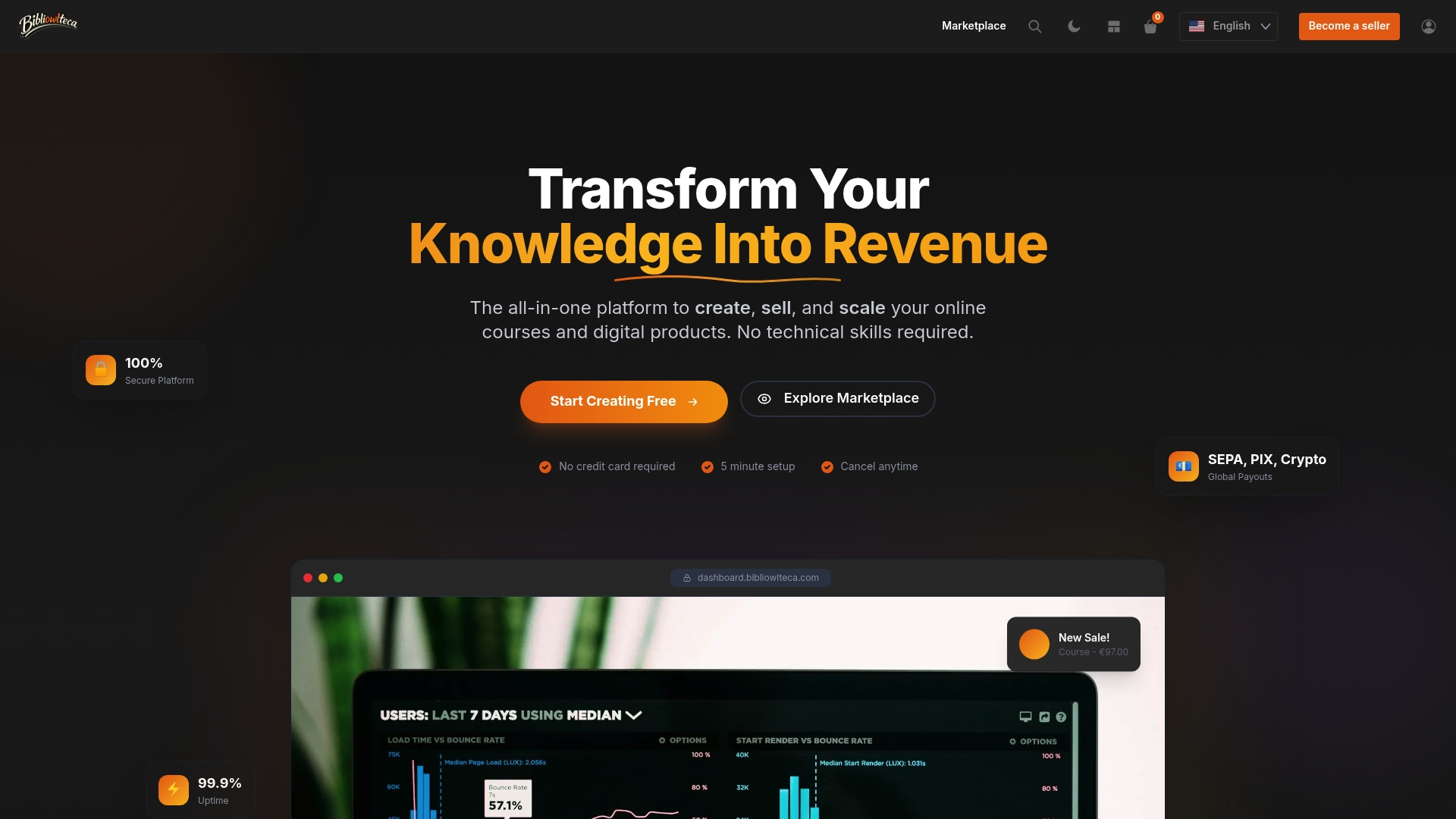
Where journal publishing hands control to a publisher, Bibliowlteca keeps it with you. You set the price, own the audience, and distribute your e-books, courses, and resources globally without navigating APCs or copyright transfer agreements. The platform handles payment processing across multiple currencies, manages tax compliance automatically, and gives you the infrastructure to sell digital content without needing a development team behind you.
For UK educators who have already done the hard work of producing rigorous, peer-reviewed material, Bibliowlteca is the practical next step: take what you know, package it for the audience who needs it, and get paid for it. Browse the full feature set and set up your store today.
Key takeaways
The academic publishing workflow is circular, not linear, and UK creators who plan for resubmission, copyright negotiation, and post-publication monetisation from the outset will move faster and retain more control over their work.
| Point | Details |
|---|---|
| Plan for resubmission | Keep a format-neutral master manuscript to reduce reformatting time across journals. |
| Choose your model early | Open Access retains broader reuse rights; subscription publishing typically transfers copyright to the publisher. |
| Metadata drives discoverability | Keywords, ORCID, and abstracts assigned at proof stage determine how easily readers find your work in Scopus and Google Scholar. |
| Copyright requires active management | In traditional publishing, authors often lose reuse rights unless they negotiate carve-outs before signing. |
| Bibliowlteca extends your reach | The platform lets UK creators sell e-books, courses, and digital resources globally, with payment processing and tax compliance built in. |